Contents
A Hut in Matsubagayatsu
It is said that with a firm determination to propagate the true Law, the Daishonin traveled from his hometown, Kataumi, to Izumiya (currently known as Namuya) via the western beaches of Awa Province. He then traveled by boat from Izumiya to Yonegahama Beach (currently known as Yokosuka) on the Miura Peninsula, and finally reached Kamakura via Miura Road.
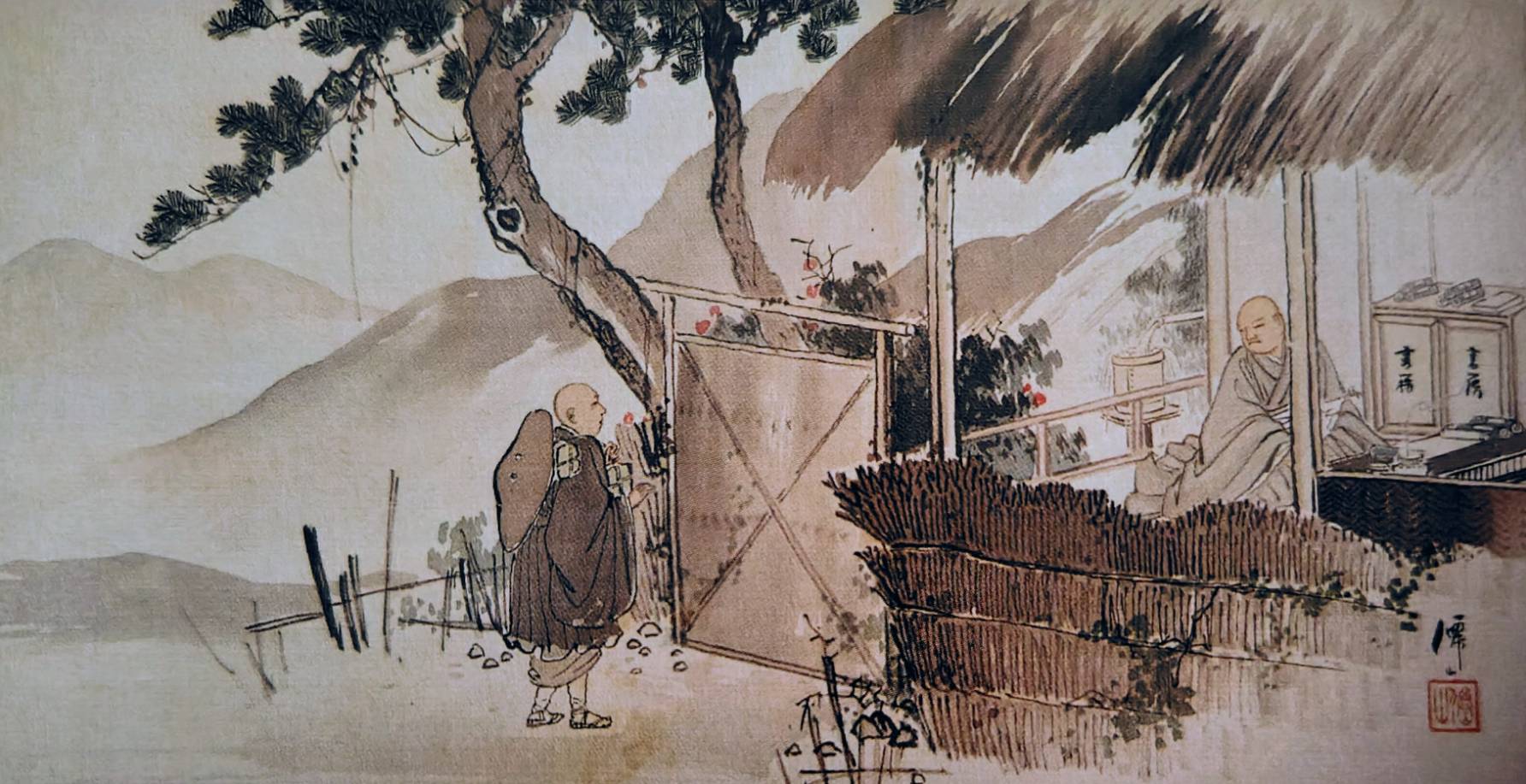
The Daishonin was convinced that Kamakura was the singular place to engage in propagation activities, since it was the capital of the military government, the center of commerce, and a city crowded with large temples of various Buddhist sects, which were thriving at the time. It was inevitable that once the Daishonin propagated his Buddhist doctrines there, many persecutions should follow.
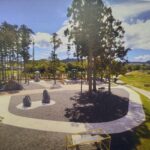
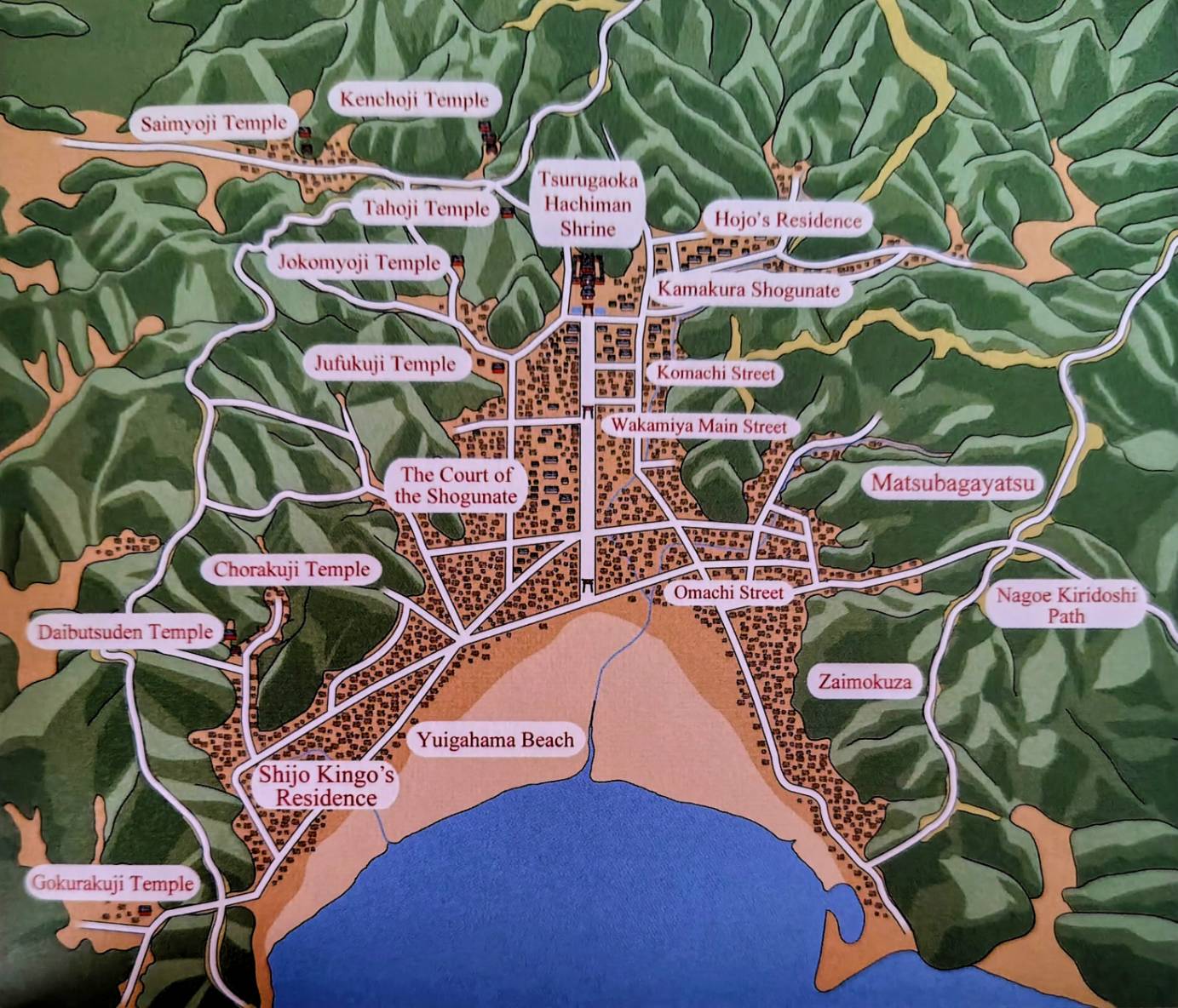
Around August of the fifth year of Kencho (1253), soon after the took up residence in Kamakura, the Daishonin built a small hut in a place called Matsubagayatsu in Nagoe. For the next 18 years, this dwelling served as his propagation center, up to the time of the Tatsunokuchi Persecution, which took place in the eighth year of Bunnei (1271).
Street Preaching
A passage in the Gosho, On Refuting Ryokan and Others (Ha ryokan to-gosho) reads:
As I stated before, in the spring of the fifth year of Kencho (1253), at the age of 32, I started to refute the Nembutsu sect, the Zen sect, and others…
(Gasho, p. 1078)
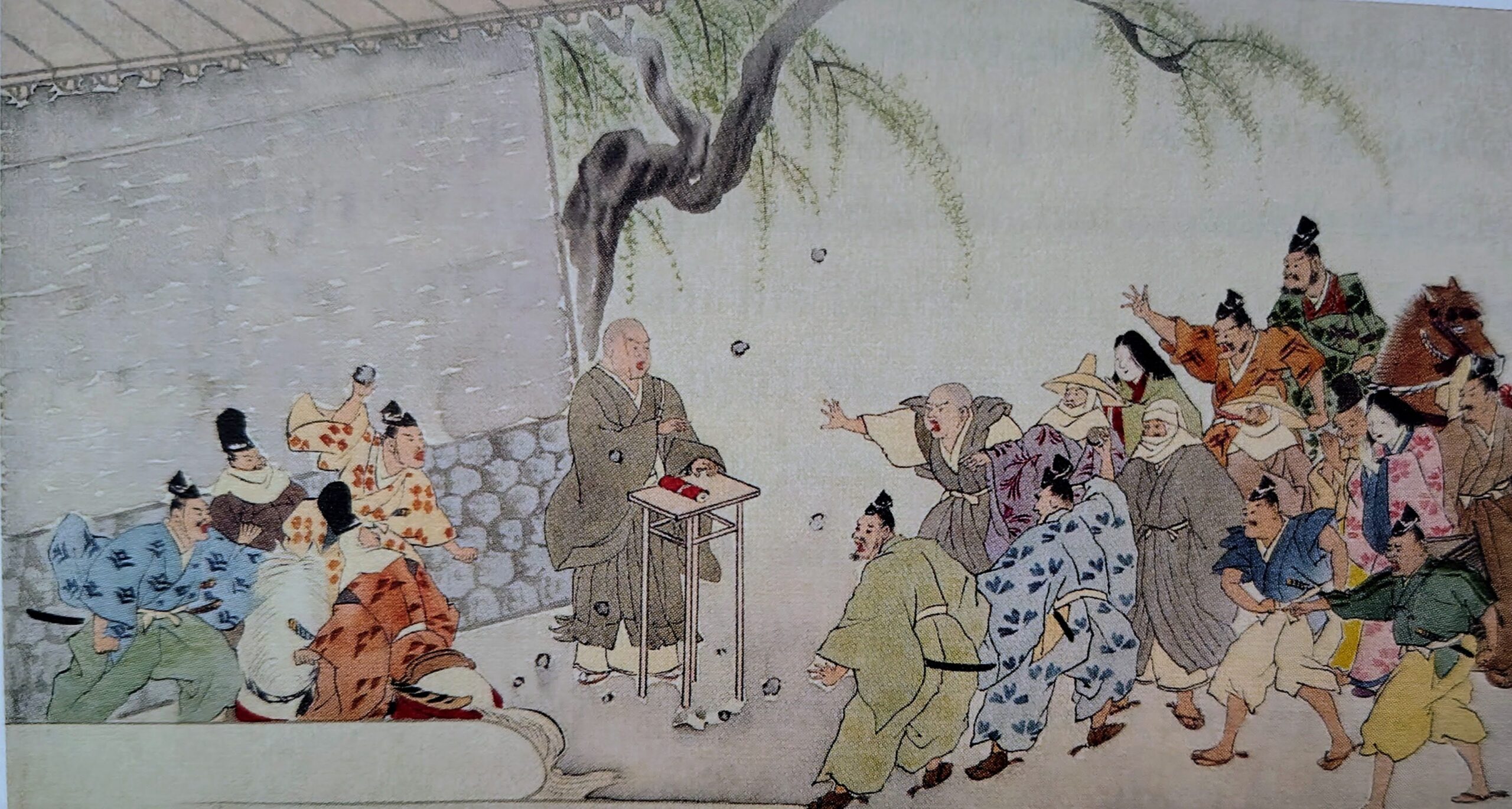
As described in this Gosho, soon after the Daishonin arrived in Kamakura, he stood in the streets, and dauntlessly refuted erroneous teachings and revealed the truth. He did so in a dignified manner, declaring “Nembutsu leads to the hell of incessant suffering,” and “Zen is the teaching of devils.” This was the beginning of his “street preaching.”
Since the Daishonin was completely unknown to the people in Kamakura during those early days, he first needed to carry out street preaching to the people who passed by, in order to propagate a totally new teaching in Kamakura.
At present, in Kamakura there are several places, which are said to be the historic sites of the Daishonin’s street preaching. Among these locations, the site of Komachi is well known. It is one street east of Wakamiya Main Street. This is where the shogunate was located, with its family quarters and the regent’s residence just to the north. busy as other areas, such as Omachi, Komemachi omachi was as regular basis. Komachi nd Okura, where the market was open on a so was relatively close to the Daishonin’s hut in Matsubagayatsu.
There also was a place called Hikigayatsu, located between atsubagayatsu and Komachi, where Hiki Yoshimoto17 (Daigaku buro)” once lived. This individual later converted to the wishonin’s Buddhism, together with his wife.
In Letter to Nakaoki nyudo (Nakaoki nyudo-goshosoku), the ishonin states:
At first, only I, Nichiren, chanted the Daimoku. Since then, those who saw me, encountered me, or heard me, covered their ears, glared in fury, contorted their mouths, clenched their fists, and ground their teeth. Even my parents, brothers, masters, and good friends all became my enemies.
(Gosho, pp. 1431-1432)
ーーーーーーーーーー
17 Hiki Yoshimoto [1202-1286): His full name was Hiki Daigaku Saburo Yoshimoto. One of the Daishonin’s lay believers who lived during the Daishonin’s lifetime. He was lar officer of the Kamakura Shogunate specializing in Confucianism. It is said The Daishonin asked him to review the Rissho ankoku-ron prior to his submission government. Through this process, Yoshimoto took faith in Nichiren Daishonin’s Buddhism. He received several Gosho writings, such as Letter to Daigaku Saburo (DaigaSaburo ku dono-gosho), from the Daishonin.
ーーーーーーーーーー
The expression “those who saw me, encountered me, or heard me” also indicates that the Daishonin widely and actively propagated his teachings to the people in Kamakura.
From these points, we can conclude that street preaching was the Daishonin’s first step in propagating Nam-Myoho-Renge-Kyo and refuting the teachings of various Buddhist sects, which are the cause of calamities and disasters.
As more disciples, such as Nissho18” and Nichiro19,” and lay believers, such as Toki Jonin20” and Shijo Yorimoto21 took faith, the Daishonin gradually started to use other means of propagation, such as dialogues and discussions.
ーーーーーーーーーー
18 Nissho [1221-1323]: One of the six senior priests appointed by Nichiren Daishoni from among his disciples. Also called Ben-ko or Ben Ajari. Fie became a disciple of the Duishonin in 1254. After the Daishonin’s passing, he called himself a priest of the Tend sect and turned his back on Nikko Shonin.
19 Nichiro [1245-1320]: One of the six senior priests of Nichiren Daishonin’s disciple Also called Chikugo-bo or Daikoku Ajari. After the Daishonin’s passing,Nichiro,goi against his master’s will, took a statue of Shakyamuni Buddha from the Daishonin’s gra site
20 Toki Jonin [1216-1299]: Also called Toki nyudo. One of the influential believe together with Ota Jomyo and Soya Kyoshin, who lived in the area which corresponds current Chiba Prefecture. He received many Gosho writings from Nichiren Daishonin, s The True Object of Worship (Kanjin no honzon-sho).
21 Shijo Yorimoto [1229-1296]: Shijo nakatsukasa saemon-no-jo Yorimoto. Also ca Shijo Kingo. One of the powerful followers during Nichiren Daishonin’s lifetime. A sam warrior in Kamakura who served Ema Mitsutoki, a member of the Hojo clan. He took Nichiren Daishonin’s Buddhism soon after the Daishonin declared the establishmen true Buddhism in 1253. At the time of the Tatsunokuchi Persecution in 1271, he folle the Daishonin to the execution site, determined to die with him if the Daishonin we be beheaded. He was also skilled in medicine, and treated Ema Mitsutoki as well Daishonin when each of them became ill. He received many Gosho writings, such Opening of the Eyes (Kaimoku-sho).
ーーーーーーーーーー
The initial focus of the Daishonin’s propagation efforts was on ing the Nembutsu sect, which had widely prevailed among the le at that time. The Gosho, Letter to Akimoto (Akimoto-gosho s as follows:
Although there are many people and provinces in Japan everyone in unison chants Namu-Amida-Butsu. They revere Amida Buddha as the object of worship; they pray for rebin in the pure land in the west and disdain the remaining nin directions.
Everyone, including those who practice the Lotus Sutra those who embrace the Shingon teachings, those who uphol the precepts, and the wise and the foolish, believes the chanting the Nembutsu is the primary practice. Thus, eve as they practice their own teachings, they chant the name Amida Buddha as a superior means to eradicate their negativ karma.
(Gosho, p. 1448)
The First Remonstration with the Nation
During the Kencho, Kogen, and Shoka eras, which correspond to ne mid-Kamakura periods, there was a succession of unprecedented, bnormal incidents and tragic disasters, such as destructive fires, aging rainstorms, great earthquakes, and epidemics. In response these, the government ordered each religious sect to pray for The elimination of the disasters, but their prayers were in vain. In particular, a major earthquake occurred on a scale that had never mappened before on August 23rd of the first year of Shoka (1257). n order to locate the sutras clarifying the cause of these misfortunes, he Daishonin went into the sutra storehouse of Jissoji Temple in wamoto of Suruga Province (what is currently known as Fuji City of Shizuoka Prefecture) and started to peruse all the sutras, in February of the following year. The 13-year-old Hoki-ko (later called Nikko Shonin) met the Daishonin when he was carrying out practices at the nearby Shijuku-in Temple. He was so inspired by the Daishonin’s venerable personality and noble figure that he decided to become his disciple and began to serve him.
In the first year of Bunno (1260), the Daishonin completed the remonstration document called the Rissho ankoku-ron (On Securing the Peace of the Land through the Propagation of True Buddhism), which is the most important writing of his life. On July 16th of the to the most influential man in Japan. same year, he sent this writing Hojo Tokiyori22 via Yadoya nyudo23.”
There is a passage in the document that states:
I find that all people have gone against the correct Law and become wholly devoted to evil doctrines. This is why all the guardian deities have abandoned this country and sages have left this land, not to return. Seizing this opportunity, devils and demons rush in, bringing disasters and calamities.
(Gosho, p. 234)
In this passage, he points out the causal relationship of all the unprecedented disasters. In other words:
All the people have slandered the correct Law and followed heretical teachings.
It has caused the guardian deities, who no longer can enjoy the flavor of the correct Law, to abandon the country.
Instead, devils and demons have rushed in to take over the temples and shrines.
ーーーーーーーーーー
22 Hojo Tokiyori [1227-1263]: The fifth regent of the Kamakura Shogunate. After retiring as the regent, he established Saimyoji Temple, entered the priesthood, and resided there, this is why he was referred to as Saimyoji.
23 Yadoya nyudo [Dates of birth and death unknown]: Yadoya Mitsunori. A vassal to Hojo Tokiyori and Tokimune, both regents of the Kamakura Shogunate. Yadoya Mitsunori was a close aide to Hojo Tokiyori.
ーーーーーーーーーー
This is the reason why such unprecedented disasters have repeatedly occurred.
He concludes in the Rissho ankoku-ron that it is essential to renounce the erroneous doctrine of Nembutsu, which was most prevalent at that time, and to convert solely to the Lotus Sutra, the only true Law.
He further predicted that two kinds of disasters would occur if the ruler of the country did not eradicate slanders and did not listen to the golden words of the Buddha. These two disasters that had not yet occurred are the disasters of revolt within one’s domain and invasion from foreign lands, two of the seven described in the Sutra of the Medicine Master (Yakushi-kyo), the Sutra of the Benevolent King (Ninno-kyo), and so forth.
Thus, the Daishonin remonstrated with the government by submitting the Rissho ankoku-ron to correct the people’s erroneous idea of devoting themselves to heretical doctrines. This was his first remonstration with the ruler of the nation.
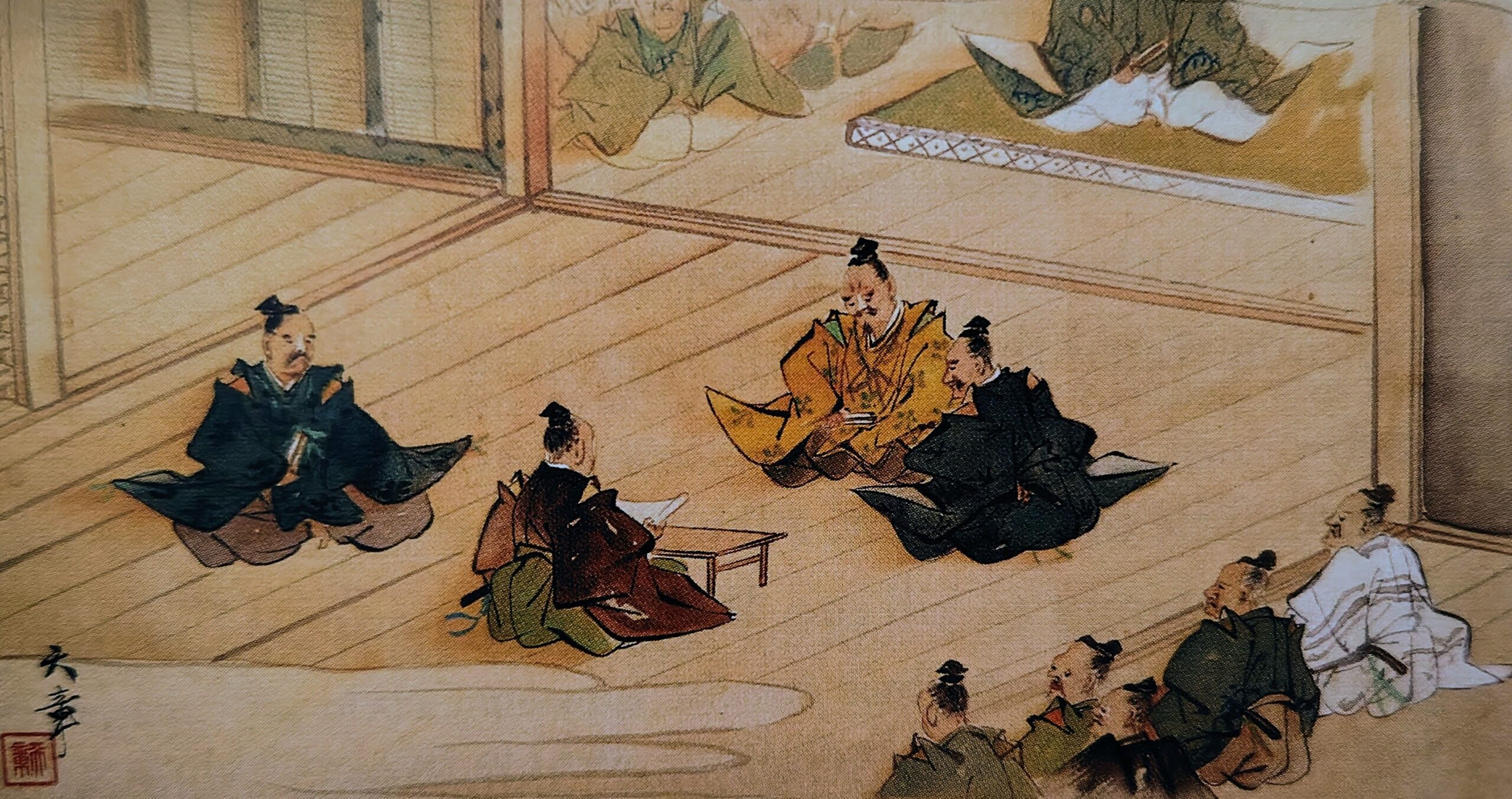
The Daishonin asked Yadoya nyudo to forward the Rissho ankoku. ron to Hojo Tokiyori and to convey the following words:
You must renounce the Zen and Nembutsu sects.
(The Selection of the Time [Senji-sho], Gosho, p. 867)
In this way, the Daishonin refuted not only the Nembutsu but also the Zen sect, which Hojo Tokiyori revered.
Matsubagayatsu Persecution
The government administrators, who were staunch followers of the popular Buddhist sects at the time, not only rejected the Rissho ankoku-ron, but also resented Nichiren Daishonin and secretly devised an evil plot against him.
With the consent of Hojo Shigetoki (also known as Gokurakuji nyudo and the father of the regent of the Kamakura government at that time), a group of slanderous people, including many Nembutsu believers, attacked the Daishonin in his Matsubagayatsu hut in the middle of the night. This occurred on August 27th of the first year of Bunno (1260).
The Daishonin, however, mysteriously escaped from this life-threatening attack without even a single injury.
The Daishonin stated the following regarding this persecution:
In the middle of the night, a few thousand surged to my small hut in an attempt to kill me. But how mysterious! I somehow again survived that night.
(Letter to Shimoyama [Shimoyama-goshosoku), Gosho, p. 1150)
After that,the Daishonin stayed at the residence of Toki Jonin,located in Shimousa Prevance,(present Chiba Prefecture) for a while .
Dureing his stay,the Daishonin led Ota Jomyo24 “Soya Kyoshin25 ” and others to take faith in his tesching throughin his propagation efforts in the region.
ーーーーーーーーーー
24 Ota Jomyo [1222-1283]: Also called Ota nyudo or Ota saemon-no-jo. One of the influential believers, together with Toki Jonin and Soya Kyoshin, who lived in what rently Chiba Prefecture. He received many Gosho writings from Nichiren Daishon has On the Transmission of the Three Great Secret Laws (Sandai hiho bonjo ji), one of t st important Goshos.
25 Soya Kyoshin [1224-1291]: Soya Jiro hyoe-no-jo Kyoshin. Also called Horen ya nyudo. One of the influential believers during the Daishonin’s days, living in Ichikawa City, Chiba Prefecture, he received many Gosho writings, such as “Soya nyudo dono-motogosho.”
ーーーーーーーーーー
Izu Exile
In the spring of the first ar of Kocho (1261), the year llowing the Matsubagayatsu rsecution, Nichiren Daishonin turned to Kamakura and sumed his propagation activities.
On May 12th of the same ar, Hojo Nagatoki, the regent the Kamakura government, no heard about the Daishonin’s rther propagation, had e Daishonin arrested. Without any questioning or investigation agatoki, through the power of his authority, exiled the Daishon to Kawana of Izu (present Shizuoka Prefecture).
During his exile on Izu, the Daishonin stated:
From the twelfth day of the fifth month of last year (1261) to the sixteenth day of the first month of this year (1262), for about two hundred and forty days, I have been devoting myself to the practice of the Lotus Sutra, day and night. This is because I have been exiled for the sake of the Lotus Sutra. I do nothing but recite and practice the sutra each and every moment. There could be no other joy greater than this for someone born as a human.
(The Four Debts of Gratitude [Shion-sho], Gosho, p. 266)
This means that the Daishonin, by himself, demonstrated what was preached in the Lotus Sutra, and he expressed his joy for being able to practice according to the Buddha’s teachings.
Meanwhile, upon hearing the news of the Daishonin’s exile, Nikko Shonin rushed to see the Daishonin and faithfully and constantly served his master. At the same time, he assiduously performed shakubuku, through which he led Kongo-in Gyoman, a priest of the Shingon sect in Atami, and many others in the surrounding areas of Ito to convert to the Daishonin’s teachings. (Both Atami and Ito are currently in Shizuoka Prefecture.)
During this period of exile, the Daishonin wrote many Goshos, including The Four Debts of Gratitude (Shion-sho). On the Teaching, Capacity, Time, and Country (Kyo ki ji koku-sho) and On Revealing Slander (Ken hobo-sho).
Komatsubara Persecution
In February of the third year of Kocho (1263), after receiving a letter of pardon from Hojo Tokiyori, the Daishonin returned to his lodging in Kamakura. The following autumn, the first year of Bunnei (1264), the Daishonin hurried home to Awa Province for the first time in twelve years after hearing the news that his mother, Myoren, was critically ill.
When the Daishonin arrived home, he found his mother suffering from a serious illness and her death seemed inevitable. However, through the Daishonin’s prayers, his mother not only recovered, but also prolonged her life. The Daishonin mentions this event in the Gosho:
As I, Nichiren, sincerely prayed for my compassionate mother’s recovery, not only was she cured of her illness, but also her life was extended by four years.
(On Immutable and Mutable Karma [Kaenjogo-gosho], Gosho, p. 760)
Afterwards, the Daishonin stayed on in Awa, devoting himself to propagating true Buddhism. Kudo Yoshitaka26, the feudal lord of Amatsu in Awa Province (currently Kamogawa City, Chiba Prefecture) who was a staunch believer, invited the Daishonin to his residence when he learned that the Daishonin had returned to Awa. On November 11th, the Daishonin accepted his request and departed for Yoshitaka’s residence, accompanied by approximately ten companions.
ーーーーーーーーーー
26 Kudo Yoshitaka (?-1264]: Kudo sakon-no-jo Yoshitaka. One of the Daishonin’s lay believers during the Daishonin’s lifetime. He was the feudal lord of Amatsu in Awa Province. At the Komatsubara Persecution, he protected Nichiren Daishonin from the attack launched by Tojo Kagenobu and his soldiers, and was killed by them. He was given the Gosho, The Four Debts of Gratitude (Shion-sho) by the Daishonin.
ーーーーーーーーーー
Tojo Kagenobu, the steward of Tojo Village in Nagasa County who viewed the Daishonin as an enemy of the Nembutsu sect, found out that the Daishonin was on his way to Yoshitaka’s manor. At twilight, when the Daishonin and his followers were nearing Komatsubara (currently, Kamogawa City in Chiba Prefecture), Kagenobu and his men attacked the Daishonin and his party.
 Komatsubara
Nichiren Daishonin describes this incident as follows:
On the eleventh day of the eleventh month, on the main street called Matsubara, in Tojo in Awa Province, between the hours of the monkey and the rooster, several hundred Nembutsu believers ambushed me. At that time, I, Nichiren, was accompanied by approximately ten people, out of whom only three or four were able to fight. The arrows poured down on our heads like rain. The slashing swords were as fierce as lightning. One of my disciples was killed in battle while two other followers were severely wounded. [Although] I was cut by a sword and sustained a beating…
(Reply to Nanjo Hyoe Shichiro [Nanjo hyoe shichiro dono-gosho], (Gosho, p. 326)
As this Gosho passage shows, the Daishonin encountered this severe persecution, which nearly took his life. Kudo Yoshitaka, who tried to protect Nichiren Daishonin from the attack, eventually lost his life.
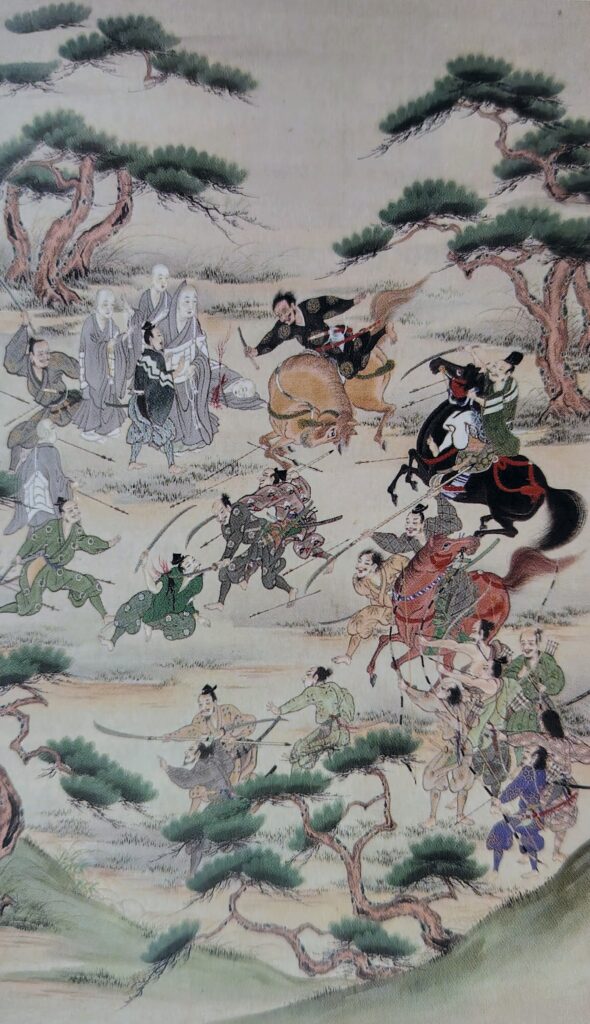
Despite Yoshitaka’s efforts, the Daishonin sustained a cut on the right side of his forehead from Kagenobu’s sword and his left arm was fractured. This incident corresponds exactly to the passage in the Encouraging Devotion (Kanji; thirteenth) chapter of the Lotus Sutra, which states that individuals who propagate the true Law in the defiled age, will be attacked by evil people with swords and staves (Hokekyo, p. 375).
An Official Letter from Mongolia and Nichiren Daishonin’s Remonstration
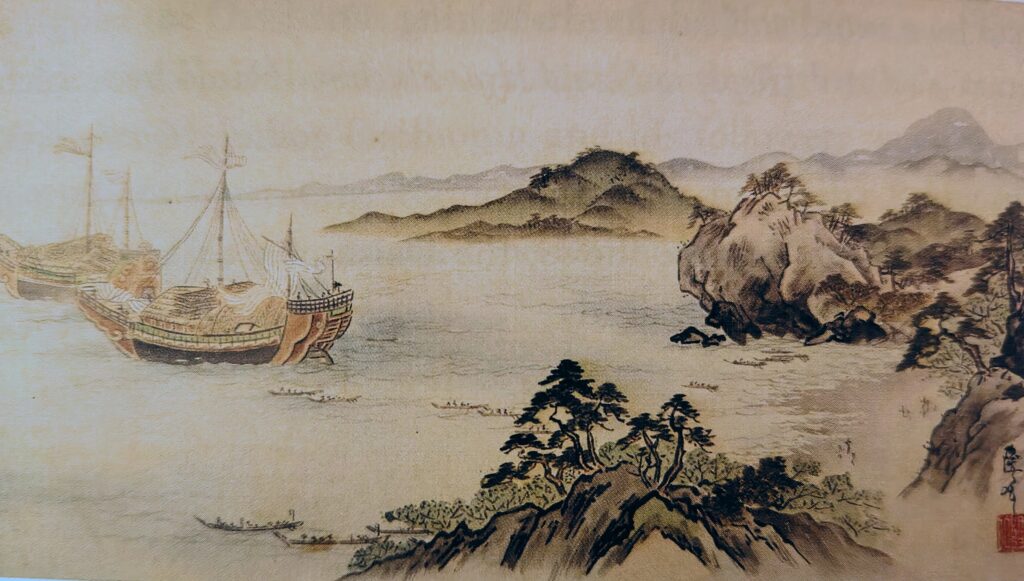
In January of the fifth year of Bunnei (1268), an emissary from Mongolia made a visit to Japan and delivered a diplomatic document to the Kamakura government. This was, in fact, a threatening letter, implying that Japan should become a vassal state of the Mongolian Empire.
The occurrence of the disaster of “invasion from foreign lands” already had been predicted in the Rissho ankoku-ron, written by Nichiren Daishonin eight years earlier. Now, it was about to happen in reality.
On April fifth in the same year, Nichiren Daishonin heard the news that the government had received a threatening letter from Mongolia. He then wrote Rationale for the Submission of the Rissho ankoku-ron (Ankokuron gokan-yurai) and sent it to a government official, Priest Hokan. He also sent two letters to Yadoya nyudo, one in August and another in September, to remonstrate again with the government. However, the Daishonin did not receive any responses.
Then, on October 11th, he sent a document to eleven individuals: to two leaders of the Kamakura government-Hojo Tokimune and Hei-no saemon-no-jo Yoritsuna27, two government officials Hojo Yagenta28 and Yadoya nyudo, and to the representatives of seven major temples Ryokan29 of Gokurakuji Temple, Doryu of Kenchoji Temple, a representative of the Daibutsuden, Jufukuji Temple, Jokomyoji Temple, Tahoji Temple, and Chorakuji Temple. In the letter, he requested that right and wrong should be judged through a public religious debate. He further demanded that the defeated side should immediately discard their erroneous belief and take faith in the true teaching. The reason why the Daishonin wrote these letters is stated as follows:
It is not that I look down upon the various sects. My only desire is the peace and security of this nation.(Letter to Chorakuji Temple [Chorakuji eno-onjo], Gosho, p. 380)
ーーーーーーーーーー
27 Hei-no saemon-no-jo Yoritsuna [2-1293]: Taira-no Yoritsuna. He served rwo successive regents of the Kamakura shogunate. Hojo Tokimune and Sadatoki. As deputy chief of the Hojo clan, he wielded power in the Kamakura government. In the eighth year of Bunnei (1271), he masterminded the attack at the Matsubagayatsu hut where Nichiren Daishonin resided, and plotted to have the Daishonin beheaded at Tatsunokuchi. In the second year of Koan (1279), he started the Atsuwara Persecution. Years later, Yoritsuna and his son were executed due to an allegation that they had plotted a rebellion against the Hojo clan. This caused Yoritsuna’s entire clan to perish.
28 Hojo Yagenta [Dates of birth and death unknown]: One of the Daishonin’s believers, who lived in the area currently known as Kamakura City of Kanagawa Prefecture. After receiving a letter remonstration from Nichiren Daishonin, he converted to the Daishonin’s Buddhism and maintained his sincere faith.
29 Ryokan [1217-1303]: A priest of the Shingon-Ritsu sect. Ryokan establishe Gokurakuji Temple in Kamakura, and, with the full protection of the Hojo clan, wielde supreme power in Buddhist society.
ーーーーーーーーーー
Due to the circumstances of a pending attack by Mongolia,his single-minded hope before anything else was for the security of the nation and peace for the people.
However, the leaders of the Kamakura government refused to heed the Daishonin’s admonishment. Rather, they insulted and scoffed at him.
Ryokan Prayer for Rain
Beginning in May of the eighth year of Bunnei (1271), dry weather persisted, leading to a severe drought prevailing throughour Japan. After another month without rain, the Kamakura governmen ordered Ryokan of Gokurakuji Temple, who was revered by the people as a living Buddha, to offer a prayer for rain. Ryokan agrend to this, declaring that he would make rainfall within seven day, beginning on June 18th, to save the people.
Upon hearing of this, Nichiren Daishonin decided to take the opportunity to widely demonstrate to the public what was true and what was erroneous among the Buddhist teachings. He made the following proposal to Ryokan:
If [Ryokan] brings rain within seven days, Nichiren wil renounce the teaching that Nembutsu leads to the hell o incessant suffering. I will become a disciple of Ryokan shoni and embrace the two hundred and fifty precepts. Howeve if there is no rainfall, it will become obvious that Ryokan extremely deceptive, even though he appears to adhere those precepts…Ryokan should believe in the Lotus Sut alone.
(Yorimoto’s Petition [Yorimoto chinjo], Gosho, p. 1131)
Ryokan accepted the Daishonin’s challenge and, with his many disciples, single-mindedly prayed for rain. However, he could no make rain fall within the seven-day period. He asked the Daishonis to prolong the term of his prayer for rain for seven more days. H kept on praying, but no rain appeared. On the contrary, the drough became even more severe than before, and windstorms blew in th Kamakura region. As a result, Ryokan’s prayer for rain broug further sufferings to the people. He suffered a crushing defeat in h challenge with the Daishonin.
Petition from Gyobin
The failure of Ryokan’s prayer for rain was a disgrace not only the Ritsu sect, but also for all the major temples in Kamakura t supported Ryokan.
Ryokan had been exposed by Nichiren Daishonin as an extrem arrogant false sage and a hypocrite. He had been defeated comple in his challenge to pray for rain. Nevertheless, he did not he his promise to the Daishonin. On the contrary, with his ha growing, Ryokan plotted with representatives of the major templ Kamakura, and ordered a priest named Gyobin to hold a debate the Daishonin.
Ryokan tried to make Gyobin confront Nichiren Daish probably because it was shortly after his complete defeat agains Daishonin and he did not want to expose himself for the debate On July eighth of the eighth year of Bunnei (1271), Gyobin= letter challenging the Daishonin and demanding a private discu Understanding their ill intentions, the Daishonin replied to his on the 13th of the same month:
Regarding the several questions you have enumerated, it might be difficult to hold a private discussion with you. Therefore, I would suggest that we present a petition to the government officials. Then, the right and wrong should be judged under their supervision concerning the points that you presented. This is my greatest wish.
(Reply to Gyobin [Gyobin-gohenji], Gosho, p. 472)
Ryokan’s plot to entrap the Daishonin using a private debate failed. He then, together with other conspirators, finally took the last resort of submitting a slanderous complaint about the Daishonin to the court.
Their complaint, following the custom of those days, was forwarded from the court to the Daishonin with an order to file a written response. Nichiren Daishonin immediately wrote an initial document of defense, which is called, Counter-claim against the Petition from Ryokan and Others [Ryokan nen-a to sojo gohensatsu].
In his response, he thoroughly refuted the erroneous points in their petition, and at the same time, stated as follows:
If heretical views are refuted and the truth is revealed, it will be just like the example of the one-eyed turtle30,” which finally climbed into the hole of a floating [sandalwood] log.
(Counterclaim against the Petition from Ryokan and Dibers [Ryokan nen-a to sojo gohensatsu), Gasbo, p. 472)
ーーーーーーーーーー
30 Example of the one-eyed turtle: The story of the one-eyed turtle is a parable described in the Former Affairs of King Wonderful Adornment (Myoshogonno honjt, twenty-seventh) chapter of the Lotus Sutra. It is extremely difficult and rare for a turtle with only one eye to find a perfectly fitting piece of driftwood that he can rest upon in the vast ocean. Likewise. it is difficult and rare for living beings to encounter the true Law. In this context, a public debate would be a golden opportunity for the Daishonin to refute heretical views and reveal the truth.
ーーーーーーーーーー
Reacting to Nichiren Daishonin’s counterclaim, Ryokan and his llow conspirators, refusing to back down, started to maneuver ehind the scenes. They spread false charges against the Daishonin various people in power, and at the same time, they tried to curry vor with influential individuals. The Daishonin describes the way they behaved as follows:
Ryokan shonin respectfully offered a petition to the government to make an accusation [against Nichiren]. Doryu shonin of Kenchoji Temple, visited a magistrate’s office on a palanquin, and knelt down at the officials’ feet. Nuns who embrace the five hundred precepts used valuable silk to get their message heard by the government.
(Reply to Myoho bikuni [Myoho bikuni-gohenji],Gosho, p. 1267)
The wives and widows of the authorities, who blindly believed their words, raised their eyebrows in anger, and said:
[Nichiren] does not have to be interrogated. He should be beheaded immediately. His disciples should also be beheaded, banished to a remote island, or put in prison.
(Repaying Debts of Gratitude [Ho-on-sho], Gosho, p. 1030)
The Second Remonstration with the Nation
Due to the unjustified resentment of Ryokan and others on his side, on September tenth of the eighth year of Bunnei (1271) Nichiren Daishonin was summoned by the Kamakura governmen and interrogated by the Supreme Court. On this occasion, the Daishonin strictly remonstrated with the government, as recorded in On the Buddha’s Behavior (Shuju onfurumai-gosho, Gosho, p. 1057) He warned that if they persecute Nichiren, the envoy of the Buddha they surely will receive punishment from the guardian deities, and furthermore, the two disasters of revolt from within and foreign invasion certainly will occur in this country.
On September 12th, two days after the interrogation, Nichiren Daishonin sent a letter to Hei-no saemon-no-jo, urging him again to follow the Daishonin’s words:
You are the leading person in the country at this time Why are you harming the greatest asset in the nation? You should immediately give the deepest consideration [to my remonstration), so that the foreign invaders can be repulsed.
(On the Day before Yesterday [Issakujitsu-gosho]Gosho, p. 477)
These two reprimands infuriated Hei-no saemon-no-jo. Fille with rage, on the same day, he attacked the Daishonin’s hut in Matsubagayatsu together with several hundred soldiers.
The method of assault was extraordinary just for arresting single priest. The soldiers took every violent action they could such as trampling on scrolls of Buddhist scriptures. It was especiall significant that Sho-bo, the first retainer of Hei-no saemon-no-jo, snatched the scroll of the fifth volume of the Lotus Sutra fron the Daishonin’s robe and struck him hard on the head with it thre times.
The fifth volume includes the Encouraging Devotion (Kang thirteenth) chapter of the Lotus Sutra, which predicts that on who propagates the Lotus Sutra in the Latter Day of the Law w encounter many persecutions, such as being struck with swords ar staves. In other words, this persecution predicted in the Lotus Sut was inflicted upon Nichiren Daishonin in actuality, which prove that he is the votary of the Lotus Sutra.
As the the Dathonin powerfully remonstrated against them:
How ridiculous! See how insanely Hei-no saemon-no-jo is acting! All of you are now toppling the pillar of Japan.
(On the Buddha’s Beharier [Shuju onfurumai-gosho), Gashe, p. 1058)
Hei-no saemon-no-jo and his retainers, who were on a rampage. were overwhelmed by the Daishonin’s unwavering attitude and mmediately fell silent. This was Nichiren Daishonin’s second chontrarion with the nation.