The Daishonin of the Estabishment of The True Buddhism
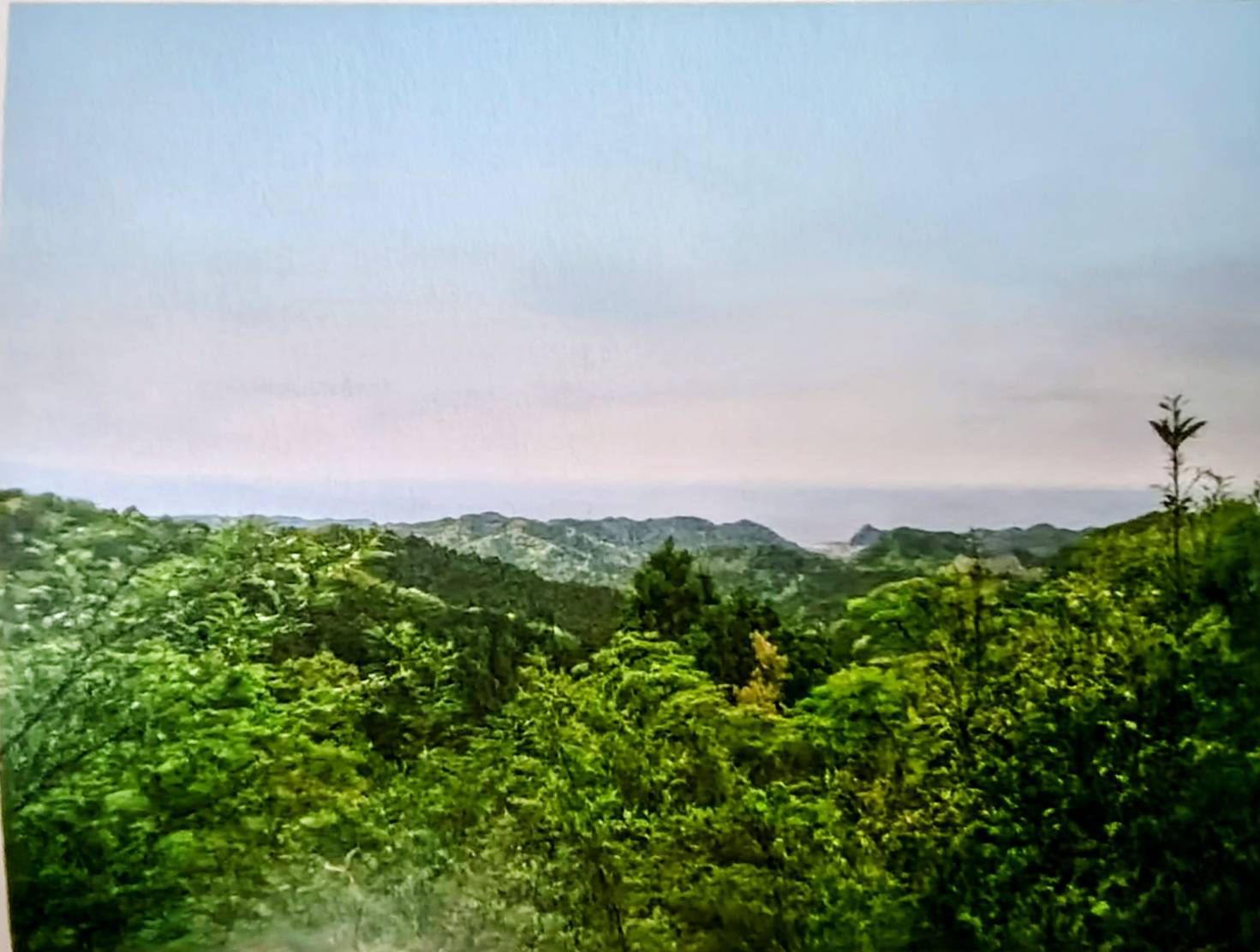
After completing his travels for Buddhist study, Rencho returned to Seichoji Temple in his home province at the age of 32 in the spring of the fifth year of Kencho (1253). After profound consideration, he made an unshakable resolution to propagate the great Law of “Nam-Myoho-Renge-Kyo,” no matter what major obstacles may appear. Before dawn on March 28th of the same year, Rencho walked up to the Kasagamori Forest, at the top of Mount Kiyosumi. There, he chanted Nam-Myoho-Renge-Kyo toward the entire universe, facing the rising sun. This was the first time when he revealed the Daimoku of his inner realization.
Right after the revelation of the Daimoku, at Seichoji Temple he began to preach his teachings, including the doctrine stating tha Nembutsu leads to the hell of incessant suffering. And after on month had passed, on April 28th, he declared the establishment true Buddhism by clearly preaching to all the people the Daimokuthat he would propagate throughout his life.
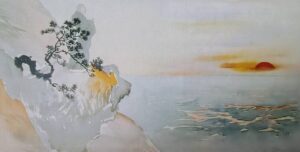
Later, Nichiren Daishonin expressed his feeling as follows:
If I speak even a word about it that Nembutsu and other heretical teachings will lead one into the evil paths), then will surely meet opposition from my parents, my brothers, and I will also suffer persecution from the sovereign. If I stay silent, I will be lacking compassion. Based on the teachings of the Lotus Sutra and Nirvana Sutra, I have contemplated whether I should speak out or remain silent These sutras expound that if I do not speak out, this life may be eventless, but undoubtedly I will fall into the hell of incessant suffering in my next lifetime. I came to realize thar if I did speak out, I would encounter the three obstacles and four devils without fail.
(The Opening of the Eyes [Kaimoku-sho], Gosho, PP. 538-539)
The “Nam-Myoho-Renge-Kyo” that Nichiren Daishonin began to chant is the Daimoku of the unprecedented sole essential teaching that will save all living beings. This Daimoku arose from The easternmost land of Japan and will spread throughout the world Huring the Latter Day of the Law and into the eternal future as ndicated in the following two passages:
When I pondered the matter, based on the Buddha’s prophecy described in the sutras, I came to the conclusion that the present time definitely corresponds to the beginning of the fifth Five-hundred-year Period. There is no doubt that
ーーーーーーーーーー
12 Three obstacles and four devils: Three kinds of hindrances and four kinds of evil functions that obstruct one in carrying out the Buddhist practice and lead one into the evil ths the three obstacles of earthly desires, karma, and retribution; and the four devils of rthly desires, five components, death, and the devils of the Sixth Heaven.
ーーーーーーーーーー
Buddhism shall arise from the easternmost land of Japan.
(On the Buddha’s Prophecy [Kembutsu mirai ki], Gosho, p. 678)
Since Nichiren’s compassion is vast, Nam-Myoho-Renge-Kyo will prevail for ten thousand years and beyond into the future. It possesses the beneficial power to open the blind eyes incessant suffering. of all the people in Japan, and it blocks the path to the hell of incessant suffering.
(Repaying Debts of Gratitude [Ho-on-sho], Gosho, p. 1036)
The Name “Nichiren”
When Rencho established true Buddhism, he took this opportunity to change his name to Nichiren. His name consists of the two Chinese characters “Nichi” and “Ren,” which mean “Sun” and “Lotus.” This derives from two passages in the Lotus Sutra.
First, the Emerging from the Earth (Juji yujutsu; fifteenth) chapter of the Lotus Sutra states:
[The votary of the Lotus Sutra is not defiled by earthly desires and slanders. This is likened to the lotus flower remaining untainted by the muddy water.
(Hokekyo, p. 425)
Second, the Wondrous Powers of the Tathagata (Nyorai jinriki, –first) chapter of the Lotus Sutra reads:
Just as the sunlight or moonlight dispels the darkness, this person will practice [Myoho-Renge-Kyo] in the world and eliminate [the fundamental] darkness of all living beings.
(Hokekyo, p. 516)
Based on the above-cited passages, the Daishonin explains his own in Letter to the Wife of Shijo Kingo (Shijo kingo nyobo-gosho) as follows:
[The benefits of this medicine] are as clear as the sun and the moon, and as pure as a lotus flower. The Lotus Sutra can be compared to the sun and the moon, and a lotus flower. This is why the sutra is named Myoho-Renge-Kyo. I, Nichiren, am also likened to the sun and the moon, and a lotus flower.
(Gosho, p. 464)
As the Daishonin mentions, the name “Nichiren” indicates that en Daishonin is the reincarnation of Bodhisattva Jogyo, whom uminate the fundamental darkness of all living beings during thousand years of the Latter Day of the Law and into the eternal future, and purify this defiled world. His behavior can be compared to the sun that illuminates all darkness and the pristine lotus flower that blooms in muddy water from which it grows. Furthermore, the Daishonin states in Letter to Jakunichi-bo (Jakunichi bo-gosho):
I gave myself the name Nichiren on the basis of the enlightenment that I have attained by myself.
(Gosho, p. 1393)
Hence, he proclaims that he is in the state of Buddhahood.
Significance of the Title “Daishonin”
In Nichiren Shoshu, our founder has been respectfully called “Nichiren Daishonin.” This honorific title signifies that Nichiren Daishonin is the True Buddha. Originally, Nichiren Daishonin referred to this title of dai-sho-nin (literally means “supreme sage”) as another name for “Buddha.”
He states in the Gosho as follows:
I. Nichiren, am an insignificant common mortal. However, from the standpoint of upholding the Lotus Sutra, I am the one and only supreme individual (dai-nin) in Japan today.
(The Selection of the Time [Senji-sho], Gosho, p. 869)
Nichiren is the unparalleled sage (sho-nin) in all of Jambudvipa.”
(A Sage Knows the Three Existences of Life [Shonin chisanze jil,Gosho, p. 748)
ーーーーーーーーーー
13 Jambudvipa: This signifies this world, the saha world, where humans live. According in ancient Indian cosmology, it is located to the south of Mount Sumeru.
ーーーーーーーーーー
A Buddha, a World-Honored One, is one who speaks the truth. That is why the Buddha is referred to as the sage (sho-literature and teachings, the one who speaks the truth is nin) and the supreme individual (dai-nin). In non-Buddhist also called a wise man, a sage, an inhabitant of heaven, or a hermit. However, since a World-Honored One is supreme and superior to them all, he is referred to as the supreme individual (dai-nin).
(The Opening of the Eyes [Kaimoku-sho], Gosho, p. 529)
Both dai-nin and sho-nin mentioned in the above passages Indicate honorific titles of the Buddha. One who speaks the truth, who knows the three existences of life, and who reveals the true aching is called the “Buddha” or “World-Honored One.” This is ecause his words and behavior are supreme and most noble. He further preaches in the Gosho as follows:
According to the principle expounded by the true sutra, I am convinced that, when Buddhism falls into serious disorder in the Latter Day of the Law, a supreme sage (dai-sho-nin) will appear in this world.
(Reply to Hyoe-sakan [Hyoe sakan dono-gohenji], Gosho, p. 1270)
You should realize that the supreme sage (dai-sho-nin) resides in this country.
(Letter to Horen [Horen-sho], Gosho, p. 823)
These passages declare that the supreme sage (dai-sho-nin) will make his advent in the Latter Day of the Law. They indicate that Nichiren Daishonin will appear as the True Buddha in the Latter Day of the Law and definitely will bring salvation to all living beings in this world with the great teaching of Myoho-Renge-Kyo. Nichirer Daishonin states:
I came to the conclusion that the present time definitel corresponds to the beginning of the fifth Five-hundred-yea Period. There is no doubt that Buddhism shall arise from th easternmost land of Japan… You should know that [now is th time when] the sage who is equal to the Buddha will be born (On the Buddha’s Prophecy [Kembutsu mirai ki], Gosho, p. 678)
Since Nichiren Shoshu follows the teaching of Nichir Daishonin, we use the title, dai, because he is the supreme individ in all of Jambudvipa. Moreover, combining the honorific titles nin and sho-nin, we respectfully designate him as the dai-sho-nin, revere him as the True Buddha in the Latter Day of the Law.
The followers of other Nichiren sects call him “Most Rever Nichiren” or “Great Bodhisattva Nichiren.” However, in the Go-the Daishonin gives the following admonishment:
Even if the people of the nation pay heed to Nichiren country will fall into ruin if they do not properly respect (On the Buddha’s Behavior [Shuju onfurumai-gosh], Gosho, p.1066)
Since the various other Nichiren sects have not received the ransmission of the Heritage of the Law, they cannot understand and elieve in Nichiren Daishonin as the True Buddha in the Latter Da of the Law. Thus, they are the ones who are being disrespectful to the True Buddha and are slandering the true Law.
The First Sermon of Nichiren Daishonin
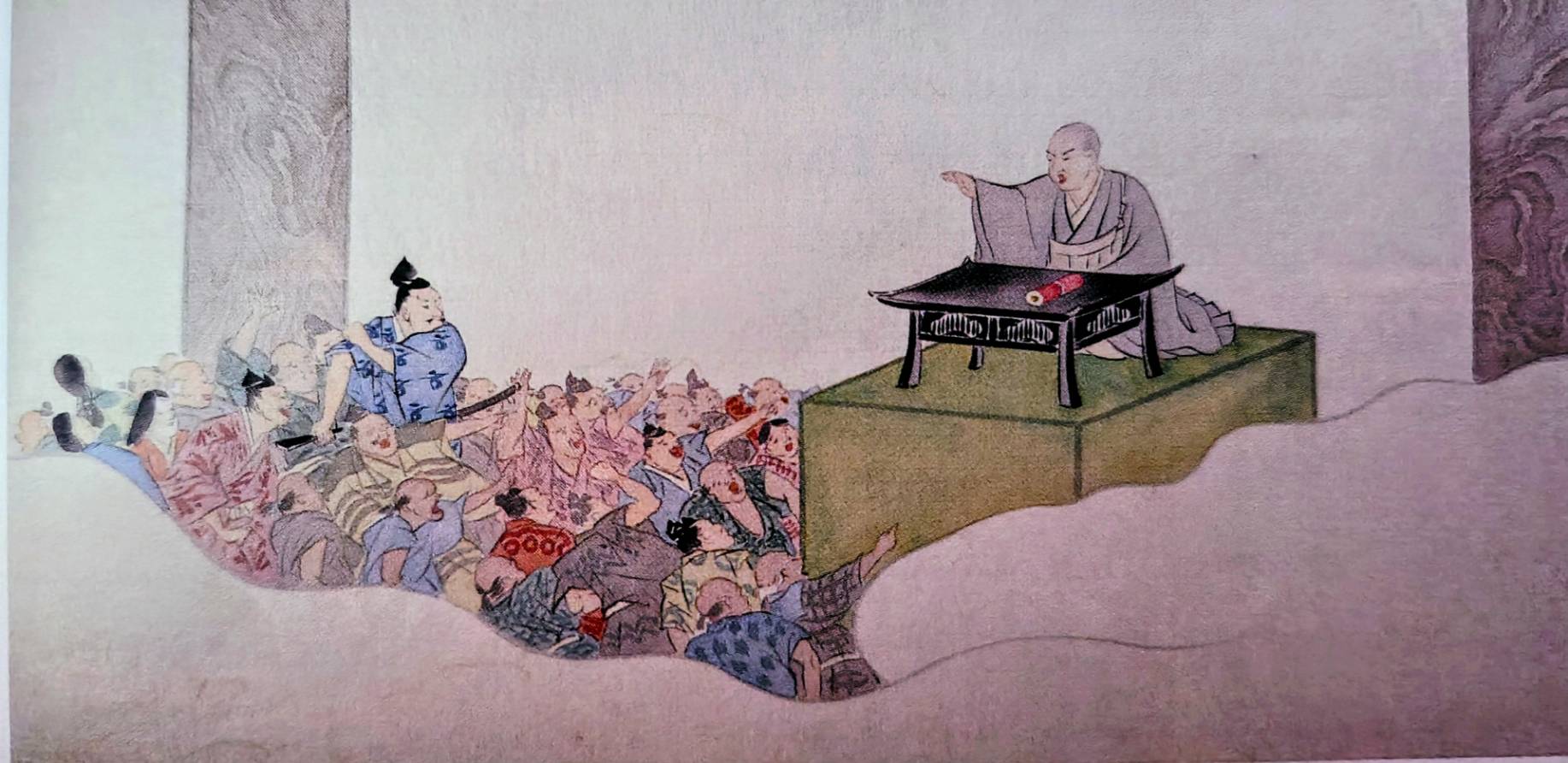
On April 28th, at the hour of the Horse (noon), Nichiren Daishonin ascended to the dais in the Jibutsudo hall of the Shobutsubo” at Seichoji Temple. There, he began his propagation of Nam-Myoho-Renge-Kyo. The Daishonin stated that the Lotus Sutra was the supreme of all the Buddhist teachings. Furthermore, he declared that all living beings in the Latter Day of the Law could be saved only by Nam-Myoho-Renge-Kyo. Moreover, he proclaimed that holding attachments to other teachings is a serious error.
When Tojo Kagenobu,” the feudal lord of the area around Seichoji Temple, listened to the Daishonin’s preaching, he became furious because he was a fanatic believer of Nembutsu. He immediately tried to assault the Daishonin. This was actual proof of the passage in the Encouraging Devotion (Kanji; thirteenth) chapter of the Lotus Sutra, which states:
Many arrogant people will speak ill of and curse [the votary of the Lotus Sutra), while others will assault him with swords and staves.
(Hokekyo, p. 375)
ーーーーーーーーーー
14 Jibutsudo hall: A hall built on the grounds of a temple or on the premises of a lay believer’s house where objects of worship are enshrined.
15 Shobubotsu: One of the temples belonging to Seichoji Temple on Mount Kiyosumi, where Nichiren Daishonin entered the priesthood and studied. He preached the teaching of Nam-Myoho-Renge-Kyo for the first time to the people who gathered in the Jibutsudo hall of Shobutsubo Temple.
16 Tojo Kagenobu [2-1264]: The feudal lord of Tojo Village in Nagasa County of Awa Province. He continued to persecute the Daishonin from the first day Nichiren Daishonin preached the teaching of Nam-Myoho-Renge-Kyo. On November 11th of the first year of Bunnei (1264), together with a few hundred soldiers, Kagenobu assaulted the Daishonin and his followers at Komatsubara (Komatsubara Persecution). Soon after this, Kagenoba died in agony.
ーーーーーーーーーー
Nichiren Daishonin, however, managed to escape with the assistance of Joken-bo and Gijo-bo. He stayed awhile in Hanabusa, which was outside of Kagenobu’s feudal domain.
Guiding Nichiren Daishonin’s Parents to True Buddhism
After escaping the attack by Tojo Kagenobu and his followers, the Daishonin went to visit his parents. He decided that the time had come to truly fulfill his filial duties and repay his debt of gratitude to them. At first, they worried about the incident at his first sermon, when he lectured on his teaching at Seichoji Temple. The Daishonin described the situation in the Gosho:
My parents beseeched me and tried to stop me.
(On Rajagrha [Oshajo ji], Gosho, p. 976)
The Daishonin’s parents were concerned about him and begged him to change his determination, go back to Dozen-bo, and spend his life as a priest of Seichoji Temple.
However, the Daishonin earnestly explained his doctrines to them in detail: among all the sutras, the Lotus Sutra is indeed, the ultimate purpose of the advent of various Buddhas of the three existences, and it is the direct path to attain enlightenment.
As they listened to his well-reasoned teaching and faced the venerable appearance of the Daishonin, they found themselves putting their palms together. Finally, they determined to discard their faith in the Nembutsu teaching, uphold faith in the Lotus Sutra, and chant the Daimoku. Upon their taking faith in true Buddhism, the Daishonin gave the Buddhist name “Myonichi” to his father, and “Myoren” to his mother. Both of these names included one Chinese character from the Daishonin’s name, “Nichiren.” Thus, he achieved his determination to lead his parents to the true teaching. This was the utmost filial duty and the true way to repay his debt of gratitude to them.
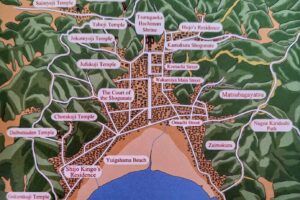
Afterwards, the Daishonin left Awa, his place of birth, and headed toward Kamakura, which was the center of government and politics at the time. From there, with the light of Myoho-Renge-Kyo, he started this journey to illuminate the world, where evil teachings and corruption were rampant, in order to save all living beings in the Latter Day of the Law and on into eternity.