15 November 1281 (Age: 60)
I have received the horse-load of polished rice and the sack of washed taro you sent and chanted Nam-Myoho-Renge-Kyo.
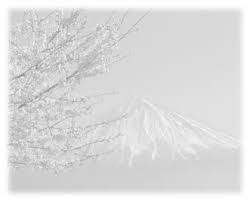
“Myoho-Renge-Kyo” is symbolically represented by the lotus The mahamandara flower, which is said to bloom in heaven and the cherry blossom, which blooms in the human world, are both beloved flowers, but the Buddha chose neither to represent the Lotus Sutra Of all the varieties of flowers, the Buddha chose the lotus blossom, in particular, to symbolize the Lotus Sutra and he had a reason for doing SO.
Some plants flower first and bear fruit later, while others bear fruit first and flower later. Some plants will sprout only a single flower and bear abundant fruit, while others will have numerous flowers but produce only a single fruit. And there are plants that do not flower but only bear fruit. There exist various kinds of plants; however, the lotus is the only one that flowers and bears fruit simultaneously.
All other teachings explain that one must first perform good deeds in order to later attain Buddhahood. It is, therefore, not clear whether it will ever be attained. However, the Lotus Sutra teaches that the hands used to hold the Lotus Sutra will immediately enter Buddhahood, and the mouth that chants the Daimoku will instantly become Buddha. This is similar to the reflection of the moon as it rises above the eastern mountains, which immediately appears to float on the surface of the water or a sound and its resonance occurring simultaneously.
The Lotus Sutra states, “Among those who hear this Law, there is not one who shall not attain enlightenment.” This passage means that if there are a hundred or even a thousand people who embrace this sutra, all will become Buddhas without exception.
Your letter mentions the anniversary of the passing of your father, the honorable Matsuno Rokuro Zaemon Nyudo. You say that since he had many children, there will likely be various kinds of memorial services and that unless the services are held in strict accordance with the teachings of the Lotus Sutra, they will be rites of slander.
With his golden mouth, Shakyamuni Buddha taught, “The World-Honored One has long set forth his expedient doctrines but will now reveal the truth.” Taho Buddha lent credence to Shakyamuni’s words proclaiming, “All the teachings of Myoho-Renge-Kyo are true.” To verify this, all the Buddhas of the ten directions extended their tongues upwards until they reached the Brahma Heaven1.
Southwest of Japan, across a great expanse of ocean, there is a country called China. In that country, there are some who revere the Buddha but not the gods, while there are others who revere the gods but not the Buddha. The circumstances in ancient Japan were most likely the same.
Be that as it may, in China there once lived a calligrapher named Wu-long who was the foremost calligrapher in his country. similar to [Ono no] Tofu or [Fujiwara no] Kozei in Japan. However, he detested Buddhism vowing never to transcribe any
Buddhist scripture. As his death drew near, he became gravely ill and summoned his son in order to convey his last wishes, saying “Because you are my son and your skill as a calligrapher is so much greater than mine, my legacy will live on. However, no matter what kind of evil forces may attempt to influence you, never transcribe the Lotus Sutra.”
Shortly thereafter, his five sense organs began gushing blood as if they were fountains. His tongue split into eight pieces and his body scattered to the ten directions. But his relatives, ignorant of the three evil paths, did not realize that these events were portents of his imminent fall into hell.
Like his father before him, the son named Yi-long, proved to be the greatest calligrapher in China. And in accordance with his father’s final will, he vowed never to transcribe the Lotus Sutra.
The great king reigning at that time was named Ssu-ma. He was a believer in Buddhism, and because he held the Lotus Sutra in particular reverence, the king wished to own the Sutra, written in the hand of the finest calligrapher of his kingdom. He therefore summoned Yi-long to commission the work.
But Yi-long replied, “Please allow me to decline your request so that I may comply with my father’s final will.” Upon hearing his explanation, King Ssu-ma reluctantly called upon another calligrapher to transcribe the entire Lotus Sutra.
However, the completed work did not meet the king’s expectations. So once again, the king summoned Yi-long into his presence and declared, “Because you told me of your father’s final wishes. I restrained myself and did not compel you to transcribe the Sutra, but now I must insist that you at least write the title, “Myoho-Renge-Kyo” for each of the Sutra’s eight volumes.”
As Yi-long pleaded again and again to be excused from this burden, the King grew irate and finally exclaimed, “You speak of your father but your father was my subject! If you persist in defying me and refuse to inscribe the titles because of your fear of being unfilial, know now that you will be charged with treason!” Even though it meant he would be disobeying his father, in order to avoid punishment, Yi-long succumbed to the king’s unrelenting demands and wrote out the titles of the eight volumes of the Lotus Sutra and presented his work to the king.
Upon returning home, Yi-long faced his father’s grave, and shedding anguished tears of remorse, lamented, “Father, I have surrendered to the king’s harsh command and in disobeying your prohibition against inscribing the titles of the Lotus Sutra, I have sinned and cannot reverse it.” He remained at his father’s grave for three days refusing to take nourishment, his death approaching
In the pre-dawn of the hour of the tiger, on the morning of the third day, losing consciousness, Yi-long felt as though he had entered a dream. As Yi-long looked up into the sky, he saw a heavenly being who looked to him like a painting of the deity Taishaku. Innumerable legions of his followers appeared, filling the heavens and the earth. Yi-long said, “May I ask who you are?” The being replied, “Do you not recognize me? I am your father, Wu-long. While I lived as a man, I was strongly attached to non-Buddhist teachings, harboring hatred towards Buddhism. I was especially hostile to the Lotus Sutra and as a result, fell into the Hell of Incessant Suffering.”
“Day after day, my tongue was ripped from my mouth hundreds of times. I suffered death time and again, only to find myself alive once more. In my despair, I beseeched the heavens for relief and prostrated myself upon the earth, all to no avail, I yearned to warn people in the human world of the sufferings that I had brought upon myself, but I had no means to do so.”
“Whenever you, my son, said that you were only following my wishes, your words turned into the very flames that tortured me, or were transformed into swords that rained down upon me from above. Your actions could not have been more unfilial! However, you were just abiding by my wishes and I was only suffering the natural consequences of my own deeds. Therefore, I could not rightfully bear a grudge against anyone.”
“When I became resigned to my fate, a golden Buddha suddenly appeared in the midst of the Hell of Incessant Suffering and recited, Even if those who have destroyed good causes fill the entire universe, they will without fail, attain Buddhahood if they hear the Lotus Sutra even once. The moment that this Buddha entered the Hell of Incessant Suffering, it was as if an inferno had been doused with water. With this, my anguish lessened somewhat, so I reverently placed my palms together and asked the Buddha who he was, to which the Buddha replied, ‘I am the character Myo, one of the sixty-four characters which make up the titles of the Lotus Sutra that your son Yi-long is currently transcribing. Since the title of each of the eight volumes of the sutra are composed of eight characters, a total of sixty-four Buddhas appeared becoming sixty-four full moons whose brilliance instantly bathed the Hell of Incessant Suffering with an all-illuminating light. And in accordance with the principle that all people and the lands in which they live are the life of Buddha, the Hell of Incessant Suffering was revealed to be the Land of Eternally Tranquil Light without changing its original nature.”
“I along with all of the other denizens of Hell, became Buddha seated upon a lotus blossom, and was allowed to ascend to the Inner Court of the Tushita Heaven2. I wanted to tell you this before all others.”
Yi-long protested, “It is true, my hand transcribed the characters, but how could that have saved you? Moreover, I did so against my will. How could what you say be true?”
To this his father replied, “You simply don’t understand! As my son, your hand is my hand and your body is my body. Therefore, it is as if I wrote the characters that flowed from your hand. Although you did not believe in the Lotus Sutra, your hand wrote the characters, and that is why I was saved. Suppose a child starts a fire that accidentally burns something. It is the same with the Lotus Sutra, for if one happens to embrace it even without sincerity, he will unquestionably become a Buddha. Now that you are aware of its supremacy, you must never slander the Lotus Sutra. Even though our offense was great, because we are laymen, it will be relatively easy to repent and expiate our slander.”
Later, Yi-long related his experience to the king, who replied, “This happened as a result of my request for you to transcribe the Lotus Sutra.” From this time forward, Yi-long was shown ever-increasing favor by the king, and all of the king’s subjects came to take faith in the Lotus Sutra.
Now, the late Goro was your son, and the dearly departed Lord Matsuno was your father. You are the late lord’s daughter. He is Please have Hoki-bo Nikko read and explain this letter to you. Since certain to have ascended to the inner sanctum of the Tushita Heaven I have written in haste, I have been unable to provide you with more detail.
With my deepest respect,
The fifteenth day of the eleventh month Nichiren
Reply to the wife of Lord Ueno
Notes
1. One of the thirty-two features of a Buddha, indicating truthfulness.
2. The Fourth Heaven in the World of Desire where Bodhisattva Maitreya resides.