Upon Publication of Shinyo
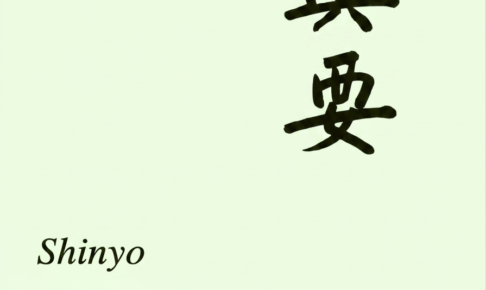
At this time, His Holiness the High Priest has granted his permission for the publication of an English language periodical for overseas members of the faith. The publication has been called Shinyo, which means “True Essence.” When we reverently see that our mis-sion to accomplish the propagation of True Buddhism throughout the world is both the will and the great aspi-ration of Nichiren Daishonin, it becomes natural that we members of the priesthood and laity persevere to cor-rectly spread, even if just slightly, the Daishonin’s True Law and True Doctrines to members of the faith in Japan and all countries of the world.
The priesthood was originally faced with a situation in which we ourselves refrained from explaining the doctrines of the sect in all the various foreign languages, or from directly promoting or participating in their propagation, because we entrusted the instruction of the overseas members to the SGL However, it turns out that in actuality, the Soka Gakkai has been carrying out the religious activities of SGI solely for the sake of the Soka Gakkai. Further, it is because today, the true colors of the Soka Gakkai and SGI’s immense slander and treach-erous desire to destroy the priesthood have been revealed that we priests must ourselves become the pillar of the worldwide propagation, strive to spread the teachings, and pioneer a fresh, true great path for worldwide Kosen-rufu in harmonious cooperation with all the sincere members of pure faith around the world. The publica-tion of Shinyo will play a vital role in the accomplish-ment of that mission.
I pray that the readers of Shinyo will not only be able to establish a closer bond with the “True Essence” of the True Doctrines of Nichiren Daishonin and continue to embody the instruction of His Holiness the High Priest in their own lives, but will also be able to fulfill the prac-tice of correct faith in Nichiren Shoshu, receive the great benefits of Myoho-Renge-Kyo and be bathed in the re-sulting joyous delight. With this prayer, I will close my publication message on this 1st day of January, 1993.
Kotoku Obayashi
Overseas Bureau Chief of Nichiren Shoshu
New Year’s Message : 67th High Priest Nikken Shonin
His Holiness the High Priest Nikken Shonin
I wish to offer my heartiest congratulations to all over-seas members of the faith of Nichiren Shoshu around the world at the dawn of another year. I trust that in greeting this brilliant New Year, each of you was able to vibrantly chant Daimoku in reverence for the boundless compassion of the True Buddha of the Sowing, Nichiren Daishonin.
The priesthood is currently pouring forth all of its en-ergy in an effort to continuously plant the seed of Myoho-Renge-Kyo in every corner of the globe, relieve the hearts of great numbers of people and open them to the source of true happiness which derives from contact with the bound-lessly compassionate heart of the True Buddha, the Daisho-nin, so that they may attain a life condition of tranquil free-dom.
It is expounded in the most important of all Buddhist teachings, the Lotus Sutra, that the brilliantly illuminated nature of the Buddha, called Myoho-Renge-Kyo, exists within the innermost depths of all life. But because people become besieged by greed, anger, stupidity, arrogance, and indecisiveness; and further because of attachment to such incomplete or mistaken views as: the existence of a perma-nent ‘self’ or ‘ego,’ the existence of such permanent extremes as the ‘self’ which continues, or oppositely, completely ceases to exist after death, and the non-applicability of the Law of Causality, it is not even remotely possible for people, solely of their own power, to perceive (much less bring forth) this nature. The teachings of Nichiren Daisho-nin, the True Buddha who made His appearance in the La ter Day of the Law, exist so that mankind can break through those obstacles and manifest that original heart of great bril liance. It is for this purpose that through His lifelong propa-gation of Myoho, Nichiren Daishonin was tempered by great persecution and thus re-awakened to the incompre hensible Law of the Lotus, the heart of the Buddha which since Kuon Ganjo, the time with no beginning and no end, and which never dying, dwells eternally. For that same pur-pose, He then inscribed the Dai-Gohonzon, with which he imbued the entirety of the benefit of His enlightened life, to serve as a mirror for the hearts of the people of the Latter Day of the Law.
The Buddha nature blooms within the hearts of all who reverently chant Nam-Myoho-Renge-Kyo with belief in this Gohonzon, and these people become deeply aware of that Law within themselves.
In the final analysis, the my riad problems of life, which go beyond the questions of East and West, boil down to the human heart. If we do not understand the root of all the sundry emotions, such as attachment, suffering, joy, anger, sorrow and pleasure, we will find ourselves interminably caught up in a deluge of instability, and will spend this, and countless future lifetimes, in continuous perplexity. The na ture of the Buddha, that is, the true embodiment of the Law of the Lotus, is the source of the heart, which exists univer-sally in all things, and through a true realization of which, we become free from, and further become able to correctly deal with, the multitudinous perplexities of the heart. Thus, belief in and the consistent chanting of Daimoku to the True Buddha Nichiren Daishonin’s Gohonzon of Myoho-Renge-Kyo, and perseverance for oneself and for others, are the fundaments by which the hearts of people throughout the world can be led to flowering, and the only path through which the source of the heart can be unlocked to achieve true self-realization.
The Daishonin states:
“Although this mandala of Nam-Myoho-Renge-Kyo is only five or seven characters, it is the Master of all of the Buddhas of the three existences, and these same characters assure that all women will also attain en-lightenment.” (Showa Shintei Gosho, vol. 2, p. 1011)
And the 26th High Priest Nichikan Shonin states
“This Gohonzon bestows limitless, infinite benefit, and Its unfathomable workings are vastly profound. There-fore, if you chant Nam-Myoho-Renge-Kyo with faith in this Gohonzon for even a short while, there is no prayer that will not be answered, no evil that will not be eradicated, no blessing that will not be bestowed and no reason that will not become clear.” (Fuji Shugaku Yoshu, vol. 3, p. 213)
To all members of the faith of Nichiren Shoshu around the world that long period during which your freedom was suppressed and you were forced into erroneous conduct by the Ikeda SGI has passed. Now is indeed the time that you should worship and conduct yourselves freely, and through the power of Myoho, joyfully expand our ring of unity. And with prayers for the steady advancement of the worldwide propagation and the good health of all of you, I conclude my New Year’s message.
January 1, 1993
Nikken
ーーーーーーーーーー
“Sutras preceding the Lotus sutra expounded that women, as well as people in the worlds of Leaming and Realization, could not attain Buddhahood. The Daishonin is affirming here that all living beings can achieve Buddhahood.
New Year’s Greeting : Reverend Kotoku Obayashi,Overseas
Reverend Kotoku Obayashi,
Overseas Bureau Chief
I wish to extend my warmest congratulations to the worldwide membership of Nichiren Shoshu at the be-ginning of this New Year, 1993. It is truly difficult for me to adequately express my joy that the entire priest-hood and laity of Nichiren Shoshu have vowed to per-severe under His Holiness, the 67th High Priest of the Head Temple, Nikken Shonin, in an invigorated, fine spirit of itai doshin, which anticipates our embarkation towards the advancement and development of a new Kosen-rufu, and the construction of the Buddha Land.
Last year, the Overseas Bureau of Nichiren Shoshu was engaged in dispatching our priests to such places as America, Brazil and many countries in Europe, as well as to India, Indonesia and other various ASEAN coun-tries, South Korea and Nationalist China. Through this we were able to both conduct activities including Gongyo, consultations and guidance meetings with peo-ple of pure faith who seek the correct faith and teach-ings of Nichiren Shoshu, and firmly embrace a great portion of the overseas membership.
Further, while six hundred and fifty overseas mem-bers were able to participate in the spring Mushibarai-e ceremony at the Head Temple, four hundred and fifty participated in the autumn Oeshiki ceremony, and an-other eight hundred were in attendance for the summer training course.
Moreover, not including those mentioned above who participated in either of the two great ceremonies or the summer training course, the number of overseas mem-bers of the faith who made a Tozan pilgrimage last year reached as many as three thousand five hundred.
By far, a greater number of overseas members 別 now coming on Toan to the Head Temple than whes the Soka Gakkai managed the operation of group Tozans and SGI conducted the Totans of overstas members of the faith.
It is over a year since the Soka Gakkai and SGI were excommunicated, and I feel that this year brings the arrival of a vitally important era. It is more than likely that disturbances, insults, libel and slander by members of SGI will escalate on an ever greater scale We will not flinch. I believe that it is rather because these are the times in which we live that both based on the only Dai-Gohonzon in this world, and in accordance with Nichiren Daishonin’s golden words of profound illumination, we must fulfill our “practice of faith as it is taught by the True Buddha Nichiren Daishonin,” and with further resolution, follow through in our practice both for ourselves and for others. Here, I would like to discuss the fortune of one who “practices faith as it is taught by Nichiren Daishonin.”
First, one who fills each day anew with a heart which unwaveringly seeks the Buddha through “prac tice as it is taught by Nichiren Daishonin” will know no stagnation, but will always advance. Whichever sector of society one ventures into, so long as one has the strength of faith which does not stagnate, one will even-tually be able to become a person of great capability.
Second, as is stated by the passage, “Faith is the entrance to the path and the mother of benefit,” one who consistently perseveres with utterly pure faith in the one and only True Object of Worship can accumu late the most treasured of all benefits.
Third, one who continuously carries through in “the practice of faith as it is taught by Nichiren Daishonin will also generally make no serious blunders in life One who constantly reveres the teachings of Nichiren Daishonin and the instruction of the High Priest, and continually fulfills a faith that is earnest and pure, will not be imbued with evil, neither will one give oneself up to wickedness nor sink into depravity.
Fourth, one who always carries out “the practice of faith as it is taught by Nichiren Daishonin” will neither be swollen with pride nor become arrogant, not even if amidst favorable personal circumstances or at the heights of prosperity. People usually create problems when their sails are full before a favorable wind, or when they are at the peak of prosperity. But those who constantly persevere in “the practice of faith as it is taught by Nichiren Daishonin” can strictly govern themselves no matter what position they find themselves in. Finally, whether it be within the family, at the job, in terms of livelihood, or in life in general, one who “practices faith as it is taught by Nichiren Daishonin” can conquer all adversity. Nichiren Daishonin states in Reply to Kyo’o: “…disaster will be transformed into joy. You should summon up faith, and pray to this Gohon-zon. Then what is there that cannot be accomplished?” (Showa Shintei Gosho, vol. 2, p. 1006) And in the Oko Kikigaki, the Daishonin instructs, “It is most important that you practice as it is taught by the True Buddha.” (Showa Shintei Gosho vol.3, p. 2918)
I pray that the importance of “practice as it is taught by Nichiren Daishonin” will be unfailingly engraved on all of your hearts, so that you will be able to go to any lengths as disciple believers of the Daishonin in the splen-did practice of strong, vigorous faith, and further, be-come true victors in life. And with prayers for every-one’s continued health and great happiness, I conclude my New Year’s greeting.
January 1, 1993
Kotoku Obayashi
Overseas Bureau Chief
Nichiren Shoshu
High Priest Nikken Shonin’s Guidance
Address to the Members of Tokyo Territory No. 1
Given on May 24th, 1992, at Josenji Temple, Sumida Ward, Tokyo
I am visiting here today to address the members of Tokyo Territory No. 1, and am grateful that through the participation of so many believers from the various tem-ples throughout the Territory, we have been able to hold this event so splendidly. Thank you everyone for all of your generous efforts.
With our sect in its recent situation, the member’s awareness of the local temples has increased consider-ably, with the result that in growing numbers, they have been able to free themselves from the tenacious grasp of the Soka Gakkai to join their local temples and carry out their faith and practice correctly. This phenomenon has reached national proportions of the 590 local temples, 262 of them had organized Hokkeko groups at the end of the year before last. It’s been just 16 months since then, and yet new Hokkeko chapters have already been orga-nized at another 80 temples. That leaves about 100 tem-ples without a Hokkeko, but I have a feeling that most of them will have inaugurated a chapter by the end of this year.
These events are headed toward the construction of a structure which will lead to the rejuvenation of our de-nomination, with priests and lay members working coop-eratively to protect the True Law and advance towards Kosen-rufu. And because of this, even though I am grow-ing older and less useful, after a great deal of thought about the matter, I decided that it would be meaningful if I made the time to visit each Territory around the country to meet with everyone directly, and convey my thoughts and feelings about the Daishonin’s teachings.
For that reason, the members of Territory No. 2 gath-ered for a meeting yesterday at Daiganji Temple in Shin-juku Ward, and here we are today at Josenji Temple for a similar gathering of the members of Territory No. 1. Af-ter all, since Tokyo is always at the forefront when be-ginning undertakings like these, I felt that I should make Tokyo the first leg of my national tour.
In the Heritage of the Ultimate Law of Life, the Dai-shonin gives strikingly profound guidance which espe-cially relates to our current situation. “Though many in body, all of Nichiren’s disciples and believers should chant Nam-Myoho-Renge-Kyo with one heart, transcending all differences among themselves to become as inseparable as fish and the water in which they swim. This is the basis for the universal transmission of the ultimate law of life and death. Herein lies the true goal of Nichiren’s propagation. When you are so united, even the great hope of Kosen-rufu can be fulfilled without fail. (Showa Shintei Gosho, vol. 1, p. 745)
I’m sure that you hear this passage often, but I be-scending all differences among themselves” is vitally im-portant, and particularly pertinent to the current rejuvena tion of the denomination, where priests and laity are unit-ing to protect and spread the Law. I believe that it is these congregations which manifest faith that truly tran scends all differences.”
In short. I believe that it is in the faith of everyone gathered here today that this desire to transcend all dif-ferences “to become as inseparable as fish and the water in which they swim” is naturally manifesting itself in the form of unity between the priesthood and laity.
I have constantly borne this principle in mind since assuming my position as High Priest. And in receiving the honor of protecting the Law, I have simultaneously felt the responsibility to open my heart to everyone, no matter who they were or what organization they belonged to, with the conviction that we should be “as inseparable as fish and the water in which they swim” But a great deal has happened. Foremost were grave errors concern-ing the Daishonin’s Buddhism by a certain leader of an organization called Soka Gakkai. These errors occurred due to his arrogance and distorted views, which started to appear back in the days of Nittatsu Shonin. Those errors included how one should understand the True Object of Worship through faith, and more specifically extended to his fundamental understanding of the core significance of the Daishonin’s will regarding the establishment of the ultimately important High Sanctuary of the Essential Teachings, which is the consummation of the Three Great Secret Laws. In dealing with these errors, Nittatsu Sho-nin was greatly pained as to how to correct them and lead the Soka Gakkai in the proper direction, while still re-specting the Gakkai’s original way of doing things in its role as guardian lay organization of Nichiren Shoshu, and thereby help them attain true benefit.
Nittatsu Shonin’s actions had various ramifications Although I cannot go into all of the details here and now, we finally drew the line, and all of the problems were settled on May 3, 1979. Nittatsu Shonin instructed that so long as the Soka Gakkai did not overstep its bounds as a lay organization, its members should be increasingly active in association with Nichiren Shoshu to work for the attainment of Kosen-rufu. Two months later, Nittatsu Shonin passed away.
As I took over from Nittatsu Shonin, his spirit filled me to the core. I constantly felt that like “fish and the water in which they swim,” “transcending all differences among themselves,” without the slightest discrimination, the priesthood and laity must unify and head for Kosen-rufu in that all-embracing bond. And I feel that I did my best to put this conviction into practice.
But unfortunately, because the Gakkai was mistaken about the very basis of the Daishonin’s teachings, it was inevitable that as time passed, those errors would come to the surface little by little.
By strange coincidence, this became particularly ob-vious in July, August, and up through October of 1990, just the year we were celebrating the 700th Anniversary of the Head Temple’s founding. I cannot go into details here about everything that happened because there just wouldn’t be enough time. But in any case, the priest-hood continuously hoped that in some way, the feelings of both parties could be mutually understood, and I be-lieve that we dealt with the matter properly.
The Soka Gakkai vociferously and arbitrarily alleges that “there’s no dialogue,” but that is absolutely untrue. We tried to hold discussions with them based on the belief that as long as someone is sincere, they can give proper answers to perfectly legitimate questions. But it was rather the Soka Gakkai who, until the end, refused any such communication.
Be that as it may, at the root of all this is the slander of arrogance that germinated and grew within the hearts of the executive leaders of the Soka Gakkai. In Reply to Lord Soya, there is a passage that reads: “No matter how sincerely one believes in the Lotus Sutra, any slan-der against its teachings will surely cause him to fall into hell, just as one crab leg will ruin a thousand pots of lacquer.”1 (Showa Shintei Gosho, vol. 2, p. 1549)
This passage means that no matter how much someone might boast of their faith in the Lotus Sutra, if that person has a fundamentally slanderous heart, the benefits of that faith will be obliterated and revert to nothing. without fail.
At this point, I will talk about how “slander” mani-fests itself. It comes in the form of the Fourteen Slan-ders, with which I am sure you are all familiar, namely,
(1) arrogance,
(2) negligence (of Buddhist practice),
(3) arbitrary, egotistical judgement (of Buddhist teachings),
(4) (criticism of the True Law based on) shallow, self-satisfied understanding,
(5) (the lack of yearning for Bud-dhism due to) attachment to earthly desires,
(6) lack of understanding (of Buddhist doctrine, resulting in conceit and the lack of a seeking spirit),
(7) disbelief (in Bud-dhism),
(8) aversion (to Buddhism, which results in criti-cism,
(9) doubt (of Buddhism, which causes one to be irresolute),
(10) vilification, defamation (of Buddhism),
(11) scorn, contempt (for Buddhists),
(12) hatred (of those practicing Buddhism),
(13) jealousy (of Buddhist practi-tioners) and
(14) resentment, the bearing of grudges (against Buddhists).
When you compare the substance of these Fourteen Slanders with the Soka Gakkai’s ac-tions, you notice that they indisputably coincide with all Fourteen Slanders they way the Gakkai and its mem-bers currently display their hostility towards the priest-hood day after day and night after night with denuncia-tions, abusive language, and defamatory remarks. It is not just one or two. Nor is it just three or four, but all fourteen of the slanders which are clearly manifest in the Soka Gakkai’s current actions and their betrayal of the Daishonin’s Buddhism.
But with developments having come this far, it is imperative for us as priests to unconditionally and cor-rectly protect the Law as well as establish a path for the correct practice of faith with the hope of saving even one of those people who have lost their senses. At the same time, as I have mentioned on numerous occasions, the Daishonin’s True Teachings teach us how to eradicate individual evil karma and allow us to attain the great benefit of enlightenment as common mortals, and they firmly point the way to Kosen-rufu through extending this benefit to all other living beings. So I pray with all my heart that all of you will persevere together with us the priesthood, in true concord, to protect and propagate the True Law.
I conclude with heartfelt prayers that today will be an impetus for you to further deepen your faith and prac-tice. And once again, thank you for all of your time and effort today.
ーーーーーーーーーー
1 It is said that the chemical make-up of a crab is such that when put into lacquer, it ruins lacquer and that the potency of a single creb’s leg can spoil as many as a thouthand parts of lacquer.
The Significance of Gongyo
In Nichiren Shoshu, the most important signifi-cance of Gongyo can be found within the titles and mean-ings of the actual sentences of the silent prayers. In other words, we reverently perform Gongyo based on the meaning of the First Prayer, which is an offering to the Shoten Zenjin, who are vitalized, or even better, nour-ished by the flavor of the Law of Myoho-Renge-Kyo, and the Second Prayer, which is an offering to the Dai-Gohonzon, the Object of Worship of the Essential Teach-ings, or the Treasure of the Law. We conduct the Third Prayer as an offering to the Treasure of the Buddha, Nichiren Daishonin, and also as an offering to the Trea-sure of the Priest Nikko Shonin, Nichimoku Shonin and all the other successive High Priests of Nichiren Shoshu. In the Fourth Prayer, we pray for the attainment of the Great Aspiration of Kosen-rufu, the eradication of all our past slanders against the Law, and our enlighten-ment in this and all future existences. In the Fifth Prayer we pray for all of our deceased ancestors, including our deceased fathers, mothers, brothers and sisters, and con-clude with the offering of prayers for the salvation of all existence.
The Horen Sho states: “It is explained that the benefits of one who extols and makes offerings to the Votary of the Law in the Latter Age, is 10 quadrillion times greater than that of making offerings through the suitable thoughts, words and deeds of faith for a period of one entire kalpa to the life and body of Shakyamuni Buddha” (Showa Shintei Gosho, p. 1195) The fact that the benefit of making praise and offerings to the soul of Nichiren Daishonin embodied within the Gohonzon to-gether with the Daishonin himself, provides 10 quadril-lion times more benefit than that of making offerings to the life and body of Shakyamuni Buddha during Shaky-amuni’s lifetime, is pointed out in both the Lotus Sutra and the Daishonin’s Gosho.
The second significance of doing Gongyo is in order to offer our sincere requitals of gratitude to the Three Treasures of the Buddha, the Law and the Priest. The Daishonin states in the Kaimoku Sho (Opening of the Eyes) The disciples of the Buddha must under-stand and know how to repay the four types of obliga-tion.” (Showa Shintei Gosho, p. 766) We offer the Sec-ond and Third Prayers in order to repay our debt of gratitude to the Three Treasures. The Fourth Prayer is to pray for the salvation of and repay our debt of gratitude to all existence, as well as to pray for the attainment of Kosen-rufu. The Fifth Prayer is connected to our repay-ing of gratitude to our parents and ancestors.
The third significance is that it is indeed this Gongyo which is based on the transmission of the inher tance and ceremonies of the Daishonin’s Buddhism. It is the basis of faith for the only truly significant practice in the age of Mappo, as taught by the Buddha. The Daishonin notes in the Eighteen Perfections Gosho, “My disciples and followers must practice the correct teach-ings as I do.” (Showa Shintei Gosho, p. 2181)
The fourth significance is that when we do Gongvo, we bathe ourselves in the benefits of the Go honzon and develop life conditions of happiness. Gongyo is the source and generative power through which we attain Buddhahood. Nichiren Daishonin states: “When we revere Myoho-Renge-Kyo in our hearts as the object of worship, the Buddha nature within us is summoned forth and manifested by our chanting Nam-Myoho-Renge-Kyo, this is what is meant by ‘Buddha… When with our mouths we chant Nam-Myoho-Renge-Kyo, the Buddha nature within our hearts, being summoned, will invariably emerge.” (How Those Initially Aspiring to the Way Can Attain Buddhahood through the Lotus Sutra, Showa Shintei Gosho, pp. 1646-1647). This passage precisely shows us the importance of the True Object of Worship and the Daimoku of the Essential Teachings together with the principle of how we as common mor-tals can attain Buddhahood as we are.
The fifth significance is that through our daily practice of Gongyo we are able to polish our minds and bodies, eradicating the slanders from our impure and sullied hearts and bodies, and transform our lives, purn-fying the six senses. Herein lies the importance of Gongyo. Concerning this point, there is an instruction from the Daishonin in the Issho Jobutsu Sho (On Attain-ing Buddhahood), in the very famous passage that reads “Arouse deep faith, don’t give into laziness and polish yourself night and day. How should you do it? Only by chanting Nam-Myoho-Renge-Kyo.” (Showa Shintel Gosho, p. 127)
Furthermore, if I may delve just a little more into this particular point, Gongyo is also the way in which all living beings can achieve their desires. In Reply to Kyo’o, the Daishonin states: ” misfortunes will change into happiness. Muster your faith and pray to the Gohonzon. Then what is there that cannot be achieved?” (Showa Shintei Gosho, p. 1006) As disci ples and believers of Nichiren Daishonin, realizing and basing our practice on the aforementioned great signifi-cances, we perform Gongvo to amass great fortune in our lives and strive to accomplish the original desire of Nichiren Daishonin, that is, Kosen-rufu.
The Significance of Reciting the Hoben and Juryo Chapters
In Nichiren Shoshu, during Gongvo we recite the Hoben and Juryo chapters of the Lotus Sutra. The true significance of reciting the floben chapter, which di-vulges the heart of the Provisional Teachings of the Lotus Sutra, lies in refuting all the pre-Lotus Sutra Hina-yana and Provisional Mahayana Teachings and reveal-ing the true enlightenment inherent within the Essential Teachings of the Lotus Sutra.
The Juryo chapter is the heart of the Essential Teachings of the Lotus Sutra and as we recite the true meaning that exists hidden in the depths of the Juryo chapter, we refute not only the Provisional Teachings of the Lotus Sutra, but also the Buddhism of the Harvest (of Shakyamuni) and reveal the extremely profound ben-efit of Myoho-Renge-Kyo in the depths of the Juryo chapter.
With the practice of the recitation of the Hoben and Juryo chapters, we correctly chant Daimoku believing in the Dai-Gohon-zon and Myoho-Renge-Kyo of Kuon Ganjo. The Daishonin states in the Gassui Sho (On Reciting the Hoben and Juryo chap-ters): though no chap-ter of the Lotus Sutra is negligible, among the en-tire twenty-eight chapters, the Hoben and Juryo chap-ters are particularly out-standing The remaining chapters are all, in a sense, the branches and leaves of these two chapters” (Showa Shintei Gosho, p. 473) And in the Akimoto Gosho, He notes, “The Buddhas of the Three Existences and Ten Directions will without a doubt plant the seed of the Five Characters of Myoho-Renge-Kyo” (Showa Shintel Gosho, p. 2077)
Attitude and Posture During Gongyo
One should have a correct appearance, posture and attitude when offering the recitation of Gongve and Daimoku to the Gohonzon. One may sit either in the traditional Japanese, or seiza fashion, cross-legged in western style, or in a chair. However, what is important to remember is that no matter which style one chooses, it should always be done out of profound respect for the Gohonton. Therefore, one should sit up straight with good posture, placing the right and left hands together in prayer centrally on the chest with both elbows resting evenly against the sides of the body. If one prefers to use a chair, then both feet should be properly touching the floor, one should not sit in a casual manner (askew, with legs crossed, or the like).
When reciting Daimoku or Gongyo, one’s eyes should be focused on the character “Myo” in the center of the Gohonzon, one’s voice should have a speed that is properly matched to the rhythm of one’s breathing, the volume should be moderate, one should chant strongly, correctly, and clearly pronounce each word, syllable and letter, and when reading the silent prayers, one should concentrate to the fullest in order to sincerely offer the silent prayers to the Gohonzon.
During Gongyo, it sometimes occurs that one has random or distracted thoughts. However, one should not be swayed by these random thoughts, but should have strong confidence that if one practices this Bud-dhist training with correct faith to this marvelous Go-honzon, without a doubt, one will all be able to manifest the greatest of benefits in one’s life. Day by day, one should carry out one’s practice with a fresh spirit, and put forth the utmost effort to do one’s best and most concentrated Gongyo.
As a standard rule, Gongyo is done twice daily, once in the morning and once in the evening. There is no set time to do Gongyo. However, according to one’s own life style, one should choose a time that is most conve nient, and then do one’s best to make Gongyo the most im portant aspect in daily life.
Note:
The references from the Gosho that have been quoted here have been taken from the Showa Shintei Go-sho, the Gosho issued by the Nichiren Shoshu Priesthood. It was first edited and pub-lished in April of 1971 by the Fuji Gakurin of the Head Temple Taisekiji, under the auspices of the 66th High Priest off Nichiren Shoshu, Nittatsu Shonin. This Gosho differs from the Gosho Zenshu and the Major Writings of Nichiren Daishonin in that the writings published in the Showa Shintei (New Edition) Gosho appear in the precise order in which they were initially written by the Daishonin and in their entire original form, that is all archaic Chinese characters and texts have been left in tact, and no modifications have been made.
ーーーーーーーーーー
1. Four types of obligation One’s debt of gratitude to one’s parents, teacher, sovereign and the Three Treasures of Bud-Chian
2. Cerxmonies Denotes Kegi, the practice of faith as mani fested through action and as taught by the Buddha, ie, cere monies, rites and rituals.
The Silent Prayers
This is the official translation of the Silent Prayers appearing in The Liturgy of Nichiren Shoshu, which will be available very shortly to members of the faith around the world.
First Prayer-Offering to the Shoten Zenjin
I sincerely pray that Daibontenno, Taishakutenno, Dainittenno, Daigattenno, Daimyojotenno and all the other Shoten Zenjin, sworn guardians of the Lotus Sutra, may increasingly be nourished by the power of Myoho-Renge-Kyo, so that they will be able to continually pro-tect those who embrace True Buddhism.
Chant Nam-Myoho-Renge-Kyo three Times
Second Prayer – Offering to the Dai-Gohonzon
I express my sincere devotion to the Dai-Gohonzon the soul of the Juryo chapter of the Essential Teach-ings and the Supreme Law concealed within its depths, the fusion of the realm of the Original Infinite Law and the inherent wisdom within the Buddha of Kuon Ganjo, the manifestation of the Buddha of Intrinsically Perfect Wisdom, the eternal coexistence of the Ten Worlds, the entity of Ichinen Sanzen, the oneness of the Person and the Law, and the Supreme Object of Worship of the High Sanctuary. I also express my heartfelt gratitude for Its beneficence and pray that Its profound benevolent power may ever more widely prevail.
Chant Nam-Myoho-Renge-Kyo three times
Third Prayer – Offering to Nichiren Daishonin and the Successive High Priests
I express my sincere devotion to the Founder of True Buddhism, Nichiren Daishonin, the boundlessly com-passionate Buddha who revealed the True Cause of Original Enlightenment, who possesses the Three En-lightened Properties, and whose Three Enlightened Properties comprise His single being, whose benefi-cence transcends the Three Existences, and who pos-sesses the Three Virtues of sovereign, teacher and par-ent. I also express my heartfelt gratitude for His benefi-cence and pray that His profound benevolent power may ever more widely prevail.
Chant Nam-Myoho-Renge-Kyo three times
I express my sincere devotion to the second High Priest Byakuren Ajari Nikko Shonin, the first among the Treasure of the Priest and the Great Master of Propaga-tion who directly received the Living Essence of the True Buddha from Nichiren Daishonin. I also express my heartfelt gratitude for His beneficence and pray that His profound benevolent power may ever more widely prevail…
Chant Nam-Myoho-Renge-Kyo three times
I express my sincere devotion to the third High Priest Nudakyo Ajari Nichimoku Shonin, the Master of the Seat of the Law, who directly inherited the Living Essence from Nikko Shonin. I also express my heartfelt gratitude for His beneficence and pray that His profound benevo-lent power may ever more widely prevail,
(Silently) Nam-Myoho-Renge-Kyo, Nam-Myoho-Renge-Kyo, Nam-Myoho-Renge-Kyo
I express my sincere devotion to the fourth High Priest Nichido Shonin, the fifth High Priest Nichigyo Shonin and all the successive High Priests, who have in-herited and correctly handed down the Living Essence. 1 also express my heartfelt gratitude for Their beneficence and pray that Their profound benevolent power may ever more widely prevail.
Chant Nam-Myoho-Renge-Kyo three times
Fourth Prayer-Prayer for Worldwide Propagation
I sincerely pray for the attainment of the Great Aspi-ration of the True Buddha – Kosen-rufu, the worldwide propagation of the Buddhism of the True Cause through the power of Myoho-Renge-Kyo.
Chant Nam-Myoho-Renge-Kyo three times
I pray to eradicate my many past and present slanders against the Law, and to continually purify and deepen my faith and practice so that I may attain enlightenment in this and all future existences.
(Offer personal prayers here.)
Chant Nam-Myoho-Renge-Kyo three times
Fifth Prayer – Memorial Prayers for the Deceased
I pray that all my deceased relatives, all deceased Nichiren Shoshu believers, and all others who have de-parted this life may attain Buddhahood through the power of Myoho-Renge-Kyo. Nam-Myoho-Renge-Kyo
(Offer special memorial prayers while sounding the bell contin ously)
Chant Nam-Myoho-Renge-Kyo three times
May the impartial benefits of Myoho-Renge-Kyo spread equally to the farthest reaches of the universe so that I together with all other existence, may attain the tranquil state of enlightened life.
Chant Nam-Myoho-Renge-Kyo three times
Benefits Fail to Emerge Due to Lethargy and Lack of Wisdom
from Sunday Lectures by Rev. Kotoku Obayashi
Overseas Bureau Chief
If a person gets a tip about an easy way to make an smooth profit and then falls victim to fraud, even though the swindler was evil, the person who fell for his sweet talk in the first place obviously made a big mistake. Even in the world of faith, many malicious doctrines and sordid religions run rampant. But it must be said that it is due to one’s own dishonest faith and lack of wisdom that one is misguided by these kinds of perverse religions, and that life runs amuck.
In terms of the Daishonin’s teaching of Myoho, since the time of the Daishonin up until the present day, multitudes of priests and lay believers have continued to plant the seeds of unfathomable benefit which lead to ultimate happiness within the lives of believers and non-believers alike, through the compassionate and enlightening prac-tice of shakubuku.
We who are able to practice this correct faith in this day and age owe a debt of gratitude to those priests and lay believers for their great compassion. But there are people who, in spite of the fact that they have been able to come into contact with the Daishonin’s True Buddhism, the True Doctrine of the True Master, and are able to practice the greatest faith in the world, instead of having firm belief in that noble conviction, due to their own lack of vision, come and say, “Even though I’ve taken faith in this religion, not even the slightest good thing has come my way,” or, “I’m not getting any benefits.”
Shutting their eyes to their own lack of faith, neither doing Gongyo nor practicing shakubuku, ignoring the truth of faith, the Law of cause and effect, doubting the Gohonzon, doubting the Daishonin, these people blame the Gohonzon as if it were due to the Gohonzon’s lack of power that they receive no benefits, or again, malign faith in Nichiren Shoshu, as if there were some mistake or incompetency in the faith itself. But if one will cor-rectly and consistently practice faith based on the True Object of Worship, the Gohonzon, adhering to the doc-trines and instructions of the Buddha and using good judgment, propriety will produce great results, and good causes will inevitably give birth to good effects. How-ever, it is those very people who, forgetting their own lethargy, blame everything on the Gohonzon and the faith. That’s like the person who blames others for their own troubles, but when he himself gets lost on the way to visit a friend says, “Who in the world built a road way out in the middle of nowhere?” Or it’s like the willful patient who won’t take the medicine that a doctor has compounded expressly or him, but instead turns to alcohol or harmful drugs, and then blames the doctor be-cause his illness isn’t getting any better.
In The Selection of the Time, the Daishonin poses the questions: “Is it the fault of the man who builds a road if someone loses their way on that road? Or if a sick person, repelled by the medicine a good physician has given him, dies because he refuses to take it, is it the fault of the good physician?”
Similar kinds of admonitions appear in the Nirvana Sutra; “If a good physician who is familiar with all kinds of illness prescribes medicine for one who is suf-fering from a certain illness, and if the patient doesn’t drink the medicine, is it the fault of the physician? Or suppose there is a great benefactor who wishes to give people all that he possesses. If there is anyone who does not even attempt to receive his generosity, is it the fault of the benefactor? When the sun has risen and every-thing is clearly visible, if a blind man cannot see the road, is that the fault of the sun? If there is a great tract of land which possesses the capability of bearing fruit equally throughout, but the farmer does not plant a por-tion of the land, is it the fault of the land that no crops grow there?”
We must realize that people receive no benefit from this practice solely because of their own lack of faith, and that to blame the teachings of the Daishonin is total-ly absurd. I truly believe that such people must dig far more deeply into the Daishonin’s instructions to find out what this faith really is. In On Rajagriha Castle, the Daishonin states: “Whether your prayers are answered or not depends totally on your own faith. It is in no way Nichiren’s responsibility.” We must never forget the great fundamental principle, “Faith is the fundamental source of Buddhism,” and must make it the root of our own daily practice.
The Person and the Law
From an English Language Oko Lecture, presented at Myokoji Temple, Tokyo
by Reverend Yosai Yamada, Chief Priest of the Sessen-bo at Taisekiji
In this lecture, I would like to explain the ultimate principle of Buddhism, which in Nam-Myoho-Renge-Kyo of the Three Great Secret Laws, and how Nichiren Daishonin embodied it as the object of worship so that all people in the Latter Day of the Law could attain Buddha-hood. I am aware that you have been taught many things about this. I know that you have been told that if there is a person to whom you should have devotion, it should be the Daishonin. Further, I know that you have been taught that if there is a Law which you should revere, it is Nam-Myoho-Renge-Kyo. Moreover, I know that you have been told to treasure and hang on to your Gohonzon, no matter what happens. But obviously the Gohonzon appears not to be a person, although perhaps it could contain a law. For these reasons, I have chosen this subject of The Person and the Law, to clarify the Object of Worship in Nichiren Shoshu Buddhism.
Honzon, or object of worship, means something which one reveres above all things — something to which one devotes one’s life. In the Record of the Orally Trans-mitted Teachings, or Ongi Kuden, Nichiren Daishonin teaches us: “”Nam’ derives from Sanskrit and signifies devotion. There are two objects of devotion: the Person and the Law that is, devotion to Shakyamuni and the Lotus Sutra.”
(Showa Shintei Gosho vol.3, p.2739)
Doesn’t this appear to contradict what you have been taught? The Daishonin says the Person is Shakyamuni, and the Law is the Lotus Sutra. You must be asking, “What is the meaning of Shakyamuni, and what is the meaning of the Lotus Sutra?” According to Exegesis on “The True Object of Worship” set forth by the twenty sixth High Priest Nichikan Shonin, there are six types of Shakyamuni. They are:
1. The Shakyamuni of the Tripitaka teaching,
2. The Shakyamuni of the connecting teaching,
3. The Shakyamuni of the specific teaching,
4. The Shakyamuni of the theoretical teaching of the Lotus Sutra,
5. The Shakyamuni of the essential teaching of the Lotus Sutra,
6. The Shakyamuni of the teaching hidden in the depths of the Lotus Sutra.
Now you must be asking: “Why are there so many Shakyamunis?” It is because the name Shakyamuni means the same thing as Buddha. So, of the teachings I men-tioned, the first five identities were manifested by the his-torical Shakyamuni Buddha who appeared in India as Gautama Buddha. The last one, the Shakyamuni of the teaching hidden in the depths of the Lotus Sutra, was mani-fested by Nichiren Daishonin, who appeared in the Latter Day of the Law and expounded Nam-Myoho-Renge-Kyo, the ultimate Law hidden in the depths of the Juryo chapter of the Lotus Sutra.
Therefore, from the viewpoint of the Daishonin, the Shakyamuni I mentioned in the above passage is not Gautama Buddha of India. In this quotation, Shakyamuni indicates the Original Buddha who expounds the supreme teaching of Nam-Myoho-Renge-Kyo, which we ourselves cannot find, but which the True Buddha can reveal from the depths of the Juryo chapter of the Lotus Sutra. The Daisho-nin used Shakyamuni and Buddha interchangeably whenever he interpreted the Lotus Sutra from the viewpoint of his own enlightenment. They have exactly the same meaning.
Now, your next question must be, “Then what is the Lotus Sutra cited in the above passage?” According to the doctrine of Nichiren Shoshu, there are three kinds of su-preme teaching of the Lotus Sutra which can lead people directly to enlightenment, in accordance with people’s ca-pacity and the times. They were expounded for the people of the Former, Middle and Latter Days of the Law. The Lotus Sutra of the Former Day of the Law is Shakyamuni’s sutra of the same name. The Lotus Sutra of the Middle Dav of the Law is Tien T’ai’s Maka Shikan, which expounds the principle of ichinen sanzen, and the Lotus Sutra of the Latter Day of the Law is Nam-Myoho-Renge-Kyo of the Three Great Secret Laws. The Lotus Sutra indicated in this passage is neither that of the twenty-eight chapter Lotus Sutra, nor T’ien T’ai’s Lotus Sutra, ichinen sanzen. The Daishonin writes in, Reply to Lord Ueno: “Now in the Latter Day of the Law, neither the Lotus Sutra, nor any other sutra is valid. Nam-Myoho-Renge-Kyo alone is valid.” (Showa Shintei Gosho vol. 2, p. 1816)
Whenever the Daishonin refers to the Lotus Sutra as the teaching to be spread in the Latter Day of the Law, he means the essence of the Lotus Sutra, Nam-Myoho-Renge-Kyo. Thus, devotion to Shakyamuni and the Lotus Sutra means devotion to Nichiren Daishonin and Nam-Myoho-Renge-Kyo, the Law only the True Buddha could ex-pound. So what you have learned you should revere about the Person and the Law, so far is true.
The object of wor-ship to which my expla-nation refers can be viewed in these two ways from the standpoint of the Person and from the standpoint of the Law. The Person is still Nichiren Daishonin, and the Law is still Nam-Myoho-Renge-Kyo. Nichiren Daishonin be-came enlightened to the Law of Nam-Myoho-Renge-Kyo within the workings of the universe in the infinite past, and realized that it was also the entity of his own life.
Furthermore, he inscribed this ultimate Law – the entity of his life in the form of a mandala, so that future gen erations could share his enlightenment. This mandala is what we call the Gohonzon, the True Object of Worship, and as we read through the Gosho, we find that depending upon the situation, the Daishonin at times explains the ob-ject of worship in terms of the Person, and at other times in terms of the Law.
The following passages approach the object of wor-ship in terms of the Person. The Gosho, On the Three Great Secret Laws, says: “The Object of Worship indi-cated in the Juryo chapter is Shakyamuni, the Buddha al-ways in this world, who has possessed the three enlight-ened phases of life since the time without beginning.” Who is this Buddha who is always in this world? By now you know that this Shakyamuni is the Original Buddha from Kuon Ganjo, the Shakyamuni of the universal and unchanging Law hidden in the Juryo chapter of the Lotus Sutra.
In Requital for the Buddha’s Favor, the Daishonin writes: “Throughout the world, as well as in Japan, the people should all revere the Shakyamuni of the essential teaching as the Object of Worship.” Who is this “Shakyamuni of the essential teaching?” It is the Buddha of the revealed teaching, Nam-Myoho-Renge-Kyo.
In On Persecutions Befalling the Buddha, the Daisho-nin writes: “Had it not been for the ad-vent of Nichiren in the Latter Day of the Law, the Buddha would have been a great liar and the testi-mony given by Taho and all other Buddhas would have been false. In the twenty-two hundred and thirty years since the Buddha’s death, Nichiren is the only person in the whole world to fulfill the Buddha’s prophecy.
(MWN vol. 1, p. 240) And of course this is true. Many beings and representatives assembled at Eagle Peak when the Bud-dha preached the Lo-tus Sutra. A great treasure tower rose out of the earth, and Taho Buddha said in a great voice, “Excellent! Excellent, Shakyamuni. All that you have said is true.” Thereafter, this teaching was transferred to a magnificent figure for future propagation. All beings returned to their respec-tive worlds, but the sound of the Law embodied in this teaching, that could make even evil men and those of in-corrigible disbelief into Buddhas in this world, was never heard on Eagle Peak.
In the Opening of the Eyes, twenty-two hundred and thirty years later, Nichiren Daishonin, facing his con-temporary Japan, wrote: “I, Nichiren, am sovereign, teacher, father and mother to all the people of Japan.” These words were written in the face of an imminent na-tional disaster. Of what use is a Buddha if he remains apart from the crises of his contemporary society without comment when he knows the way to avoid calamity? Nichiren Daishonin never failed in this respect as the Per-son, nor did he fail future generations in Japan and the world over in terms of the Law.
So the following passages will discuss the Object of Worship in terms of the Law, and The Debate on the Ob-ject of Worship answers an important question for those of us alive now. “Question, What should common mor-tals in the evil-filled Latter Day of the Law choose as their object of worship? Answer, They should make it the Daimoku of the Lotus Sutra.” (Showa Shintei Gosho vol. 3, p.1907)
In Earthly Desires are Enlightenment, the Daishonin writes: “The teaching which I, Nichiren, am now propaа-gating may seem limited, but it is actually most profound. This is because it goes even deeper than the teaching ex-pounded by T’ien Tai and Dengyo.” (MWN vol. 2, 1 p.228) It reveals the three important matters (the Three Great Secret Laws) contained in the Juryo chapter of the essential teachings. The True Object of Worship says: “The essential teaching of the Lotus Sutra and True Buddhism are both pure teachings that lead directly to Buddha hood. However, Shakyamuni’s is the Buddhism of the harvest, and this is the Buddhism of sowing. The core of this teaching is one chapter and two halves (the latter half of the Yujutsu chapter, the entire Juryo chapter and the first half of the Fumbetsu Kudoku chapter), and for me it is the five characters of Nam-Myoho-Renge-Kyo.” (Showa Shintei Goshovol.2, p.970)
There is a profound implication here. This is another way of saying that with the five characters of Nam-Myoho-Renge-Kyo, the Buddha becomes the great sower, the world and its people become a great field, and Nam-Myoho-Renge-Kyo is the seed of Buddhahood for those who have made no good causes for enlightenment, wherever they are, whomever they may be. In On the Three Great Secret Laws, the Daishonin writes: “Now in the Latter Day of the Law, the Daimoku which Nichiren chants is different from that of previous ages. Nam-Myoho-Renge Kyo is the practice both for one’s own self and for the sake of others. It is composed of the five characters of name, substance, quality, function and influence.” (Showa Shintei Gosho vol. 3, p. 2282) With these Gosho passages in mind, now let me try to discuss the Object of Worship in terms of the Person more simply.
In declaring himself to be the votary of the Lotus Sutra, the Daishonin vowed to spend his life propagating the es-sence of the Lotus Sutra, Nam-Myoho-Renge-Kyo. To him, Nam-Myoho-Renge-Kyo was the Lotus Sutra of the Latter Day of the Law. In the Lotus Sutra, its propagation in the Latter Day of the Law was entrusted to the Bodhisattvas of the Earth, headed by Bodhisattva Jogyo.
In making his vow to spread the True Law, Nichiren Daishonin thus took upon himself the mission of Bodhisattva Jogvo, and, just as the Lotus Sutra predicted would happen to its votary, he was assailed by constant per-secution and troubled by the three powerful enemies. In the Daishonin’s case, he was constantly maligned by members of the general populace. His teachings were rejected out of hand by priests of other sects, who feigned enlightenment when they had not yet reached it. And his life was threat-ened by lay and religious authorities, jealous of their power and seeking to hold sway over the people. The Daishonin, however, was never deterred by these threats and abuses, and persisted in his propagation efforts. Finally, he was taken to be beheaded at Tatsunokuchi beach. The execu tion attempt failed, but in a large sense, it spelled the end of Nichiren Daishonin’s life in his capacity as Bodhisattva Jogvo. In the Opening of the Eyes, he writes: “A person called Nichiren was beheaded.” (Showa Shintei Gosho vol. 1, p.814) Though not literally killed, the Daishonin shed his transient, ephemeral identity before dawn on that date, and embarked on a more important mission that is, to realize his own enlightenment in a concrete form so that others could share in it.
Although he expressed his enlightenment in the invo-cation of Nam-Myoho-Renge-Kyo, he had not given it visible form as the True Object of Worship. Unfortu-nately, the people of his day could not understand the pro-found meaning of Nam-Myoho-Renge-Kyo. They under-stood it only superficially as dedication to the Lotus Sutra, or Nam-Myoho-Renge-Kyo. The Tatsunokuchi Persecu-tion gave the Daishonin the opportunity to embark on his great mission as the Original Buddha. Only the Original Buddha is able to inscribe the Gohonzon, which is the en-tity of Nam-Myoho-Renge-Kyo. As the Original Buddha, the Daishonin served as the Object of Worship in terms of the Person while alive. In other words, his contemporary followers were able to attain Buddhahood by following his teachings and forming a relationship with his Buddha-hood. But what of future generations after his death?
As you know, the Daishonin clarified the Object of Worship in terms of the Person in the Opening of the Eyes and the Object of Worship in terms of the Law in The True Object of Worship. The Gohonzon can be called the Ob-ject of Worship not only in terms of the Person, but also in terms of the Law. The Daishonin established the Gohonzon so that people who would come after his death could attain Buddhahood without fail by chanting to it faithfully.
Let’s consider the relationship between the Person and the Law, which is very important, and you’ll under-stand why you are told to treasure and hold on to your Gohonzon, no matter what happens. Nichiren Daishonin is the Buddha who is one with the Law. That is, in his enlightenment, Nichiren Daishonin realized that his own life was Nam-Myoho-Renge-Kyo. He later inscribed it in the form of the Gohonzon. Thus, the Gohonzon too em-bodies the oneness of the Person and the Law.
In other words, the purpose of his alternating descrip-tions, which I supported from the Gosho before, is to clarify that the Person and the Law are united in the Gohonzon. To put it more precisely, the Person is the Law, and the Law is the Person. Nam-Myoho-Renge-Kyo is the life of Nichiren Daishonin, and he embodied it in the form of a mandala. This is the Gohonzon.
In his Reply to Lady Nichinyo, the Daishonin clearly teaches us the oneness of the Person and the Law. “The Great Teacher Dengvo wrote, ‘The entity of ichinen sanzen is the Buddha who obtained enlightenment for s himself ” (MWN vol. 1 p. 213) From this, we should t understand that ichinen sanzen, the totality of the universe t and the Buddha’s enlightenment, are one entity. This is inherent in the Gohonzon. And the Daishonin goes on to say:
“Therefore, this Gohonzon is the supreme mandala which has not appeared until more than two thousand, two hundred and twenty years after the Buddha’s death.” Also, in his orally transmitted teachings on the Gohonzon, the Dai-Gohonzon, the ultimate Gohonzon which he in-scribed as the basis for all other Gohonzons, and which he left for all mankind to worship, is like the reflection of his figure in a pond. We cannot see or touch the person, but the Dai-Gohonzon is the manifestation and reflection of his enlightened life as Person and Law. In the Reply to Kyo’o, the Daishonin writes: “I, Nichiren, have inscribed my life in sumi.” (MWN vol. 1, p.120) This is another way of saying that he embodied his enlightened life in the form of the Gohonzon. But another implication of this sentence is that the Daishonin devoted his entire life to the establishment of the Gohonzon for mankind with the same compassion with which he declared to his troubled con temporary Japan: “I will be the Pillar of Japan. I will be the Eyes of Japan. I will be the Great Ship of Japan. This is my vow and I will never forsake it.” (MWN vol. 1, p.120)
If we look at Nichiren Daishonin’s lifelong dedication to saving unhappy people, we become aware of his great compassion. If we ponder the True Law, we can under-stand its great power. In the struggle to propagate True Buddhism, both compassion and power are needed. In other words, both the Person and the Law are essential.
Since the Gohonzon is the embodiment of the Person and the Law, it contains both this compassion and power. By chanting Nam-Myoho-Renge-Kyo to the Gohonzon with sincere faith, we can attain the same compassionate life condition as Nichiren Daishonin. Through this prac-tice we can develop our own Buddha nature. Thus, there is no essential difference between his life and that of the common mortal’s. This is the ultimate teaching of the Daishonin’s Buddhism, and we believe that no other reli-gion can approach it.
We can become the Buddha, in complete unity with the Gohonzon, no longer needing to think about how our lives are entities of the True Law, but knowing it, and also knowing that so are the lives of all people. This is true, but is it easy?
The Daishonin’s compassion in the face of such ques-tions is always consistent and lasting. I would like to share this one passage from the Gosho with all of you. It was written for common mortals practicing to become Buddhas. “You have less knowledge of Buddhism than 1, and moreover, you are lay believers with lands, families and retainers.” Therefore, it may be impossible for you to sustain your faith throughout your life. This is why I want to tell you that because of your positions, it would be bet-ter to feign ignorance of the Lotus Sutra. No matter what may happen in the future, be assured that “I will never for-sake you or neglect you.” Thank you very much.
On the Significance of Pilgrimage to the Head Temple
This is an edited version of a translation of a document prepared by the Current Affairs Conference, Resources Group 1 of the Nichiren Shoshu Priesthood, and published in the August 1, 1991 issue of Dai-Nichiren.
The Dai-Gohonzon of the High Sanctuary1, the source for all humanity to attain enlightenment and the purpose for the advent of Nichiren Daishonin, the founder of this sect, is at Taisekiji, the Head Temple of Nichiren Shoshu. Thus, Taisekiji is the most sacred precinct in the entire world. We customarily refer to pilgrimage to the Head Temple Taisekiji as Tozan2, and use this as an occasion to pray for our own enlightenment, for the happiness of our families, for the welfare of society and the world, and for the attainment of the True Buddha Nichiren Dais-honin’s Great Aspiration of Kosen-rufu3.
The Head Temple is the Fundamental Sacred Precinct of Faith
The Three Great Secret Laws4 the Object of Worship of True Buddhism, the Invocation of True Buddhism and the High Sanctuary of True Buddhism the foundation of the Buddhism of Nichiren Daishonin. Attainment of both our personal happiness and world peace lies in wholly accepting and continuing faith and practice in the Three Great Secret Laws.
The source of all the Three Great Secret Laws is the Object of Worship of True Buddhism, the Dai-Gohonzon of the High Sanctuary of True Buddhism, inscribed on 12 October 1279, and enshrined at the Head Temple in the Shohondo. To have an audience with and worship the Dai-Gohonzon with the permission of the High Priest is what it means to truly accept and receive the Three Great Secret Laws, and is the greatest happiness for us as humans born in this life and the source of great benefit on into the future. Furthermore, the Dai-Gohonzon is the life of Nichiren Daishonin, as the Daishonin explains in the Reply to Kyo’o, “I, Nichiren, have inscribed my life in sumi”5 (MWJN, vol. I, p.120). Therefore, when we go on Tozan to the Head Temple, Taisekiji and attend the Gokaihi Ceremony, we are meeting with Nichiren Daishonin.
In the Person and the Law,Nichiren Daishonin teaches that, “…deep in this mortal flesh I preserve the In The Person and the Law, Nichiren Daishonin ultimate secret Law inherited from Shakyamuni Buddha at Eagle Peak 6 My heart is where all Buddhas enter nirvana7: my tongue, where they turn the wheel of doctrine; my throat, where they are born into this world. and my mouth, where they attain enlightenment. Because this mountain is where the wondrous votary of the Lotus Sutra dwells, how can it be any less sacred than the pure land of Eagle Peak? Since the Law is supreme, the person is worthy of respect; since the person is worthy of respect, the land is sacred… Those who visit this place can instantly expiate the sins they have committed since the infinite past and transform their illusions into wisdom, their errors into truth, and their sufferings into freedom.”
(MWN vol. 1, p. 264)
Furthermore, in the Oko Kikigaki, He teaches: “The eternal realm of Eagle Peak is this Saha8 world, which especially signifies Japan. The True Land of the Lotus Sutra is this Saha world, which is the land for the estab lishment of the supreme mandala of the Juryo chapter that has never before existed.”
(Showa Shintei Gosho vol. 3, p.2881)
That is, Taho Fuji Dai-Nichirengezan Taisekiji 9 is in actuality the pure land of Eagle Peak where the True Buddha Nichiren Daishonin dwells and is the true home for our life itself. There is a Gosho which states: “Birds who approach Eagle Peak will turn to gold.” In the same way, if we go on pilgrimage to the Head Temple Taisekiji, participate in the Gokaihi Ceremony 10 before the Dai-Gohonzon of the High Sanctuary through the permission of the High Priest, and pray from the bottom of our hearts to eradicate our many past and present slanders against the Law, and to continually purify and deepen our faith and practice, so that we may attain enlightenment in this and all future existences, according to the words of twenty-Sixth High Priest Nichikan Shonin in the Kanjin no Honzon Sho Mondan. “This Gohonzon bestows limitless, infinite benefit, and Its unfathomable workings are vastly profound. Therefore, if you chant Nam-Myoho-Renge-Kyo with faith in this Gohonzon for even a short while, there is no prayer that will not be answered, no evil that will not be eradicated, no blessing that will not be bestowed and no reason that will not become clear.”
(Fuji Shugagku Yoshu, vol. 4, p. 213)
This means that we will all be able to expiate the limitless karma that we have accumulated from our past lives up until the present, and fulfill both our own personal desires for the present and the future and the Great Aspiration of Kosen-rufu.
Learning from the History of Taisekiji
During the lifetime of Nichiren Daishonin, Abutsubo (who lived on Sado Island), visited Nichiren Daishonin at His residence on Mt. Minobu11 several times, without paying any attention to the demands of his 90 year old body. Nichimya Shonin, a woman, endured the ex treme dangers of travel of those times, and with an attitude of great reverence sought an audience with the Daishonin on Sado Island. 12
Unlike today, in those days there were no transportation systems, and so to go on Tozan meant to cross mountains and rivers on foot, step by step. No matter what the dis tance or the age, the fundamental spirit of going on Tozan to the Head Temple Taisekiji means to have the attitude in faith and practice of these people, the spirit of “single mindedly yearning to see the Buddha, they do not begrudge their lives.”
Of course, the Tozan spirit of people like Abutsubo and Nichimyo Shonin has had a great influence on believers in later ages. The 1855 Tozan travel diary of Abe Jukichi, a believer from Kannonji Temple in Morioka, was included in the Sho Kiroku compiled and edited a few years ago by Reverend Jundo Nose, chief priest of the Kangyobo at the Head Temple. The diary says, “I made my way to the Daibo 13 and weeded the area around the Gohozo. 14 After that I weeded the inner garden and cleaned up in the front of the Kyakuden. “15
(Sho Kiroku, vol. 5, p. 252)
People in those times could not easily go on Tozan several times a year. For this reason, once they went on Tozan, they would stay for several days or several weeks. Also, just as in the case of Abe Jukichi, these pilgrims would also volunteer to do work in service of the Head Temple, such as cleaning.
In the Tokugawa Period (1603-1868), there was in reality no freedom of religion in Japan. The Danka System 16 had been introduced, under which religious debate and the building of new temples were strictly prohibited. Moreover, because of the prejudices of the government administrators, Nichiren Shoshu was treaed as a banned religion and was subjected to additional repressive measures.
Even under these difficult conditions, the Kanazawa believers of the Maeda Clan in Kaga Prefecture (present day Ishikawa Prefecture) studied and propagated Nichiren Daishonin’s Buddhism, burning with a passionate seeking spirit. However, since it had been impossible to build a local branch temple, they could not receive a travel pass (which was absolutely necessary under Japanese law at the time) to go to Taisekiji, and their prospects for going on Tozan to the Head Temple were very unpromising. Even so, reports remain of a group of people with the will to make a pilgrimage who banded together, and determined to go on Tozan in violation of all these restrictions. Aiming for the Head Temple, they crossed the numerous mountains and rivers along the way, drinking dew to quench their thirst and using dry wood for pillows and burying themselves under leaves at night. When they reached the Sanmon Gate of the Head Temple, they threw themselves into each others’ arms, crying and rejoicing that they had finally arrived.
There is also a report of believers who found a way to visit the Head Temple during a Sankin Kotai 17 journey of the Maeda Clan. While staying overnight at the Yoshiwara post town on the Tokaido Road, they waited until everyone was fast asleep, sneaked out of the inn under cover of darkness, ran to Taisekiji and chanted Daimoku in front of the Gohozo until early morning. They then returned to Yoshiwara before their fellow travelers woke up. They called this a “Tozan by Stealth.”
Another example is that of Kakurin Nichinyo, a priest who was exiled to Aji Island during the Sendai Persecution 18 in northern Japan. In a letter to the Sendai believers, he taught them the following: “Regardless of youth or age, year by year you should enable as many people as possible who have not gone on Tozan to find ways to fulfill their desire to make the pilgrimage to the Head Temple. The benefit of people who do this is much greater than that of the people who go on Tozan.”
(Fuji Shugaku Yoshu, vol. 9, pg. 334)
“As for aiding others to make a Tozan pilgrimage to the Head Temple which takes many days of travel, since such a Tozan requires financial expenditure – if you have the money to come and visit this island, use it instead to help make a Tozan pilgrimage. Anyone who wishes to make a Tozan pilgrimage need not make the crossing to this island. You should just communicate in writing.”
(Fuji Shugaku Yoshu, vol. 9, p. 335)
Regarding the meaning of this letter, fifty-ninth High Priest Nichiko Shonin praised the Tozan guidance of Kakurin Nichinyo as follows: “His instructions that the benefit of encouraging and enabling people to go on Tozan who have never gone before exceeds the benefit of people who do go on Tozan, and his ‘use the money you could bring me on this island for Tozan expenses’ show a truly respectworthy will.”
(Fuji Shugaku Yoshu, vol. 9, p. 339)
Then there is the story of the Letter Acknowledging the Receipt of a Sho of Rice 19 told by believers at Myokoji Temple in Tokyo. This is the story of a woman who crossed the Hakone barrier, known to be a very perilous pass, on New Year’s eve, carrying her child on her back to take rice to the Head Temple as a New Year’s offering. In response to her sincere faith, the fifty-second High Priest Nichiden Shonin wrote this admirable woman a Letter Acknowledging the Receipt of a Sho of Rice.
There are many such episodes in the seven hundred year history of Nichiren Shoshu. We who are alive in the modern age should never forget that it is because of the strenuously accumulated efforts in the practice of Tozan and the seeking minds of these predecessors that Tocan pilgrimage continues today.
The Significance of Tozan as Taught by the Soka Gakkai and the SGI
The original spirit of the group Tozans conducted by the Soka Gakkai and the SGI conducted until recently was the spirit to be successors to the actions of these people in past ages.
Thus, guidance in the Soka Gakkai/SGI regarding Tozan to the Head Temple was: “Our spirit when we go on Tozan should be as if we had the spirit Abutsubo had when the Daishonin was alive. Abutsubo crossed the stormy ocean from Sado Island, and journeyed across fields and over mountains three times to visit the Daishonin on Mt. Minobu, to serve the Daishonin with all his heart. However remote the age, our Gakkai spirit must be this spirit of Abutsubo.”
(Opening Article of Daibyaku Renge, October 1963)
“When we go on Tozan and worship the Dai-Go-honzon, this is in itself having an audience with the Dais honin, and it goes without saying that we can enjoy great benefit from this. If there is a group Tozan to go to see the Dai-Gohonzon of absolute benefit, that is, a Gakkai group Tozan, this is the greatest event among all events and must be given priority over all other activities.” (ibid.)
Judging from the contents of this guidance, the group Tozans to the Head Temple conducted by the Soka Gakkai/SGI have traditionally been viewed as having truly great significance. The benefit accumulated by all believers as a result of this is limitless.
It is recognized by all that the Soka Gakkai/SGI has developed along with these group Tozans to the Head Temple. Because of criticism in society by people who called the Soka Gakkai/SGI a “New Religion,” new members often felt uncertain even after taking faith as a result of shakubuku. But when they stood in front of the Sanmon Gate at Taisekiji, they gained the great confidence that, “This is not a ‘New Religion’ it is a religion with a correct lineage of seven hundred years.” Isn’t chia something that all members of the Soka Gakkai/SGI have felt for themselves?
There have also been innumerable examples of mem bers who, when receiving permission to attend the Go kaihi Ceremony, found that at the time of their audience with the Dai-Gohonzon, their tears would not stop flowing and at that moment they felt a conviction well up from with that this religion is absolute.
Furthermore, Honorary President Daisaku Ikeda said the following at the First Group Tozan Leadership Meeting on the 30th of September, 1970: “Next, I would like to speak about the significance of group Tozan. For us, it goes without saying that the fundamental object of worship of our faith is the Dai-Gohonzon of the High Sanctuary. Having an audience with this Dai-Gohonzon is the most important purpose of Group Tozan, and is itself the significance of Tozan.”
(The Complete Writings of Pres. Ikeda, vol. 4, Lectures, p. 210)
After this straightforward introduction, he further explained the significance of Tozan as follows: “First, we pray to eradicate our past and present slanders against the Law, and for peace and security in this life and good circumstances in the next… Second, it means to return to the home of our lives of Kwon Ganjo and to receive the clean, pure, fresh life force that is at the wellspring of our lives… Third, we must construct a true organization based on the realization that we are all equally Nichiren Daishonin’s disciples and are Bodhisattvas of the Earth Fourth, is to make a pledge to the Dai-Gohonzon with the determination to fight for Kosen-rufu in the age of Mappo Fifth, is to pray for the happiness and peace of all humanity, and to vow to progress towards that ideal.” (ibid.)
In an even more direct manner, Second President Josei Toda stated, “When all is said and done, if you don’t go on Tozan yourself and pray to the Dai-Gohon-zon, your faith will not mature.” (The Collected Lectares of Josei Toda, vol. I, p. 112)
Thus, pilgrimage to the Head Temple Taisekiji is of truly deep importance to our faith and practice as Nichiren Shoshu believers.
The Current View of Tozan among Soka Gakkai and SGI Members
Nevertheless, people within the Soka Gakkai/SGI are now openly advocating the opinion that pilgrimage to the Head Temple to participate in the Gokaihi Ceremony is not of great importance in Nichiren Daishonin’s Buddhism. As Nichiren Shoshu believers, this is unthinkable, shocking and utterly contrary to correct faith in the Daishonin’s Buddhism.
If there are people who speak of pilgrimage to the Head Temple to many oth ors as if it has the same value as a sightsecing trip to a scenic area or who make statements with regard to Tezan such as, “If you go once in a lifetime, it’s enough,” those people may well lose in one fell swoop the fortune they have steadily accumulated up until now through their Buddhist practice in Nichiren Shoshu.
In the days of the people mentioned above who made Tozan pilgrimages many years ago and even in the more recent Edo period, there were no reliable transportation systems and the dangers of travel were so numerous that it is impossible to even compare those circumstances to the present time. Thus, setting out on a journey was an occa for exchanging final farewells before departure.A there was no freedom of religion and when making Ti pilgrimages, many people had to escape the notice of nation’s government, their feudal lord and their relat who opposed their faith. Therefore, it was all but possible for people in those times to see the Dai-Gol zon many times in their lifetime. Accordingly, “At l once in my lifetime I would like to be able to go Tozan to the Head Temple, have an audience with High Priest, and worship the Dai-Gohonzon,” beca the desire of believers of Nichiren Shoshu
In contrast to this, conditions in Japan today such that if a believer would like to go on pilgrimag the Head Temple, it is entirely possible to do so e once a month. Certainly, there may be people who it difficult to go on Tozan once a year, owing to reas of health, work, finances or other circumstances. 1 may be especially true for overseas members. But o all, this is an age in which Tozan pilgrimage can made freely.
In spite of this, today there are people who co state that Nichiren Daishonin teaches that if there special urgency, pilgrimage is not necessary by quot the passage from the General Stone Tiger, “From n on, you must not come and visit me in person unl absolutely necessary. When you have something urg to tell me, send a messenger.”
(MWN vol. 1, p.226)
When he received this Gosho, Shijo Kingo was ing subjected to jealousy and resentment from colleag who were slanderers, and he was constantly being sh owed. In other words, there was a very real danger t he would be ambushed by murderers. Certainly anyc can see that his circumstances at that time were completely different from those of current day Japan, which is thought to be the safest society in the history of the world.
People who conceal these differences in circumstances and historical ages and apply this passage directly to the current day to stop others from going on Tozan to the Head Temple are people who do not have faith in the Buddhism of Nichiren Daishonin. They are without doubt devils obstructing the faith of sincere people and enemies to the attainment of Buddhahood.
It is Vital to Maintain a Sincere Attitude of Grati tude towards the Dai-Gohonzon and His Holiness, the High Priest.
Originally, from the viewpoint of the lineage of Buddhism, Tozan to the Head Temple could not be permitted if one did not bring a “letter” (ie., letter of introduction) from the Chief of a branch temple, as was taught by the ninth High Priest Nichiu Shonin in the Kegi Sho. He stated, “People, both priests and laymen, who do not have a letter from the Chief Priest of a branch temple will not be given permission to be at the Head Temple,”
(Nichiren Shoshu Seiten, p. 995).
However, Josei Toda (the Second President of the Soka Gakkai) took a stand and laid down his life to reconstruct the Soka Gakkai in the midst of the devastation of Japan at the end of the Second World War in order to propagate Nichiren Shoshu Buddhism. In light of that position in faith, Tozan without a letter of introduction was permitted, but only for the members of the Soka Gakkai. (All other Hokkeko members continued to receive a letter of introduction from their local temples.) This continued to be the case for the Tozans conducted by the Soka Gakkai/SG1 up until June of 1991.
Naturally, the number of believers going on pilgrimage increased rapidly owing to the promotion of group Tanan activities by President Toda. It is also true that in response to this promotion various facilities within the Head Temple compound were renovated or built and the appearance of Taisekiji underwent a renewal Those achievements based on faith are deeply moving.
Still, as was stated before, it was pilgrimage to the Head Temple Taisekiji through which members pertici pated in the Gokaihi ceremony before the Dai-Gohorven of the High Sanctuary, and nothing else, that was the source for the development of the Soka Gakkai/SGL l is no exaggeration to say that the great development of the current day Soka Gakkai/SGI is a direct result of Togan pilgrimage to the Head Temple Taisekiji.
The Dai-Gohanzon of the High Sanctuary is the fulfillment of the ultimate purpose of Nichiren Daishonin And at the same time, it is the Gohonzon “received directly from the Daishonin 20 by the Second High Priest Nikko Shonin, the Great Master of the Propagation of True Buddhism. This Gohonzon was further handed down to Third High Priest Nichimoku Shonin and has been directly and legitimately inherited by each of the successive High Priests up to now, where it is upheld and protected by the current Sixty-Seventh High Priest Nikken Shonin. If one cannot feel gratitude toward the successive High Priests who have protected this Dai-Go-honzon even at risk to their own lives, then it is not possible to have faith in this religion. However great the number of members an organization may have, if it separates from the Dai-Go-honzon, the members will not receive benefit from Nichiren Daishonin’s Buddhism. At the same time, it is definitely not correct faith to separate from the transmission of the Living Essence of the Law bestowed by the Daishonin on the successive High Priests.
The development of the Soka Gakkai and the SGI has been based on benefit from the Dai-Gohonzon and the instruction of the High Priests. And thus the postwar Soka Gakkai/SGI, ridiculed as a “group of the poor and the sick, became the “group of prosperous and healthy people” that it is today. To what do the people who have been the top leaders since the early days of the organization owe their present circumstances, especially Honorary President Ikeda, who suffered from tuberculosis and poverty? The top leaders of the Soka Gakkai/SGI should sit upright in front of the Gohonzon, solidly chant Daimoku in a composed state of mind, and reflect on their own past and present.
Is their abuse and slander of the successive High Priests who have received the Living Essence of the Law a good cause for attaining Buddhahood? Or is it an evil cause to fall into hell? In what way is the “guidance” that they themselves are giving now different from the denial of the transmission of the Living Essence of the Law by the Shoshinkai or the Kenshokai (Myoshinko)? How can ending pilgrimage to the Head Temple ever lead to the attainment of Buddhahood? Will it be a cause for the future prosperity of the Soka Gakkai/SGI or a cause for its downfall? Does it correspond to the intentions of Presidents Makiguchi and Toda? What is the meaning of the phrase “their heads split into seven pieces that is written on the Gohonzon?
If they cannot get control over their attitude of revolting against the Head Temple, these people are no longer disciples of Nichiren Daishonin, they are disciples of non-Buddhist teachings. Even if they chant Daimoku, it will be of no avail. Worshipping the Gohonzon while denying the Bestowal of the Living Essence of the Law is absolutely no different from the posture of the Shoshin-kai group.
For we ordinary priests and lay believers, it is through the instruction of the High Priest that we are able to first receive the “Purity of the Living Essence of the Law”. It is through sincerely ac cepting the teachings of the High Priest that the “Purity of the Living Essence of the Law” originating with Nichiren Daishonin flows into our minds and bodies. One must understand that the “Purity of the Living Essence of the Law” absolutely cannot flow if one resists and denies the instruction of the High Priests, as Mr. Ikeda and the Soka Gakkai/SGI leaders are presently doing.
It is truly terrible that these kinds of leaders are “guiding the sincere people who are members of the Soka Gakkai/SGI and believers in Nichiren Shoshu. Based on instructions that they should criticize the priesthood and without being informed of the actual realities of the situation, most of these ordinary members are criticizing the High Priest and condemning the priesthood without truly understanding the circumstances, and are turning their backs on the teachings and practices of the faith of Nichiren Shoshu, thus building up an accumulation of negative karma. Therefore, the reason why the administration of Tozan to the Head Temple could no longer be entrusted to the leaders of the Soka Gakkai/SGI is self-evident.
In one sense, it was a change that had to be made, and in another sense, it was a change that was made because the “time” had come. Now is the time when we should accumulate great fortune by going on Tozan pilgrimage with the original posture of Nichiren Shoshu, that is, to go on Tozan to the Head Temple taking a letter of introduction from our local temple.
Emphasizing only the achievements of the Soka Gakkai/SGI and saying things like, “It is due to Group Tozan that Taisekiji has prospered,” is the attitude of people in heretical religions. What all members should do is offer their appreciation to the Dai-Gohonzon, which has granted immense benefits to all the members of the Soka Gakkai/SGI, and offer their thanks to the High Priest, who permits them to worship It.
Conclusion
Many “rumors” have been spread by the Soka Gakkai/SGI regarding Tozan and the Head Temple Taisekiji. However, there is nothing to be worried or concerned about because the Tozan Office is managing everything so that believers can have a calm, peaceful and most meaningful pilgrimage. In a Gosho written to Shijo Kingo, the Daishonin states: “This place is just the same. It is the place of the ‘cluster of blessings’ where the Buddhas and Bodhisattvas dwell. The blessings of the Lotus Sutra which I have so long recited must be vaster even than the sky. Thus, by having come here frequently year after year, it is certain that within this lifetime you will eradicate the karmic hindrances you have accumulated since the beginningless past. You should exert yourself all the more.”
(MWN vol. 6, p. 310)
We should endeavor to deeply engrave this passage in our hearts, making Tozan pilgrimage to the Head Temple an objective in faith with top priority within our lives, so that we are able to make a pilgrimage whenever the opportunity arises.
Note:
1. The Dai-Gohonzon of the High Sanctuary: Inscribed by Nichiren Daishonin on October 12, in the 2nd year of Koan, or 1279, as the principal object of worship of the Essential Teachings, the soul of the Juryo Chapter of the Lotus Sutra, for all existence in the era of Mappo, or the Latter Day of the Law, and the ultimate purpose of the True Buddha’s advent into this world. Nichiren Daishonin embodied his life and Buddhahood within the Dai-Gohonzon so that all who worship it can attain enlightenment. All Gohonzons that are enshrined in our private homes were transcribed from the Dai-Gohonzon. See also: the Three Great Secret Laws.
2. Tozan: This term, which literally means “to climb a mountain,” is used in Nichiren Shoshu Buddhist terminology to indicate making a pilgrimage to the Head Temple Taisekiji in order to worship the Dai-Gohonzon. This colorful term has its origins in historical Buddhism. In ancient China, temples were normally built on mountaintops, and one part of the Buddhist austerities was to climb these mountains in order to make the necessary pilgrimage. In fact, most temples today carry the title “… Mt. within their name.” In the faith of Nichiren Shoshu, the word Tozan carries very profound meaning for our Buddhist practice. Rather than being an austerity, Tozan is the opportunity to actuallyen the yearning to have audience with the enlightened life of the True Buddha, Nichiren Daishonin
3. Kosen-rufu: Literally, this means “to widely declare and propagate.” It signifies the propagation of the True Buddha Nichiren Daishonin’s teachings and faith in True Buddhism throughout the world so that all of existence may attain enlightenment.
4. The Three Great Secret Laws: Signify 1) The Object of Worship of the Essential Teachings of True Buddhism, or the Dai-Gohonzon, 2) The Invocation or the Daimoku of the Essential Teachings of True Buddhism, or Nam-Myoho-Renge-Kyo; and 3) The High Sanctuary of the Essential Teachings of True Buddhism, or the place where the Dai-Gohonzon is enshrined. Since the invocation of Daimoku is directed towards the Object of Worship and the High Sanctuary is built to enshrine the Dai-Gohonzon, the Dai-Gohonzon ultimately embodies all of the Three Great Secret Laws and is also referred to as the One Great Secret Law.
5. sumi: Ink used in traditional Chinese, Korean, and Japanese calligraphy and painting. The sumi is prepared by grinding an ink stick made of charcoal and resin, together with a small amount of water, on an inkstone.
6. Eagle Peak: Also referred to as Vulture Peak, or Gridhrakuta in Sanskrit. This mountain is in the northeast of Rajagriha, the ancient Indian capital of Magadha. It is said that this is the area in which the historical Buddha Shakyamuni expounded his teachings of the Lotus Sutra. Here, however, the term “Eagle Peak” refers to the enlightened and tranquil state of Buddhahood.
7 .Nirvana: In traditional Buddhism, this indicates a state in which all illusions, earthly desires, and karma, the impediments which inhibit the attainment of enlightenment and which are causes for rebirth, are extinguished. In the Daishonin’s Buddhism, all earthly desires, illusions, and karma can be transformed into enlightenment through a correct and sincere practice.
8. Saha world: Signifies this mundane world.
9. Taho Fuji Dai-Nichirengezan Taisekiji: The full and formal name traditionally used for the Head Temple, Taisekiji
10. Gokaihi Ceremony: This is the ceremony in which we are able to have an audience with and offer prayers to the Dai-Gohonzon. This is the purpose of pilgrimage to the Head Temple Taisekiji and the basis of faith in Nichiren Shoshu
11 Mount Minobu: The area where the Daishonin lived in retirement during the last years of His life, after His third and final remonstration with the Kamakura Shogunate. He resided in this area from May 1274 until September 1282
12. Sado Island: An island off the east coast of present day Niigata prefecture, in the Sea of Japan. The Daishonin was sent here in exile after a failed attempt to kill him at the Tatsunokuchi execution site in present day Fujisawa City, Kanagawa Prefecture, near the ancient Shogunate capital of Kamakura. The Daishonin was sent to this then desolate island for a period of approximately two years and five months, from 10 October 1271 to 13 March 1274. The climate on this island is at an extreme and the Daishonin had to bear a total of three very harsh winters there with next to no nourishment and shelter. Banishment to this island, traditionally was tantamount to certain death.
13. Daibo: A temple within the compounds of the Head Temple, Taisekiji, which serves as lodgings for priests.
14. Gohozo: The storehouse, sometimes also referred to as the Treasure House, where the Gohonzons that were inscribed by the successive High Priests are stored along with other treasures of Nichiren Shoshu. At the time of the above mentioned Tozan, the Dai-Gohonzon was also stored within the Gohozo. Therefore, when people came on pilgrimage to the Head Temple, they also prayed in front of the Gohozo, to the Dai-Gohonzon. 15 Kyakuden: The Reception Hall at the Head Temple. Today it is called the Dai-Kyakuden, or Grand Reception Hall
16. Danka System: A system initiated by the Tokugawa Government to keep control over the population, under which each household was forced to be a registered supporter (danka) of a local temple. Changing temples was forbidden.
17.Sankin Kotai: Under the Sankin Kotai system the Daimyo(feudal lords) were required to reside in Edo (present day Tokyo) every other year, thus enabling the Tokugawa Shogunate to keep a close watch on them. In addition to the expense of maintaining a residence in Edo they were required to travel with a large retinue when making the journey between Edo and their own domain.
18. Sendai Persecution: This persecution occurred in the 1760’s in the Sendai area of Northern Japan. The Nichiren Shoshu priest Kakurin Nichinyo (also sometimes referred to as Kakurinbo Nichinyo Zo-Shonin) went to the Sendai area in 1764 to rebuild the Nichiren Shoshu temple Hondoji which had been established by the fourth High Priest, Nichido Shonin. Kakurin Nichinyo fervently devoted himself to the propagation of the Daishonin’s teachings to the extent that many people rapidly took faith in Nichiren Shoshu, which caused priests of other sects to grow fearful and spread false rumors and accusations. As a result, in March 1765 the priest Nichinyo and other influential believers were sent into exile.
19. Sho of Rice: One Sho is approximately 1.8 liters.
20. From Nikko Ato Jojo no Koto: The document in which Nikko Shonin transfered the Dai-Gohonzon and the entirety of the Daishonin’s Buddhism to Nichimoku Shonin. It states: “I, Nikko, transfer the Dai-Gohonzon, inscribed in the 2nd year of Koan, which I received (directly from Nichiren Dai-shonin), to Nichimoku. It should be enshrined at Honmon-ji.”
From the Shinyo Translation Staff:
Concerning the usage of the term “His Holiness” in reference to the High Priest, although many readers may at first be inclined to think of the highest religious figures of other religious denominations, here, the term is used to signify the High Priest of Nichiren Shoshu, who is the only person who possesses within his own life the Living Essence of the True Buddha, Nichiren Daishonin, as passed down through the successive generations of High Priests.
In consideration of the possible translations of the Japanese and notwithstanding the problems that could arise from misunderstanding, we felt that the term “His Holiness” was indeed the most fitting.
Taisekiji Information
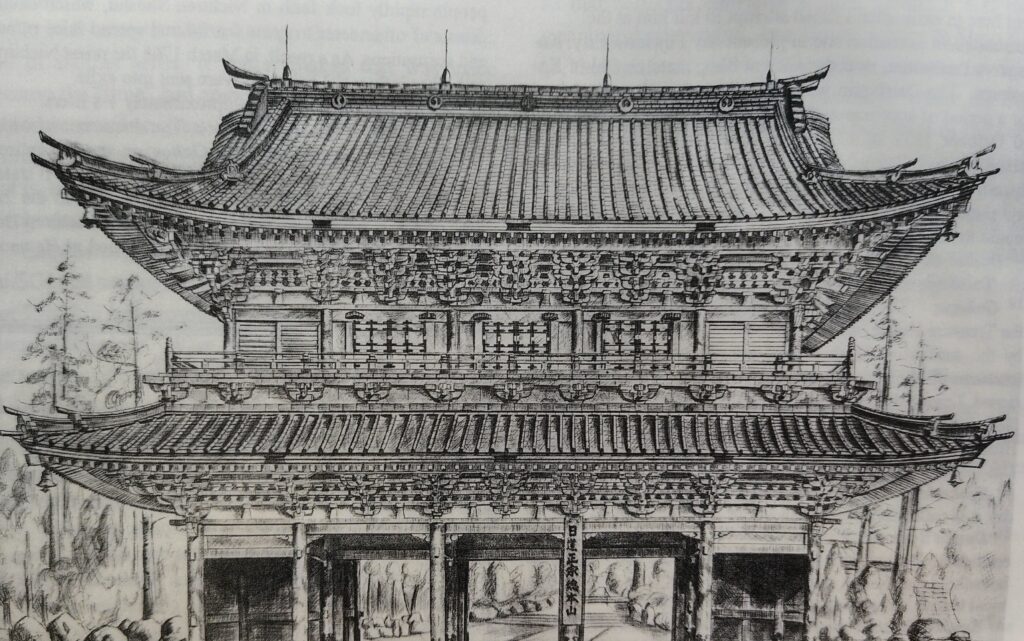
Sanmon (Gate of the Threenesses)
Approximately 400 meters past the Somon stands a tall gate, the Sanmon. The red painted wooden structure, whose entrance is almost 24 meters wide, 11 meters deep and 22 meters high, is the pinnacle of magnificent beauty, and its proportions make it the largest on the eastern seaboard. In 1712, the 25th High Priest Nichiyu Shonin asked that the 6th Tokugawa Shogun lenobu donate 70 huge trees from Mt. Fuji and that his wife Tennei-in contribute 1,200 pieces of gold. Taking nearly six years to construct, the Sanmon was completed in August of 1717. Minor repairs have been made since that time and in 1931, the 60th High Priest Nichika Shonin had the original Japanese cypress bark roo changed to copper tiles. In 1935, major repairs were undertaken, including the replacement of the circular pillars. In March of 1966, it was made a Prefectural Tangible Cultural Asset.
Concerning the Soka Gakkai-Clow Incident:
The following are two letters that were sent by the Bureau of Religious Affairs to all Nichiren Shoshu priests regarding the Soka Gakkai-Clow incident.
November 27, 1992
The Priesthood Will Fend Off the Gakkai in the Early Stages of the Trial
Regarding the Clow Incident, isn’t it truly strange that Mrs. Clow first deliberately marred the honor of another party, and then turned around and filed a defamation suit herself? Still, the priesthood’s course of action will be to thoroughly demolish her unjust suit through legal proceedings. The details of what has transpired thus far are outlined below.
Nullification of Indecorous Serving of Complaint to the High Priest
Not only are the contents of the Clow lawsuit pure nonsense, but the way the suit was delivered—that is, the way the complaint was thrown onto an airplane seat after the deliverer fled the aircraft—constituted a despotic breach of international rules. The alleged invalid delivery was a clear violation of the Hague Convention on International Delivery. Accordingly, when the priesthood sought annulment of the complaint in the Los Angeles County Courts, Clow’s representative summarily admitted that there had indeed been a breach of international law and promised to redeliver the complaint.
Making new publications free and holding a huge press conference in Los Angeles while lodging the complaint is simply plain crude.
However, there was an article, including a photograph of the High Priest, in the November 22 issue of the Seikyo Shimbun, which made it seem as if the actual trial against the High Priest had already begun, but in fact, the High Priest has not yet served with the complaint yet.
Demand for Punitive Damages Stricken
Another breach of the law concerns the complaints which have already been served in America on NST (Nichiren Shoshu Temple) and NSH (Nichiren Shoshu Hokkeko), which are corporations registered in the state of California. The seeking of punitive damages against hospitals and religious corporations is prohibited by the California Code of Civil Procedures. So again, when the priesthood filed a demurrer to strike the part of her lawsuit which demanded punitive damages, Mrs. Clow’s representative again summarily admitted breach of state law, and withdrew the demand for punitive damages.
Either Mrs. Clow’s lawyer was not aware of this express passage, or, because of the needs for the press conference, he acted in disobedience of California state law in spite of his awareness of the passage, but in either case, breach of the law is not to be forgiven.
Rejection of Illegal Emergency Motion to Subpoena the High Priest for Witness Hearing
In an all-out attempt to harass the High Priest, the Clow faction made an emergency motion to subpoena the High Priest to the American Embassy in Tokyo this past November 19th and 20th (the day of the Oeshiki ceremony), for a witness hearing, and further requested permission to video tape the proceedings. Because this kind of emergency motion is not recognized by either international or state law, the courts naturally denied the motion.
However, because the Gakkai ‘s demands were so relentless, Mrs. Clow’s lawyer made a second emergency motion to the courts for the witness hearing, but the motion was immediately denied.
The Gakkai seems to have rumored that something was going to happen on November 19th, and when it seemed as if nothing was going to happen, they probably exerted quite a bit of pressure on Mrs. Clow’s lawmaker, but their intrigue was shattered.
As explained above, the priesthood will, until the bitter end, follow the procedures of international law, as well as the rules of law to decisively crush this unjust lawsuit. We hope that, totally unshaken by the Gakkai’s intrigue and strategic propaganda, the entire priesthood will move onward, in unity and dignity, under the instruction of the High Priest.
________________________________________________________________________
December 11, 1992
Concerning the Clow Incident Gakkai Being Investigated for “Unclean Hands”
You have already been informed that the clauses demanding punitive damages (U.S. $50,000,000,000, or ¥6,200,000,000) in the Clow complaints served against NST (Nichiren Shoshu Temple) and NSH (Nichiren Shoshu Hokkeko) this past November 17th were stricken. Furthermore, on December 7th, both corporations submitted to the courts defense documents pertaining to the remainder of the complaint, submitting the following plea:
1. Denial of the truth of the facts in the Clow statement in their entirety, and,
2. “Unclean hands” on the part of the Gakkai, in that the Clow lawsuit is nothing more than a sordid strategy to force the High Priest to resign for having excommunicated the Soka Gakkai. (The complaint against the High Priest has still not been served.)
Because of this, the Soka Gakkai’s sordid campaign will finally be judged and denounced under the strictness of the law. Below is a general summary.
The Gimmick of the Clow Lawsuit
As you already know, last July 20th, the Soka Gakkai used a Gakkai-member lawyer in Los Angeles, California, named Bucklin, to send Hiroe Clow’s “Sworn Testimony” to Nikken Shonin. Bucklin stated that because her statement was sworn to a lawyer, Clow was aware that she could be sentenced to over a year in prison for perjury, and therefore her statement was the truth. Then this “Sworn Testimony” was published in the pages of a Soka Gakkai newspaper.
But, as we have made clear, the testimony sent to Japan is nothing more than a private document, and under Japanese criminal law, perjury does not apply. In response to this, the Gakkai obstinately insisted that because Mrs. Clow lives in California, and she was punishable for perjury under the laws of that state. (As stated in the August 14th issue of the publication, Jiyu, No. 467.)
However, following that, we learned through the investment of an American lawyer that, in fact, under California law as well, unless the submission of a document is required by law (documents to be submitted to the courts, government agencies, or the like), perjury does not apply. In this case, it follows that because there was no basis for it in law, Hiroe Clow was not afraid of being imprisoned for perjury under California law for having unilaterally made and sent her “Sworn Testimony” in order to personally attack the High Priest.
What is astonishing is that this time, there was no submission of a written oath swearing that of all of what Hiroe Clow had set forth in the written complaint she submitted to the California state courts was the truth. As it was a personal complaint, the usual practice is to simultaneously submit a written oath, which she did not do.
Where there was no danger of being legally convicted of perjury, she gave grandiose sworn testimony, but where there was actually a possibility of being convicted of perjury, she gave no testimony at all. The cunning with which these choices were made was truly skillful. It gives one a good idea of the way in which the Gakkai goes about things.
Denunciation of the Gakkai’s Sordid Plot
There is a rule within American law that disallows knocking on the doors of the courts with “unclean hands.” That rule vehemently opposes schemes in which a person first takes wickedly provocative action, then waits for rebuttal, turns around, and files a lawsuit.
As all of you are aware, the most vulgar of scandal campaigns, which the Gakkai is developing against the High Priest by using all the newspaper space they can, isenough to make any well informed person avert their eyes. For that reason, they have avoided translating these scandal pages into English to show them to people in America and other various countries. Were they to translate these Gakkai articles literally, just as they are, and distribute them, members would probably leave in a steady stream. First the Gakkai put out these types of base, provocative articles, and then when they were thoroughly refuted by the priesthood in publications like the special editions of Daibyakuho, what resulted was this Clow law-suit.
In this way, the Clow Incident is just one of the acts of harassment in the ongoing barrage of hatred towards the High Priest for the Gakkai’s having been excommunicated, and in those terms, there is no doubt that the lawsuit was lodged with “unclean hands.” But from now on, the priesthood intends to make a central target of the close examination and denunciation of the “unclean hands” with which the Gakkai executed the Clow lawsuit.
As we have already made clear in the September 2nd issue of the special edition of Daibyakuho, the fictitiousness of the information provided in the Clow incident is obvious. In effect, the Gakkai’s fabricated articles were written based on the fallacious premise that thirty years ago, there were no laws in the city of Seattle regulating prostitution. The August 14th Jiyu article (No. 476), mentioned earlier, which sheds light on the scandalous campaign, asserts: “At that time in 1963, in the state of Washington, where Seattle is located…there were no laws prohibiting either prostitution or a man’s buying of a woman. That’s why the prostitutes were not accused of any crime.” [The August 29th issue of Jiyu (No. 486) emphasizes the same point). Therefore, Clow stated that for that reason, it was not unnatural that the police set the two prostitutes who had confessed to prostitution free, and only brought the man who had not paid the agreed amount of money in for questioning.
But if there had been no laws against prostitution, then the story that the police kept this man standing on a freezing winter street at two o’clock in the morning for an hour, and then filled out four pages of reports at the police station is inconsistent. Why on earth would the High Priest have been brought into the police station for questioning at all? Certainly the police could not have volunteered as collection agents for the prostitutes? Further, Mrs. Clow states that while taking four pages of police reports, the police neither verified the man’s identification nor had him sign the reports, but instead settled the affair with Mrs. Clow as the High Priest’s representative, but this is nothing but a shabby story.
In our investigations, we found out that even thirty years ago, there were tough laws regulating prostitution in Seattle, which crumbled her fabrication in one fell swoop. Reading back over the events, the foolishness of the stories is just astonishing. Because the Gakkai knows that police records from thirty years ago no longer exist to disprove whatever Mrs. Clow says, these articles are truly vicious.
In other words, the Clow Incident is no more than an intrigue contrived by the Gakkai’s “unclean hands,” which we flatly denounce. However, our investigation and denunciation are being conducted in accordance with the laws of the state of California and International Law, and we will not imitate the Gakkai’s illegal behavior. So it will probably take time, and we will need endurance. We happily inform you that we have requested treatment of this incident by well know law firms, not only in America, but throughout the world, so we ask all licensed priests within the sect to rest assured, to guard over the Three Treasures of our founder the True Buddha, and give your undivided attention to the teaching of members of the faith.
Bureau of Religious Affairs, Nichiren Shoshu
Note:
Thank you for reading our first edition of Shinyo. Any comments or suggestions that you would care to offer would be greatly appreciated. We are especially interested in receiving any personal experiences; news from your local temple or your country’s organization, for possible publication in future editions of Shinyo. Looking forward to growing together with you, we take this occasion to wish you a most happy New Year!
The Editorial Staff of Shinyo
Nichiren Shoshu News
The Mokushi-e Ceremony Conducted at Taisekiji
On the 15th of November, 1992, at 7:00 am., the Mokushi-e Ceremony was conducted at the Grand Reception Hall at the Head Temple, Taisekiji under the auspices of His Holiness, the High Priest Nikken Shonin. During this ceremony, the High Priest offered the ceremonial Kenzen meal to the Three Treasures of Buddhism, the recitation of the Sutra and Daimoku. At this time, in sincere appreciation for the beneficence owed Nichimoku Shonin, the Third High Priest of Nichiren Shoshu and the Master of the Seat of the Law, who in route to Kyoto to remonstrate with the Imperial Court peacefully passed away while chanting daimoku on this day in 1333, an offering of incense was burned first by the 67th High Priest Nikken Shonin, followed by all other priests and believers of Nichiren Shoshu present at the ceremony.
We observe Nichimoku Shonin’s memorial day to remind ourselves to propagate the Buddhism of Nichiren Daishonin wholeheartedly, with every word and deed. It is said that when the time of Kosen-rufu approaches, Nichimoku Shonin will appear to finish the task. Although his tenure as High Priest was very short, no one matched his spirit in successfully challenging erroneous beliefs, whether held by those in authority or by the common man. The Mokushi-e Ceremony, which also coincides with a Japanese festival day that originated in the seventeenth century, called Shichi-go-san, which is celebrated for children aged seven, five and three, is a ceremony in which we convey our gratitude for Nichi-moku Shonin’s unparalleled effort in fourteenth century Japan. It also carries with it our hopes for the children of tomorrow, that they may grow to be as skilled in Buddhism and as strong in faith, wisdom and knowledge as Nichimoku Shonin.
Memorial Ceremony Held for Nichikai Shonin
On the 16th of November, 1992, under the auspices of His Holiness, Nikken Shonin, a memorial ceremony was held at the Head Temple Taisekiji in commemoration of the 50th anniversary of the passing of the 60th High Priest Nichikai Shonin. Also participating in this solemn service was Rev. Nichijun Fujimoto, General Administrator of Nichiren Shoshu; Rev. Nichiken Seto, Representative Executive Administrator of Nichiren Shoshu, all Senior Priests of Nichiren Shoshu; Rev. Giyu Hayase, Chairman of the Religious Board of Nichiren Shoshu; all Divisional Directors of the Bureau of Religious Affairs of Nichiren Shoshu; numerous priests from all over Japan who had come on Tozan to the Head Temple; Mr. Kisoji Yanagisawa, Chairman of the Hokkeko Federation of Japan, together with other Japanese Hokkeko officials, and many members who had come on pilgrimage from all over Japan and overseas in conjunction with the Oeshiki Ceremony.
In commemoration of the 50th anniversary of the passing of the 60th High Priest, The Complete Works of Nichikai Shonin was published and distributed to all participants at the Oeshiki ceremony.
Memorial Ceremony Held for Nichikai Shonin
On the 16th of November, 1992, under the auspices of His Holiness, Nikken Shonin, a memorial ceremony was held at the Head Temple Taisekiji in commemoration of the 50th anniversary of the passing of the 60th High Priest Nichikai Shonin. Also participating in this solemn service was Rev. Nichijun Fujimoto, General Administrator of Nichiren Shoshu; Rev. Nichiken Seto, Representative Executive Administrator of Nichiren Shoshu, all Senior Priests of Nichiren Shoshu; Rev. Giyu Hayase, Chairman of the Religious Board of Nichiren Shoshu; all Divisional Directors of the Bureau of Religious Affairs of Nichiren Shoshu; numerous priests from all over Japan who had come on Tozan to the Head Temple; Mr. Kisoji Yanagisawa, Chairman of the Hokkeko Federation of Japan, together with other Japanese Hokkeko officials, and many members who had come on pilgrimage from all over Japan and overseas in conjunction with the Oeshiki Ceremony.
In commemoration of the 50th anniversary of the passing of the 60th High Priest, The Complete Works of Nichikai Shonin was published and distributed to all participants at the Oeshiki ceremony.
Young Priests Study English and Meet Overseas Members
On the 19th of November, 1992, twenty six young priests came from throughout Japan to Taisekiji in order to make a pilgrimage to the Head Temple, have an audience with the High Priest and partake in a two day study course in which a full day was dedicated to studying English in an intensive language seminar. All of the participating priests demonstrated a strong desire to dedicate themselves in every way for worldwide Kosen-rufu, whether it be to make the visits to the Head Temple by overseas members more memorable or by realizing dreams to go abroad and link arms with the Daishonin’s disciples overseas in order to propagate True Buddhism throughout the world. Besides the English language, many of the priests also indicated their desire to learn and master other languages such as Chinese, French, German, Indonesian, Korean, Portuguese, Spanish and others so that they might someday realize their dreams of correctly propagating the faith of Nichiren Shoshu worldwide.
On the following morning of the 20th, twenty-five of the priests who had participated in the intensive language course were divided into five groups in order to meet with some of the members who had come on Tozan to participate in the Oeshiki Ceremony from Austria, Singapore, Taiwan, the United King dom and the United States of America.
During these most valuable encounters these young priests were able to hear first hand of the situation of Nichiren Shoshu in the respective overseas coun tries. Also, the members, most of whom do not yet have temples in their own home countries and therefore do not normally have a chance to speak directly with priests were able for the first time to ask many valuable questions regarding the faith, practice and doctrine of Nichiren Daishonin’s Buddhism. They were also able to receive much needed direction for the propagation of True Buddhism overseas. Overall, it was a day of encouragement for all the participants involved, both priest and lay member alike, as they joined in true harmony in order to reaffirm their great desire to spread the Daishonin’s teachings and establish a firm foundation for worldwide Kosen-rufu, together.
own home cou rmally h
Members and Priests Gather at Taisekiji to Celebrate Oeshiki
For a period of two days, from the 20th to the 21st of November, 1992, priests and members from throughout Japan together with 448 members from Austria, France, Germany, Hong Kong, Italy, Korea, Malaysia, Singapore, Thailand, Taiwan, Trinidad and Tobago, the United Kingdom and the United States of America gathered at the Head Temple Taisekiji together with His Holiness the High Priest, Nikken Shonin, in order to participate in the joyous Oeshiki ceremonies honoring the Nichiren Daishonin’s passing on the 13th of October, 1282 and His eternal life as the True Buddha.
The Oeshiki also called Otai-e was conducted on 20 November, when the ceremony called Otaiya (the Eve of the Oeshiki Ceremony) was performed, followed by the Goshoto (the Main Oeshiki Ceremony) on the 21st. The ceremony is performed in November because 13 Осtober 1282, on the lunar calendar corresponds to 21 November of the same year on the Julian calendar.
On the afternoon of the twentieth, the ceremony began with prayers being offered to the Dai-Gohonzon in the Sho-Hondo. In the evening of that same day the High Priest entered the Mieido and sat facing north on an elevated platform, called the jogyo-za (Bodhisattva Jo-gyo’s seat), representing Bodhisattva Jogyo, whose emer-gence from the earth is described in the Yujutsu or fifteenth chapter of the Lotus Sutra. A representative priest then requested the High Priest three times to take the seat of the Buddha (an elevated pulpit) and expound the Law, just as seen in the Three Exhortations in the Juryo Chapter of the Lotus Sutra when the Buddha is asked three times to preach the Law to the people. After the High Priest took his new seat, he burned ceremonial incense and began a sermon on the Juryo Chapter of the Lotus Sutra, symbolizing the Daishonin’s revelation that Nam-Myoho-Renge-Kyo is the essence contained in the depths of the Juryo chapter.
Shortly after the sermon, and still within the Mieido, the San-san-kudo Ceremony was conducted. San-san-kudo (literally three times three equals nine) is a tradi-tional ceremony in Japanese culture consisting of an ex-change of drinks of sake, which is normally used to celebrate a happy event, such as a wedding ceremony. During the Oeshiki Ceremony, however, it represents Nichiren Daishonin together with the Six Elder Priests drinking a ceremonial toast together, as the True Buddha and His disciples rejoicing in their eternal bond of Master and disciple. The performing of this ritual brought the first day of the Oeshiki Ceremony to a close. The second day commenced with an early morning Gongyo Ceremony. At eight in the morning, the priests assembled at the Mieido for a Goshoto Oko Ceremony in which the High Priest and six other priests recited a passage from the Rissho Ankoku Ron and the Moshi-jo, or letters of public remonstration written by the successive High Priests. This ritual indicates that the essence of the Daishonin’s Buddhism is the propagation of the Law and a symbolic reaffirmation of the determination to undergo all hardships in order to achieve absolute Kosen-rufu. It also means that the enlightenment of all existence is only possible through the propagation of True Buddhism of the Three Great Secret Laws. The Oeshiki Ceremony concluded with the final ritual of taking the paper cherry blossoms down from the altar.
Nichiren Daishonin passed away serenely at the Ikegami Munenaka residence in Ikegami (present-day Tokyo) on October 13, while many of his close disciples and believers chanted Nam-Myoho-Renge-Kyo. According to the Records on the Demise of the Daishonin, written by Nikko Shonin, the Daishonin passed away at approximately 8:00 that morning. At the same time, there was an earthquake and the cherry trees in the garden bloomed out of season. This account of the earthquake awakens us to the realization that the physical passing of the True Buddha, whose life is the life of the universe itself, is to be mourned. The blooming of the cherry trees reminds us, however, that it is to be celebrated because the true life of the Daishonin remains the same immortal. This is the reason for the display of paper cherry blossoms at the Oeshiki Ceremony.
There are three important points to keep in mind about the Oeshiki Ceremony. The first is that the wondrous life of Nichiren Daishonin has existed eternally and will continue to exist even though his physical body no longer remains in this world. The very life of the Daishonin is Nam-Myoho-Renge-Kyo, which is at once his life and the True Law at the core of the universe. The person and the Law were embodied in human form, but the body matured, aged, and passed away.
According to the Ongi Kuden (Record of the Oral by Transmitted Teachings), There is nothing that ex ists on this carth eternally. Whether something exists or not solely depends on time” Although His physical body definitely passed away, His essential life remained one with the universe, retain ing the power to shake and move the world. The fact that at the time of His death an earthquake occurred and the cherry blossoms bloomed out of season is in keeping with the Buddhist concept of oneness. The Ongi Kuden further states, “When we chant Nam-Myoho-Renge-Kyo, our ignorance changes to revelation because of the Mystic Law.”
The real intention of the core of Buddhist doctrine is to reveal the concept of oneness. This entails: the oneness of common mortal and Buddha, the oneness of life and its environment, the oneness of body and mind and the oneness of death and birth. These cannot be separated from one another. Therefore, at the moment of the True Buddha’s physical death, the earth shook in farewell, but the cherry trees bloomed out of season in welcome. Thus, the Daishonin’s passing reveals the princi ple of oneness.
The second point we must come to realize is that the Daishonin’s life is eternal, that it spans life and death as well as past, present and future. The Juryo or sixteenth Chapter of the Lotus Sutra reads “When the people hear these words, they are sure to realize how rare it is to see a Buddha and they will yearn and thirst for Him. In this way, they will plant the cause for enlightenment in their hearts. Thus, although the Buddha, in fact, does not pass away, the people are told that He has reached the final nirvana.” The Jigage portion of the Juryo Chapter reads “I let people witness my nirvana as a means to save them. But in truth, I do not die. I am always here, teaching the Law.”
The True Buddha exists eternally. But because of human nature, when the Buddha is incarnate, right here in our midst, we forget everything else and spend all our time thinking of Him. Therefore, He must teach us and then leave, or we would be forever distracted from the task of achieving our own enlightenment. After His passing, the Buddha’s life is manifested in the mandala that simultaneously contains the ten life conditions. In other words, it is none other than the Gohonzon, the purpose of the Daishonin’s advent into this world. The following passage from the Gosho makes this point clear, “I, Nichiren, have inscribed my life in sumi.” The life of the True Buddha lives in the Gohonzon. The essence of the Gohonzon has been handed down to us in tangible form through the heritage of each successive High Priest from Nichiren Daishonin to Nikko Shonin, to Nichimoku Shonin and each one thereafter to the present High Priest. The Oeshiki Ceremony thus celebrates the appearance of the eternal Buddha.
The third point involves the absolute necessity of the disciples to carry on the pure heritage among the Daishonin’s six senior disciples, Nikko Shonin was the only one who understood the deep meaning of the Daishonin’s life and teaching. Only he kept the vow to protect and propagate the True Teaching as it was taught by the Daishonin. Consequently, today, only Nichiren Shoshu carries out the true meaning of the Oeshiki Ceremony, and has held the Oeshiki Ceremony according to the true doctrine and correct faith for more than 700 years.
The reason for the Daishonin’s advent was prefaced by His desire to secure peace through the propagation of the True Law. This underlying principle is manifested in the Rissho Ankoku Ron (On Securing the Peace of the Land Through the Propagation of True Buddhism). The Daishonin’s will has been inherited by Nikko Shonin, Nichimoku Shonin and each successive High Priest who, themselves, remonstrated with the government. Thus the tradition was established in Nichiren Shoshu to read the Rissho Ankoku Ron and other letters and treatises of remonstration called moshi-jo during the Oeshiki Ceremony to remind us of our tradition and pledge to accomplish Kosen-rufu.