|
Notice No. 2376 February 16, 1994 Nichiren Shoshu Bureau of Religious Affairs |
DECREE
This is a momentous year, a year in which we must more than ever work to restore the way of our founder, move forward toward widespread propagation of the Daishonin’s Buddhism (Kosen-rufu), and forge real itai daoshin. This is the year I have designated for the Great Gathering of Sixty Thousand Believers. Since the beginning of the year priesthood and laity have together been assiduously challenging the chanting of sixty billion Daimoku over one hundred days, following the example set in the Ho’ei era. Amassing merit through this Daimoku, we shall establish a new Tower of Sixty-thousand and open the way for the widespread propagation of the Daishonin’s Buddhism into the boundless future. With respect to this I hereby proclaim the following two tenets.
The first tenet is to progress toward true Kosen-rufu based on harmony between priesthood and laity. From the latter half of the 1940s onwards, Nichiren Shoshu witnessed the promotion of Kosen-rufu by the Soka Gakkai. However, this took the form of marked overemphasis on the role of the laity. The vice of arrogance, which arose from that overemphasis in due course, increased year by year. In 1977 this reached the point that the doctrinal deviations and slanderous actions of the Soka Gakkai became intolerable. Nichiren Shoshu gave them guidance to correct those errors, and for a time they appeared to have rectified their mistakes. However, since 1990, the year that marked the 700th anniversary of the founding of the Head Temple, the Soka Gakkai has once again degenerated into a group that is brazenly slandering the Law. Owing to their contempt for and opposition to both Nichiren Shoshu and the path of the priest hood, they have gone so far as to utterly repudiate the Three Treasures of the Buddhism of the Sowing. Nichiren Shoshu has thereupon taken appropriate measures in order to protect the Law. Accordingly, this year in particular is the time to return to our traditional way of faith and prepare ourselves to unceasingly progress toward true Kosen-rufu in which priesthood and laity are solidly united together.
The second tenet is to affirm our great objective with respect to the High Sanctu ary of the Essential Teachings. Kosen-rufu, our great objective as followers of Nichiren Shoshu, lies in the actualization of the High Sanctuary as the Daishonin revealed in “The Law that Nichiren Propagated throughout His Life” and in “On the Three Great Secret Laws” founded on His great compassion to save all living beings. The Soka Gakkai has put forth various opinions on this matter based on their egocentric and self-serving views about Kosen-rufu. When, however, one approaches the instructions of the Daishonin honestly, through these two sacred scriptures, one will deeply perceive through faith that the establishment of the High Sanctuary of the Essential Teachings and the manifestation of the True Law of Precepts are indeed one, and occur simultaneously. Now is the time for us to begin our great stride forward toward the realization of this High Sanctuary, our great objective for the future. Through the merit and benefit thus accumulated we will accomplish the propagation of the Daishonin’s teachings throughout the world, ensure the salvation of all people, and contribute to world peace, ultimately effecting the purification of the whole universe.
With respect to the above, we must act to refute mistaken teachings and reveal the truth through itai dubin, the unification of priesthood and laity in their hearts as one: itai dosbin that is forever rooted in our pledge to work for Kosen-rufu.
We ask all priests and lay believers to follow these tenets and strive to build an ever more steadfast foundation for Kosen-rufu.
February 16, 1994
Nichiren Shoshu High Priest
Nikken Abe
Gosho Lecture by High Priest Nikken Shonin
“The Gift of Rice”
The following is a lecture on the “The Gift of Rice” given by High Priest Nikken Shonin on September 14, 1989, for the ceremony commemorating the completion of a new main hall for Shohenji Temple. In this issue, we present the first half of the High Priest’s lecture. The second half will appear in the next issue of Shinyo. Please refer to Volume One of The Major Writings of Nichiren Daishonin, pages 267 to 270 for the text of the Gosho itself. Where the Gosho has been translated differently here, this will be indicated in footnotes.
I was invited here today to conduct the temple completion ceremony for this splendid new main hall of Shohenji Temple, which has been built based on the vow made by the chief priest and through the support of the lay members of this temple.
Together with all of you, I have just expressed my thanks in repayment of our debt of gratitude to the Three Treasures of Buddhism. In addition, I have reported to the Gohonzon that has been enshrined in this admirable hall the profound spirit of offering held in the hearts of the chief priest and lay members of this temple.
I have also expressed my strong wish for the development of unity between priests and lay members. Finally, I have expressed my desire for the prosperity of this temple, the prosperity of the True Law in this district, and for your continued growth in faith and practice.
The chief priest asked me to give a lecture on this occasion, so I would like to talk about “The Gift of Rice” Gosho, which we have just read.
The original manuscript of “The Gift of Rice” is still at Taisekiji. However, it is not clear to whom this letter was addressed. Most of Nichiren Daishonin’s letters bear the name of the person to whom the letter was addressed. For example, in the case of letters to Nanjo Tokimitsu, they are addressed “Reply to Lord Ueno” or “Reply to Lord Nanjo. However, there are occasionally cases where, for various reasons, the name of the recipi ent is not written, or where that part of the letter has been lost over such a long period of time. This Gosho is one of those cases. Since the end of the letter has been lost, it is impossible to know to whom this letter was written.
Judging from the contents of the letter, however, I am convinced that it was written to Nanjo Shichiro Jiro Taira no Tokimitsu, the founding patron of Taisekiji, who welcomed Nikko Shonin to his lands at the foot of Mount Fuji and donated the land upon which the head temple, Taisekiji, was established. I wanted to explain that first, before going into the Gosho itself.
Now, as it is printed in the Gosho Zenshu1, the last section of this Gosho from, “Because I am not a person who relishes sumptuous food,,,,,,” to the end2 actually belongs to a completely different Gosho. There may be some people who have sensed that the sentence, “Therefore, it is obvious that rice is not merely rice but life itself,” is not consistent with the portion that follows. If you noticed that in your reading of this Gosho, your reading comprehension is rather remarkable.
The Daishonin’s letters were all written on sheets of Japanese paper. In order to organize and protect the sheets, they were bound together into long scrolls with protective coverings. However, so many letters were written to Lord Nanjo that some of the pages were put together in the wrong order. This happened very rarely, but this is the reason, then, why the portion beginning with, “Because I am not a person who relishes sumptuous food…..” appears as the last portion of the “Gift of Rice” Gosho in the Gesbo Zenshu that you all have.
However, in reality, this portion belongs to the Enbudai-chu Gosho. I think you will understand this if you look for yourself. The last portion of the Enbudai-chu Gosho reads:
Although I had no intention of retreating, I sometimes felt bitter. (Zenshu p. 1590)
One character is missing at the end of this passage, but we can tell that it should have been either shi or su3. If this sentence with the missing character is followed by, “Because I am not a person who relishes sumptuous food….” then we can assume that the missing character would be shi. In that case, “Because I am not a person who relishes sumptuous food….” would fit quite well in terms of content and meaning.
Also, because the paper and writing brushes used in the letters written by Nichiren Daishonin differed depending on the time and circumstances when those letters were written, it is possible to determine which elements should go together by examining those characteristics. That is to say, the paper, writing brush, and sumi ink should be the same for letters written at the same time. For example, there may be differences in the quality and color of the paper, differences in the appearance of the characters depending on whether the tip of the writing brush was new or had become rounded with use, or differences in the shade or intensity of the sumi ink. One can determine whether two parts were parts of the same Gosho or parts of different Goshos based on these things. If they are from the same Gosho, these factors should be consistent throughout.
For these reasons as well, it is clear that, “Because I am not a person who relishes sumptuous food .” should follow the sentence, “Although I had no intention of retreating, I sometimes felt bitter.”
Therefore, in the Showa Shintei Gosho4, which was published by Taisekiji and which contains detailed scholarly notations, the portion beginning with the sentence, “Because I am not a person who relishes sumptuous food….” is in the Enbudai-chu Gosho.
Today, however, we are reading from the Gosho Zenshu that you have, so I would like to talk a little more about the passage beginning with, “Because I am not a person who relishes sumptuous food…”
When I read this sentence, I pronounced the Chinese characters [for the word that means “sumptuous food”] as mijiki, however, nowadays, this word is read bishoku as in bishokuka [gourmet]. I think that the proper reading of these characters in the Daishonin’s time was mijiki.
In the Daishonin’s time, mijiki meant “delicious meal,” which is the meaning that the word written with these characters also has today. But at the same time this word also has the meaning of a very high-class and extravagant meal. Therefore, the sentence, “Because I am not a person who relishes sumptuous food suggests that this is the sort of person who not only has no desire for a luxurious meal, but is also not concerned about matters of clothing, food, shelter, money, or fame. This has a very profound meaning when read as the final element of the Enbudaichu Gosho.
Nichiren Daishonin encountered various kinds of hardship because He read and practiced the Lotus Sutra with His life as the votary of the Lotus Sutra in Mappo. He was persecuted and hated by the rulers of the nation as well as by the people as a whole and endured many hardships.
Minor persecutions and annoyances are too numerous even to be counted, but the major persecutions number four. (MW, vol. 2, p. 114; Zenshu, p. 200)
There was His exile to Izu in the first year of Kocho [1261], followed by the attack by Tojo Saemon no Jo Kagenobu and other Nembutsu believers at Komatsubara in Awa province in November of the first year of Bun’ei [1264]. They ambushed and attacked the Daishonin and His followers with swords, spears, and bows and arrows in order to kill the Daishonin, but they failed. At that time, disciples of the Daishonin named Kyoninbo and Kudo Yoshitaka were killed in their efforts to protect the Daishonin.
Then, on the twelfth of September, in the eighth year of Bun’ei [1271], as the result of a plot by Ryokan of Gokurakuji temple, Hei no Saemon no Jo Yoritsuna, together with hundreds of his followers, attacked the Daishonin’s dwelling at Matsubagayatsu. Although the Daishonin was innocent of any wrongdoing, they attempted to behead Him at Tatsunokuchi. They failed and Nichiren Daishonin was then exiled to Sado. The day before yesterday, on September 12, we conducted the ceremony commemorating the Tatsunokuchi Persecution and expressed our appreciation to the Daishonin. It was in these ways, then, that He encountered various persecutions.
In the Enbudai-chu Gosho He said, “I sornetimes felt bitter.” Then the statement about “sumptuous food” follows.
The Kamakura shogunate had persecuted the Daishonin many times, but since everything Nichiren Daishonin prophesied actually came true, they at last granted Him a pardon from His exile to Sado, and on April 8 of the eleventh year of Bun’ei [1274] they called Him to the palace in order to ask various questions. This was an age when, if someone were exiled to Sado Island, it was impossible for that person to come back alive. Therefore, the Kamakura shogunate’s call for Nichiren Daishonin to return from Sado Island was truly unprecedented.
At the palace, Nichiren Daishonin argued that “Zen is an act of the Devil King5” and that “Nembutsu is a teaching that leads to the hell of incessant suffering6“, citing passages of proof from the sutras one by one. In addition, when Hei no Saemon asked the Daishonin, “The Mongols are said to be going to attack, when do you think they will do it? the Daishonin replied:
The sacred scriptures do not indicate the time. But the signs show that Heaven is more than a little angry. It would appear that the attack is imminent and will probably occur before this year has ended!
(MW, vol 3, p. 172, Zerubu, p. 287-288)
This famous statement is found in” The Selection of the Time Gosho7“. The sutras do not indicate specific times for such events. However, the Daishonin clearly stated that since the anger of the protective gods was so great, the Mongols would. surely attack before the end of the year. In October of that year, as He had predicted, the Mongols attacked Japan. This famous historical event is called the “Bun’ei War8.”
Historical documents from later generations indicate that since the Daishonin had precisely predicted what would happen, the Kamakura shogunate tried to strike a bargain. with him. The Shogunate offered to build a hall called the “Aizendo” for Nichiren Daishonin and to donate 1,000 che of land to Him (9,917 km², or 2,450 acres). In return, the shogunate wanted Nichiren Daishonin to invoke the power of the Law to pray for the peace and tranquillity of the country. Furthermore, they asked Nichiren Daishonin to stop saying that Nembutsu is a teaching that leads to the hell of incessant suffering.
The Daishonin never wrote anything about this offer Himself. I think that for Nichiren Daishonin this kind of offer was not worth mentioning in writing. In any event, the Daishonin firmly refused this deal.
I believe this to be a historical truth. The proof of this is that the part of the Gosho which we read awhile ago, “Because I am not a person who relishes sumptuous food…” is talking, of course, about Nichiren Daishonin Himself. In other words, the Daishonin is saying, “I do not seek honor or prosperity.”
With the sentence, “Because I am not a person who relishes sumptuous food, and there was nothing more I could do, I retired to the forest,” the Daishonin is indicating His own behavior. He is saying that He is not teaching the doctrine of the Lotus Sutra in order to win honor and profit, such as being appointed the steward of the Aizendo or being granted a thousand cho of land. If it meant that He could not preach the Law correctly, He would never accept such an offer.
The Daishonin’s purpose in preaching the True Law was to save all human beings. Therefore, when we see the life condition of the True Buddha who established the deep meaning of the Three Great Secret Laws for the people of the ten thousand years of Mappo ー that is, one who never paid attention to mundane honor and fortune, and who recited the Lotus Sutra while living isolated at Mount Minobu with very poor clothing, food and shelter ー we feel that we also should try not to be a slave to trivial fame and fortune.
The way I feel about it is that, no matter what, we must make the Law the center of our lives, protect the correctness of Nichiren Daishonin’s teachings forever and spread them widely.
The following sentences ー “I retired to the forest. I am an ordinary man and find it hard to endure the winter’s cold or the summer’s heat. Nor do I have enough to eat” (MW, vol. 1, p. 269) ー are stated as if Nichiren Daishonin were an “ordinary man9.” However, here He is talking about the difficulty of enduring the cold, difficulty of escaping the heat, and scarcity of food in His life at Mt. Minobu from the standpoint of an “ordinary man” endowed with the inner realization of the Original Buddha of kuon ganjo.
The sentence, “I could never match the feat of the man said to have walked ten thousand ri on a single meal,” leads me to suspect that there must have been an old saying to the effect that someone was only able to eat one meal during the course of a very long journey. From this anecdote we can understand that the Daishonin’s circumstances were terribly severe and difficult to endure.
The passage, “or that of Confucius and his grandson, who ate only nine meals in one hundred days, emphasizes that the life of Nichiren Daishonin at Minobu was equivalent to this anecdote and thus hard to endure.
Therefore, Nichiren Daishonin says that, “Without food, I could not long continue to recite (MW, vol 1, p. 269) These statements are made, of course, in order to emphasize how deeply Nichiren Daishonin appreciated Lord Nanjo’s offerings.
“Thus, your offerings are more than mere gifts. Perhaps the Lord Buddha himself advised you to care for me, or it might be that your karma from the past has impelled you to do so. It is impossible to say all I want to in this letter. With my deep respect.” (MW, vol 1, pp. 269-270). This expression of apprecia tion ends this passage. This portion, as I mentioned before, should be the last part of the Enbudai-chu Gosho.
Now, going back to what I was saying before, the last part of the “Gift of Rice Gosho in the Gosho Zenshu should be the passage, “rice is not rice but life itself.” This is the passage which comes just before, “Because I am not a person who relishes sumptuous food……”
There were presumably some additional sentences at the end of this letter, but unfortunately the pages which should follow are missing. This is a truly re-grettable thing, but today many of the original manuscripts of the Daishonin’s Gosho have missing parts. All over Japan there are many letters by Nichiren Daishonin from which only two or three lines remain.
Therefore, I would like to examine the meaning of this Gosho by considering the passage, “Rice is not rice, but life itself,” to be the last words of this Gosho.
Of course, since this was a letter, Nichiren Daishonin did not Himself give it the title “The Gift of Rice.” People in later days gave it this title because the beginning of the letter says “I have received the sack of rice…..”
Now, I would like to explain the actual contents of the letter. “I have received the sack of rice, the sack of taro and the basket of riverplants which you were so good as to send me by your servants.” (MW, vol. 1, p. 267) “Taro” is a kind of [small, sticky potato-like] vegetable which has a hair-like fringe. On the way here, I saw a sign which read Taro producing district,’ so I assume that this area is famous for its taro. Anyway, the Daishonin first expresses His appreciation to Lord Nanjo for sending Him those items.
As a matter of fact, the meaning of offerings is the main idea which runs throughout “The Gift of Rice Gosho. As I mentioned earlier, I believe that it was Nanjo Tokimitsu who made these offerings to Nichiren Daishonin. Nichiren Daishonin used the truly profound meaning of Buddhism to reply to Lord Nanjo’s intent in mak-ing this offering.
It is very important to make offerings, but offerings themselves do not reveal the wisdom to perceive the Buddha nature10 , the direct cause for spiritual realization, or lead directly to attainment of Buddhahood. Chanting Nam-Myoho-Renge-Kyo is the only way to attain Buddhahood. However, offerings create great merit to aid in the attainment of Buddhahood, and thus are one of the supporting conditions for enlightenment.
Shinshoki, kanshoki, and shijoki are three principles explained in the “Profound Meaning of the Lotus Sutra 11“ The first of these, shinshoki, is the fundamental basis of all three. This is the principle that everything that exists has its own nature and that this is not illusion, but is reality.
Next, kansboki is the function of wisdom, through which one views things correctly, breaks through illusion, and manifests realization.
The shi in the term shijoki means “to help” and jo means “to achieve.” Therefore, shijoki refers to the ten thousand, ie. innu-merable, deeds which help one to achieve the wisdom that leads to the attainment of Bud-dhahood
It is impossible for us to live on our own. We live by helping one another. It is no exaggeration to say that we have interdepen-dent relationships not only with our families, but also with the community, the nation and the entire earth.
The life of the individual is what is meant by the term “shinshoki.” In order to become happy, you examine the various things you see and by do-ing that, you expand the capacity of your life. This is what “kanshoki” means.
“Shijoki” refers to the things or actions around you which help you to develop your life condition. Shijoki could be your occupation, in-come, housing, clothing, your own behavior, etc. Anyway, all the things which surround you are “supporting conditions” and through their func-tioning, you can open the path to happiness.
What is the basis for our goal of attaining Buddhahood? It is the primary practice. In Mappo, the five or seven characters 12 of Nam-Myoho-Renge-Kyo are the name of the truth to which the Original Buddha of kuon ganjo is en-lightened, the entity of virtue itself, and the mystic functioning of cause and effect. It is taught that these characters encompass [the five major principles]:13 name, entity, quality, function, and teach-ing.
Upholding faith in the five or seven charac-ters of Nam-Myoho-Renge-Kyo and chanting Daimoku to the Gohonzon encompasses all three [factors that lead to revelation of the Buddha nature] the innate Buddha nature, the wisdom to perceive the Buddha nature, and the good actions to develop the Buddha nature and this is the way that one develops spiritual awakening based on the wisdom to perceive the Buddha nature and attains benefit.
However, in “The Gift of Rice” Gosho which we just read, there is no special mention of chanting Nam-Myoho-Renge-Kyo. It may have been discussed in the portion of the Gosho which has been lost.
The theme that runs throughout “The Gift of Rice” Gosho is that in addition to receiving and upholding Nam-Myoho-Renge-Kyo there are various kinds of important things which one might refer to as “external relations”; when these “external relations” become one with the essential practice of Nam-Myoho-Renge-Kyo, only then will one achieve the great benefit of attaining Buddhahood.
Therefore, when the Daishonin states at the beginning of “The Gift of Rice” Gosho that He had received a sack of rice, He is praising Nanjo Tokimitsu’s incredibly admirable spirit to make of-ferings as well as the importance of making offer-ings as a supporting condition of enlightenment.
Some of you might think that since Lord Nanjo was lord of the Ueno estate, donated a large piece of land to Nikko Shonin, and was a major supporter of Taisekiji, he must have been a very wealthy man. However, at the time he made those offerings to the Daishonin, he was experiencing a life of great difficulty and poverty.
Let us look at another letter from the Daishonin addressed to Lord Nanjo:
Moreover, your small village has been heavily taxed and its people have repeatedly been put to forced labor, until you yourself have no horse to ride, and your wife and children lack for clothing. Yet despite your own poverty, you felt sympathy for the vo-tary of the Lotus Sutra, thinking that he must be beleaguered by snow in the depths of the mountains and in want of food. So you have sent me one kan of coins. (MW, vol. 5, p. 309, Zenshu, p. 1575)
From this letter, we can see the conditions of Lord Nanjo’s life. Even though he was a warrior, he had no horse to ride, nor was there clothing for his wife and children. Despite these circum-stances, he donated one kan of coins to the Daishonin, which was a very large amount. From this, I think we can understand the excellence of Lord Nanjo’s faith.
Therefore, the main theme of this letter is Lord Nanjo’s noble spirit to make offerings and the deep significance of his offerings themselves. Nichiren Daishonin uses this as a means to teach the principle that the benefit of making such offer-ings will manifest itself as a “supporting condition” for Lord Nanjo to attain Buddhahood without fail.
Next, the Daishonin says, “Man has two kinds of treasure: clothing and food.” (MW vol 1, p. 267) The Daishonin cites food and clothing as the treasures that are indispensable for human beings to live.
Then He cites a passage from the sutra: “One sutra states, ‘All sentient beings live on food.” (MW, vol 1, p. 267) “Sentient beings” is a term used to contrast with insentient beings such as trees, rivers, grasses, and mountains, one may regard “sentient beings” as meaning animals. Therefore, in addition to human beings, birds, insects, and fish are also included in the category of sentient beings. This sutra passage explains that sentient beings are able to survive by eating.
Nichiren Daishonin explains the meaning of this passage as follows:
Man depends on food and clothing to survive in this world. For fish, water is the greatest treasure, and for trees, the soil in which they grow. Man’s life is sustained by what he eats. That is why food is his treasure. However, life itself is the most precious of all treasures. Even the treasures of the entire universe cannot equal the value of a single human life. Life is like a lamp, and food is like oil When the oil is gone, the flarne will die out, and without food, life will cease. (MW, vol. 1, p. 267; Zenshu p. 1596)
Nichiren Daishonin previously referred to clothing and food, and now He refers to shelter. Because fish live in the water, they treasure it. Likewise, since trees grow in the earth, they treasure the soil In short, sentient beings can survive because of the three treasures of clothing, food, and shelter.
Because the offering consisted of items of food, Nichiren Daishonin repeatedly emphasizes the importance of food to human life. And because Nichiren Daishonin and His many disciples at Minobu experienced extreme difficulty in obtaining food, He repeatedly emphasizes the preciousness of food.
Since the Japanese now live an affluent life, there are some people for whom eating delicious foods has become the purpose of life. Of course, nothing is wrong with eating delicious food.
However, if one disregards the principle of cause and effect or if one’s behavior is out of line with the laws of nature one will suffer the consequences. The attitude of people like us who correctly practice Buddhism should not be that of a person who is a slave to greed. In other words, we should not disregard the original significance of food.
In any case, sentient beings are able to live because of food. The Daishonin cites a sutra passage that teaches that life is the most precious of all treasures and that there is no treasure which is more important than life.
The Daishonin cited this sutra in order to show us that because food is what keeps us alive, it is for that reason a great treasure. At the same time, He praises Lord Nanjo, who had given food as an offering. In Buddhism, the preciousness of life is a fundamental principle and this is especially true in the Buddhism of Nichiren Daishonin.
(To be continued)
1 Gosho Zenshu: A collection of the works of Nichiren Daishonin. The full title is Nichiren Daishonin Goshe Zenshu (“Complete Writings of Nichiren Daishonin”). This edition of the Daishonin’s writings was supervised by 59th High Priest Hori Nichiko Shonin and was originally published by the Soka Gakkai in 1952. It is the collection most commonly used by Nichiren Shoshu believers.
2 This section appears on pp. 269-270 of vol. 1 of The Major Writings of Nichiren Daishonin. As the High Priest will make clear further on, this last section of “The Gift of Rice Gosho is really the final portion of the Enbudai-chu Gosho. In the Major Writings the first sentence of this section is translated, “Because the regent would not taste the sumptuous food [of true Buddhism]. there was nothing more I could do, and so I retired to the forest. The word in the original that is translated as “regent” is actually just the word “hite” (person). The translation of the word “hite” (person) as “regent” was an interpretation of the translator; according to the High Priest’s sermon, however, this is referring to Nichiren Daishonin Himself. Therefore, we have retranslated this passage accordingly. Also, when this portion is read in this context, it is not correct to insert the clause, (of true Buddhism), because the “sumptuous food” was the offer by the shogunate of an inducement to Nichiren Daishonin to stop refuting Nembutau.
3 Shi or su would complete the inflection of the expression “to harm” in classical Japanese.
4 Showa Shintei Gosho: A three-volume edition of the Daishonin’s writings published by Taisekiji in 1966. The editing was supervised by the 66th High Priest, Hosoi Nittatsu Shonin. The full title is Showa Shintei Nichiren Daishonin Gosho (“New Showa Writings of Nichiren Daishonin”).
5 “Zen is an act of the Devil King is one of the “four refutations, sayings that summarize Nichiren Daishonin’s refutations of other schools of Buddhism. Each of these sayings is based on passages from the sutras. We will give abbreviated explanations of this here. The Zen sect argues that the real teachings of the Buddha are not contained in the sutras, and that Shakyamuni transmitted his true teachings to Mahakashyapa in a wordless transmission from one mind to another. Thus they show complete disregard for the sutras as the teachings of Shakyamuni. However, the Nirvana sutra states, “If there should be people who do not follow the teachings of the Buddha, you should know that they are the associates of the Devil King” This is why Zen is termed an “act of the Devil King.”
6 Another one of the four refutations. The Nembutsu (Pure Land) school of Buddhism teaches that believing in the mercy of Amida Buddha and chanting the Nembutsu (Namu Armida Buts) will enable one to be reborn in the Western Pure Land. However, the sutras on which this is based were provisional teachings, the Lotus Sutra teaches that one should “honestly discard ex pedient means (provisional teachings), and teach only the unsurpassed way.” (2nd chapter) Despite this, Honen, the founder of the Pure Land school in Japan, taught his followers to discard, close, disregard, and abandon sutras such as the Lotus Sutra. The Lotus Sutra teaches that “If a person does not have faith and instead slanders this sutra… at the end of that person’s life he will fall into the Avichi hell.” (3rd chapter) This why Nembutsu is said to lead to the Hell of Incessant Suffering (another name for the Avichi hell).
7 “The Selection of the Time”: Senji Sho
8 The “Bun’ei War” refers to the war to defend Japan against the first Mongol invasion of 1274. It was named after the Bun’ei era (1264-1274), when this war oc curred.
9 The word translated as “ordinary man in the Major Writings is bonbu, which is often translated as “common mortal.”
10 “Wisdom to perceive the Buddha nature”: Japanese ryo in-buuhe. One of the “three factors leading to revelation of the Buddha nature” (san-in busbe). (These have also been called the three inherent potentials of the Buddha nature.) These are the innate Buddha nature (the in-bunbe), the wisdom to perceive the Buddha nature (rye în bunbo), and various meritorious actions that aid this wisdom for development of the Buddha nature (en in-bunbo).
11 “Profound Meaning of the Lotus Sutra: the Hokke Gengi, one of the major treatises by the Great Teacher Tien-tai.
12 The “five or seven characters of Nam-Myoho-Renge Kyo” refers to the fact that five Chinese characters are used to write Myoho-Renge-Kyo and seven Chinese characters are used to write Nam-Myoho-Renge-Kyo
13 Five major principles: doctrine by which the Great Teacher Tien-t’ai elucidated the nature of Myoho-Renge-Kyo in the “Profound Meaning of the Lotus Sutra (Hokke Gengi).
Abbreviations used in this issue:MW: The Major Writings of Nichiren Daishonin, ed. and trans. by The Gosho Translation Committee. (Tokyo: Nichiren Shoshu International Center, six volumes, 1979-1990). Zenshu: Nichiren Daishonin Gosho Zenshu, ed. by Hori Nichiko Shonin, 59th High Priest of Nichiren Shoshu (Tokyo: Soka Gakkai, 1952). Kaiketsu: Myoho-renge-kyo narabini Kaiketsu, ed. by Hosoi Nittatsu Shonin, 66th High Priest of Nichiren Shoshu (Tokyo: Soka Gakkai, 1961 |
High Priest Nikken Shonin’s Guidance
Audience for Overseas Believers
at the 1993 Oeshiki Ceremony
November 20, 1993, Great Writing Hall of the Head Temple
Thank you for coming. It seems the overwhelming majority of you will not understand what I am saying in Japanese, but I believe this will be interpreted for you afterward so that you will be able to understand it.
Many people have made the pilgrimage here for this Oeshiki ceremony in order to repay their debt of gratitude to the Daishonin. When I see this, I get a keen sense of the current state of propagation by Nichiren Shoshu around the world.
The Daishonin’s guidance tells us that it is extremely important to understand one’s debts of gratitude and to repay them, as He indicated in the Gosho called “Repaying Debts of Gratitude” and also in the Gosho called “The Four Debts of Gratitude”.
There are many countries in the world today. There are a diversity of races of people and there are many points on which manners, customs, and thinking differ in various ways. The one thing that I think absolutely never varies, however, is the affection between parent and child. From this standpoint, the most important matter for human beings is to understand their debts of gratitude and to repay them. This is also the basis for the cultivation of virtue by each individual person.
Therefore, I surmise that the Daishonin must be greatly moved by your faith in that you have come such long distances to repay your debt of gratitude to the True Buddha, the Daishonin. I have reported to the Gohonzon today about your faith and have prayed for the prosperity of the True Law and for the happiness and increased faith of the members from each country.
Today, the sky was full of clouds and therefore it is raining. In the “Parable of the Medicinal Herbs” chapter1 of the Lotus Sutra, the clouds which form in the heavens are used as a metaphor for the appearance of the Buddha. Also, rain is used as a metaphor for the great merit of the Buddha to save all living beings, in that rain falls owing to those clouds so that all the different kinds of plants and trees on the ground receive the moisture of that rain and thereby grow.
To make a long story short, among the plants and trees that receive the moisture of the rain there are little plants and mediumsized plants as well as big plants. Also, among the trees there are both little trees and big trees. However, all of them the little plants, midsized plants, big plants, small trees and large are moistened by the rain that falls owing to the virtue of the clouds, so that all the plants and trees are equally able to grow. trees
Of course, there are distinctions among the various kinds of plants and trees. There is discrimination in growth depending on the type of plant or tree, such that a small plant may only grow this much by receiving the moisture from a single rain, while a large plant may grow a lot more than that. Nevertheless, there is only one rain that falls from the sky. Thus, the clouds and the rain do not show any discrimination they grant merit2 equally to all the plants and trees. The virtue of the clouds and rain is that they save and lead each and every kind [of plant]. However, when viewed from the stand-point of the plants and trees that grow by re-ceiving the moisture of the rain, even though the rain is the same the merit that is received differs depending on the individual type of plant. Therefore, in this respect there is discrimination.
When I view your faces, everyone’s face is different. In the same way, in carrying out faith, there are times when one may think that the fortune that is thereby received differs depending on each individual person. It may seem that its form differs depending on the person. For example, when one person begins faith he may receive great benefit right away, while another person may not receive anything that looks like a benefit for a whole year after beginning his faith, but then finally receives benefit after that.
However, Nichiren Daishonin declares that with this teaching of Nam-Myoho-Renge-Kyo there is no discrimination in benefit between different kinds of people everyone is abso-lutely equal!
If one examines the teachings of Shakyamuni, one finds that he preached many provisional teachings: first the Kegon Sutra3 and then the Agon sutras4, Hodo sutras5, and Hannya sutras6. As the true teaching, Shakyamuni preached the Juryo chapter7 of the Lotus Sutra. However, even in the Juryo chapter of Shakyamuni there is still discrimination. Even though all of those at the great assembly on Eagle Peak heard the highest teaching of the Juryo chapter and received great merit, there was still discrimination between them in their condition of life, in accordance with the ten stages of faith, the ten stages of security, the ten stages of practice, the ten stages of devotion, the ten stages of development and the stage of preliminary enlightenment8. This is clearly indicated in the “Discrimination of Merit” chapter9 of the Lotus Sutra. What this means is that there was obviously discrimination in benefit.
However, with the Daishonin’s Buddhism of the Three Great Secret Laws – Nam-Myoho-Renge-Kyo even though in form there may seem to be various differences in merit or benefit, within this lifetime all the people who are here will obtain the true benefit known as “attaining Buddhahood in one’s present form” (sokushin jobutsu10). This is the splendid, precious teaching of the Daishonin. He manifested the most fundamental origin of everything something which was never clearly expressed in the teachings of Shakyamuni straightaway as the Three Great Secret Laws.
In the Gosho “Teaching, Practice, and Proof” the Daishonin teaches:
The Lotus Sutra contains twenty outstanding principles. Among these twenty, the most vital is the Juryo chapter’s revelation that Shakyamuni first attained Buddhahood in gohyaku-jintengo11. ” The people may well wonder what the Buddha meant by this. Through this revelation he taught that common mortals like ourselves, who have been submerged in the sufferings of birth and death since time without beginning and who never so much as dreamed of reaching the shore of enlightenment, are in essence Buddhas originally endowed with the three enlightened properties. That is, he taught the ultimate doctrine of ichinen sanzen.
(MW, vol. 4, p. 124; Zenshu, p. 1280)
This content of this passage is terribly profound, and I will not be able to explain it simply here now. However, this passage has an extremely deep connection to what I have just been saying. Based on the funda-mental teaching of the Juryo chapter, each and every kind of living being will obtain the great benefit of truly “attaining Bud-dhahood in one’s present form.” This is what “without discrimination” really means.
Thus, the meaning hidden in the depths of the Juryo chapter contains the real meaning of this parable, in which all kinds of plants and trees receive moisture owing to the clouds and rain. Its real meaning is that all kinds of living beings are able to receive merit without discrimination, that is, they are all able to “attain Buddhahood in one’s present form.”
We should renew our conviction in the great merit of embracing, upholding, believing, and practicing this True Buddhism of the Daishonin.
Also, while renewing our conviction, it is also vital that we carry out faith and practice just as the Daishonin teaches. Concerning “Daimoku,” the Daishonin states:
The Daimoku Nichiren is now chanting differs from that of previous ages12. It is the Nam-Myoho-Renge-Kyo which en-compasses both jigyo13” and keta14.
(Zenshu, p. 1022)
In the Zobo period, the Great Teacher Tien-t’ai and the Great Teacher Dengyo in Japan correctly interpreted the flow of Shakyamuni’s Buddhism from Hinayana to Mahayana, from the provisional teachings to the true teaching, and from the theoretical teachings to the essential teachings and expounded the functions of the Mystic Law.
These men correctly ordered the teachings of the Buddhism of Shakyamuni, which centers on the Lotus Sutra, the true teaching of Shakyamuni. But these men only chanted the Daimoku of Nam-Myoho-Renge-Kyo them-selves; this is what the Daishonin is referring to in this passage where He says that [the Daimoku in the age of Mappo] “differs from that of previous ages.”
Tien-t’ai and Dengyo perused all of the teachings of the Buddha and awakened to the whole, and to attain their own Buddhahood they did not chant either the Nembutsu16” or the dharanis of Shingon15 ー in actuality they chanted Nam-Myoho-Renge-Kyo. However, the Great Teacher T’ien-t’ai and the Great Teacher Dengyo only chanted Nam-Myoho-Renge-Kyo themselves. They didn’t encourage other people to chant this. In other words, they chanted Nam-Myoho-Renge-Kyo so that they alone would receive the great, precious merit of attaining Buddhahood in one’s present form. The reason they never exhorted other people to chant the Daimoku was because they had not been entrusted with its propagation and because the time had not yet come.
The teachings of the Daishonin are very different, they encompass both practice for oneself (jigyo) and teaching and leading others (keta), so that the merit of the Mystic Law is extended to numerous other people as well. What is important here is the principle of “goju tenden17.” After all, you have been able to embrace and uphold the Mystic Law owing to the merit of goju tenden. Therefore, if day after day from now on you continue to steadily and earnestly chant the Daimoku that embraces both practice for oneself and teaching and leading others, you will definitely obtain the merit of true attainment of Buddhahood in one’s present form, extending from this lifetime into the future.
Today, the members of the Soka Gakkai have utterly separated themselves from the merit of the true Buddhism of the Daishonin. Their leader Ikeda thinks that there is nothing wrong with tyrannizing people with insane ideas and doing anything at all to win. Their Daimoku has also become crazed because of this thinking, so that they are even chanting Daimoku that includes the prayer to ‘destroy Nichiren Shoshu.’ However, there is no merit whatsoever to chanting such Daimoku.
It is imperative that you be able to steadily and strongly continue in faith from now on, since it is so wonderful that you have been able to accept this Supreme Law that not only makes it possible for you to become a Buddha yourself but also enables you to help other people attain Buddhahood. I am firmly convinced that through correct faith and correct practice, the True Law will flourish all the more and that Kosen-rufu based on harmony between priesthood and laity will become a reality, step by step.
I will conclude my remarks for today with my heartfelt prayer for your increased diligence in practice.
1. The 5th (Yakusoyu) chapter.
2. Merit: Japanese kudoku. Kudoku is also often translated as ‘benefit’ or ‘fortune.’ The concept of kudoku, however, covers both spiritual and material aspects. The ku of kudoku indicates the cause of performing good actions; toku indicates the reward received owing to those good acts. Thus kudoku in its broader sense means “merit” in the sense of “spiritual credit held to be earned by performance of righteous acts and to ensure future benefits.” (Webster’s Ninth New Collegiate Dictionary) Here, when kudoku is used in this broader meaning, it has been translated as “merit”; where it is used to emphasize a conspicuous gain received owing to Buddhist practice, it has been translated as “benefit.”
3. Kegon Sutra: the “Flower Garland Sutra,” the teaching of the Kegon (Garland) period, the first of the five periods of Shakyamuni’s teachings as classified by the Great Teacher T’ien-tai.
4. Agon sutras: “Sutras of the Tradition” (Agamas), the teachings of the Agon period (second period of Shakyamuni’s teachings). The Agon period corresponds to Hinayana Buddhism.
5. Hodo sutras: teachings of the Hodo (Vaipulya) period (third period of Shakyamuni’s teachings). These sutras teach the superiority of Mahayana to Hinayana.
6. Hannya sutras: teachings of the Hannya (Perfection of Wisdom) period, the fourth period of Shakyamuni’s teachings. This period emphasizes the concepts of non-substantiality (Sanskrit sunyata, Japanese ku) and perfection of wisdom (Sanskrit prajna, Japanese hannya).
7. Juryo chapter: “Life-span of the Tathagata” (16th) chapter of the Lotus Sutra.
8. The ten stages of faith, ten stages of security (ten abodes), ten stages of practice, ten stages of devotion (merittrans-ference), ten stages of development (Bhumis), and preliminary enlightenment (rogaku) are the first 51 of the 52 stages of practice which, according to Tien-t’ai Bud-dhism, a bodhisattva must progress through in order to reach the 52nd stage, perfect enlightenment (myogaku). In passing through these stages, the bodhisattva eliminates illusions of thought and desire, the innumerable illusions that hinder the practice of a bodhisattva, and illusions about the true nature of existence, until finally cutting off the fundamental darkness. To pass through all 52 stages it was necessary for the bodhisattva to practice over countless lifetimes. With the Daishonin’s Buddhism, however, faith in the Gohonzon enables one to attain Buddhahood in this lifetime. The Gosho teaches: “Votaries of the Lotus Sutra will without exception definitely attain Buddhahood within this lifetime if they practice just as the Buddha taught.” (Zenshu. P. 416)
9. The 17th (Fumbetsu Kudoku) chapter.
10. Sokushin jobutsu: translated as “attaining Buddhahood in one’s present form,” this indicates the immediate manifestation of an enlightened life condition through fusion with the Gohonzon, without any change in one’s physical life.
11. Gohyaku-jintengo: an analogy used in the Juryo chapter of the Lotus Sutra to describe the incalculable number of kalpas that had passed since Shakyamuni had in fact attained enlightenment.
12. Just prior to this passage the Daishonin explains that although Vasubandhu and Nagarjuna (in the Shobo pe riod) and T’ien-t’ai and Dengyo (in the Zobo period) also chanted the Daimoku, they only chanted for themselves; it did not benefit others.
13. “Jigyo” means “to practice so as to receive the benefit of the Law for oneself.”
14. “Keta” means “to teach and lead others so that they will receive benefit.”
15. Dharani: a mystic phrase or spell; these are especially emphasized in Shingon (esoteric) Buddhism.
16. Nembutsu; literally means to meditate on a Buddha; usually refers to the chanting of Namu Amida Butsu (the invocation of the name of Amida Buddha) in Pure Land Buddhism.
17. Goju tenden: a principle explained in the “Merits of Joyful Acceptance (Zuiki Kudoku)” (18th) chapter of the Lotus Sutra. This chapter describes the propagation of the Lotus Sutra by one person after another up to a fifti-eth person. Here, the number fifty actually represents propagation to all people, with the fiftieth person being the very last person who hears the Lotus Sutra. The merit received by this fiftieth person is boundless and infinite; greater than the merit obtained due to bestowing treasures on all living beings for eighty years and enabling them to become arhats.
Words of High Priest Nikken Shonin
On the Completion of 100 Days of Daimoku
April 10, 1994, Grand Reception Hall of the Head Temple
I’ll just say a few words now.
Today, with unity between priesthood and laity, we have just completed our chanting of 60 billion Daimoku, which has been conducted at all temples in Japan and by all Hokkeko believers since January 1st of this year. Congratulations, everybody.
Today, incidentally, the joint general meeting for Fuji, Shizuoka, and Kofu was held. These members, as well as Hokkeko Chairman Kisoji Yanagisawa and other Hokkeko leaders and believers who have come on pilgrimage, have completely packed the Grand Reception Hall until there is no room left. Together with all of you, I am greatly pleased that we have been able to complete this final day of our Daimoku with great success and that we have offered our thanks in repayment of our debt of gratitude to the Gohonzon.
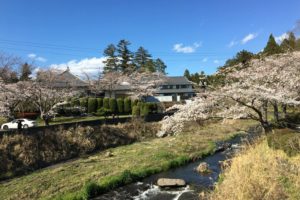
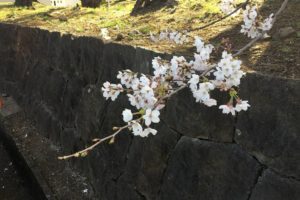
Counting from January 1st, the one-hundredth day is exactly April 10th. At this time, the cherry blossoms are in full bloom. It seems that they are sincerely celebrating the completion of this 100 days of Daimoku. As time passes, these cherry blossoms will fall from the trees, but after that, in May or June, fruit will appear as the fruition of those blossoms. This fruit, even though just ordinary cherries, will undoubtedly appear. Just like these cherry blossoms, I am convinced that this practice of 60 billion Daimoku with unity between priesthood and laity will definitely bear splendid fruit in the future.
Among those who are here, I think there are people who have been able to chant this 500,000 Daimoku per person over 100 days at age 60, 70, or 80. In contrast, some of you have been able to carry this through to the very end while in your thirties, twenties, or even teens. In the future, you will accumulate various benefits of the Law, pass through a variety of experiences in society, and as believers associated with the Bodhisattvas of the Earth you will exhibit the great merit of the Law in the world. When you see this, you will know that this 100 days of Daimoku has truly borne fruit, that its significance is limitless, and that it was a cause fundamental, Original Cause utterly beyond the capacity of we common mortals to perceive or understand.
When one considers everything about the chanting of this Daimoku, it has roughly three meanings, simply put.
The first meaning, of course, is that this was Daimoku chanted for the establishment of the Tower of Sixty-thousand.
During the Ho’ei era, when believers offered the Daimoku for the original Tower of Sixty-thou-sand, the circumstances of the age were such that the “temple registry” system1 was in effect through-out Japan. Thus, it was, on the surface, absolutely forbidden to change religions or to change from one sect of Buddhism to another. This was an age when even if one sought true Buddhism, it was forbidden under the laws of the land to change religion. It was in such an age that many believers all over the country chanted 600 million Daimoku.
Today, under what is called freedom of religion, it is possible to correctly transmit that which is true and good without limit. In other words, we live in an age when one can choose true Buddhism of one’s own accord. It was at this time, during the period of both spiritual and material confusion after the war, that the Soka Gakkai appeared and carried out the widespread propagation of the Daishonin’s Buddhism. However, although this was a form of propagation for that age, it was not the form of propagation in which priesthood and laity, truly united as one, protect the True Law and enable it to flourish. For this reason, distorted interpretations and arrogance arose after a certain period, and various distortions owing to that became clearly evident.
I believe that it has profound significance that we are establishing the new Tower of Sixty Thousand as our monument for the propagation of the Essential Teachings at this time, in the midst of these circumstances. This idea was proposed to the Head Temple through the mutual agreement of Chairman Yanagisawa and all the other Hokkeko leaders. With gratitude, I then gladly gave my permission. However, the true meaning of this lies in the fact that we have truly united together as priesthood and laity, devoted ourselves to chanting Daimoku for the Kosen-rufu of the Mystic Law, the life of the Daishonin, and offered the merit that we have gained in order to establish the Tower of Sixty-thousand. Therefore, the first meaning of this Daimoku is that we practiced 60 billion Daimoku for the sake of establishing the Tower of Sixty-thousand.
Its second meaning lies in the solid development of the Hokkeko based on unity between priests and laymen as the appropriate way to propagate the Daishonin’s Baddhism in the age. This solid, complete development of the Hokkeko organization is of the utmost importance as the foundation for propagating the True Law of Nichiren Shoshu from now on.
I think that the genuine development of the Hokkeko will take place when each member really believes that the organization is important and truly awakens to the need to devote himself to it and to protect the Hokkeko as the most precious organization for the correct propagation of the Law. I have the very strong conviction that through this Daimoku, very strong power of faith devoted to this goal will well up from the life of each individual member of the Hokkeko, and will manifest itself as the four virtues of the eternity, happiness, Bodhisattvas of the Earth true self, and purity.
The Daishonin says:
The most important thing is to chant only Nam-Myoho-Renge-Kyo and attain enlightenment2.
As expressed in this guidance of the Daishonin, the third meaning of this Daimoku is that it is important for the merit of the Mystic Law to completely penetrate into the life of each believer through the constant chanting of Nam-Myoho-Renge-Kyo. In this sense I believe that this one hundred days of Daimoku was in actuality a valuable practice toward the fulfillment of these words of the Daishonin.
In the “Parable of the Medicinal Herbs” chapter of the Lotus Sutra there is a parable called the “three sizes of herbs and two sizes of trees.” In this parable, there are many plants small, medium, and large herbs and small and large trees. Great clouds form in the sky and merciful rain pours on them all. However, the growth of each of the herbs and trees through the merit of this rain depends on its individual capacity to receive the rain. Therefore, there is discrimination [in benefit], since a small herb grows to a small size and a large herb grows to a large size. This is also known as the “metaphor of discrimination.”
However, if considered from the point of view of the rain, the great clouds form and rain falls from the heavens impartially on each and every place. The significance of that impartiality is that everything receives true life, is nurtured, and grows owing to the blessing of that merciful rain from the heavens. This is what is meant by “merit bestowed without discrimination,” in what is called the “metaphor of non-discrimination.”
The meaning of this is that everything is equal. The great, impartial benefit of Nam-Myoho-Renge-Kyo enables all existences to attain enlightenment by embracing3 them into the life of Myobo, the true origin of the enlightenment of the Buddha.
Thus, by completing this one hundred days of Daimoku, each one of you has had the virtue of the Gohonzon “Nam-Myoho Renge-Kyo, Nichiren” – penetrate into your own life. I believe you have thereby created a firm foundation for the true attainment of Buddhahood from here on.
This April 10th we have hereby finished this practice of the Daimoku in which we assemble together to chant. From now on, I hope you will always chant Nam-Myoho-Renge-Kyo whenever you have a chance. I will, too. By doing this and moving forward while considering every matter, we will truly achieve every single thing, and through the protection of the Buddha this will correctly develop into the path toward Kosen-rufu. Moreover, I believe this is the way to obtain true happiness and live a meaningful daily life as a human being born in this world.
I hope you will consider this final day of our a one hundred days’ practice of the Daimoku to be our starting point toward the great Kosen-rufu of the future as well as the time for you, yourself, to really start forward toward attaining the benefit of happiness into the eternal future. I will conclude my speech commemorating the completion of our practice of this Daimoku by offering my heartfelt prayer for your further growth in faith and practice.
Thank you very much for your support today.
1. The temple registry (terauke) system was a method of social control employed by the Tokugawa shogunate during Japan’s Edo period (1600-1868). Each person was entered at birth into the registry of his family’s temple, changing temples was forbidden.
2. MW, vol. 1, p. 214; Zenshu, p. 1244)
3. Here, we have translated the compound verb “kai-ji-go nyw” simply as “embrace” to make the sentence read smoothly. “Kai-ji-go-nyu” is a compound that expresses the fourfold purpose of the appearance of the Buddha as described in the Hoben (2nd) chapter of the Lotus Sutra. This fourfold purpose is:
(1) to open the door of the wisdom of the Buddha to all living beings;
(2) to show the wisdom of the Buddha to all living beings;
(3) to cause all living beings to awaken to the wisdom of the Buddha; and
(4) to cause all living beings to enter into the path of the wisdom of the Buddha.